The 1976 Supreme Court decision in Griswold v. Connecticut significantly changed the both prevailing notions of the right to privacy and the Constitutional status of reproductive rights in the U.S.[1] The story of Griswold is a long one and exemplifies how certain cases are framed and structured to reach the Court and secure the result the petitioner’s desire. It also illustrates the temptation leftist court members have to deal with local matters at a constitutional level through what is called “Substantive Due Process.”[2] Griswold is one of those cases with which one can accept and agree with the result, yet disagree with its reasoning and wish the court had done otherwise. This is my view.
History of the Case.
Here’s a brief overview: Since 1879, Connecticut had a rarely enforced law making the use of contraceptives illegal. The law prohibited anyone from helping, advising, hiring, or commanding another person to break it, with penalties as if they were the main offender. Before Griswold, there were attempts to challenge this law, but they didn’t get very far. All in all, sixteen attempts, first initiated in 1917, to revise or repeal the law were made by the Connecticut Legislature, but all efforts were blocked.[3] In Tileston v. Ullman (1943), the Supreme Court dismissed a doctor’s challenge because he didn’t show a direct threat to his personal rights.[4] Similarly, in Poe v. Ullman (1961), a woman’s challenge was dismissed for lack of standing. [5]
In 1961, the law was challenged again. Estelle Griswold, the executive director of the Planned Parenthood League of Connecticut, and Dr. C. Lee Buxton, the League’s medical director, opened a health clinic in New Haven. They were arrested and convicted for providing information and advice to married couples seeking contraception, and each was fined the nominal sum of $100. Griswold and Buxton appealed, but the Appellate Division of the Circuit Court and the Connecticut Supreme Court upheld their convictions. The defendants then appealed to the U.S. Supreme Court, arguing that the Connecticut law violated their due process rights under the 14th Amendment.
Griswold and Buxton challenged Connecticut’s law banning the use of contraceptives, arguing that it violated the right to marital privacy. The Court’s 7-2 decision not only overturned their convictions but also expanded the constitutional right to privacy in ways that have proven controversial. Beyond its direct legal effects, Griswold set an important constitutional precedent that influenced later cases, including Roe v. Wade, which extended privacy rights to include the right to abortion.
Roe v. Wade upset many Americans and sparked a process that, for some, [6]undermined trust in the Supreme Court and the rule of law. It seemed the decision was driven not so much by law or constitutional principles as by frustration among liberals who felt they couldn’t persuade legislatures to act in line with their views. Eventually, Roe was overturned, but not before it caused significant damage to the court’s credibility and the rule of law.
Justice Douglas
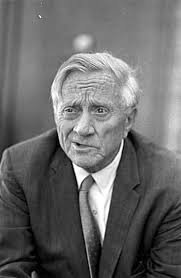 Justice William O. Douglas wrote the much-criticized majority opinion. Before critiquing the opinion, I want to share a personal anecdote about Justice Douglas. While I was in law school, Justice Douglas came to speak at the University of Texas. He was a most engaging speaker. He was also careful to portray himself as a rather traditional interpreter of the Constitution. During the question-and-answer session, he was very open and charming. I would not want my disagreement with this particular decision and its logic to in any way slander the character of Justice Douglas.
Substantive Due Process, and Penumbra’s
As these blogs have previously mentioned, after the Civil War, the Supreme Court often defended private property rights against government regulation, using substantive due process as its reasoning. The notion was that the Fifth and 14th Amendments’ protections prohibited government regulation that would inhibit the use of private property. Eventually, social pressure forced the Court to recant. From the beginning, substantive due process had been an innovation. Due process, or what we call “Procedural Due Process,” was originally conceived as a limitation on government actions that deprive citizens of fair judicial proceedings. Basically, Substantive Due Process is the invocation of some kind of pre-existing substantive (as opposed to procedural) natural right that government cannot restrict. Beginning in the 20thCentury Substantive Due Process fell into disfavor amid the widely held view that prior courts had used the doctrine to invalidate economic regulatory laws with which the court disagreed.
At the beginning of Griswold, Justice Douglas carefully makes a distinction that he believes saves the opinion. Essentially, without altering the ongoing status of substantive due process in economic matters, he states that the Court does have the authority to handle issues involving the right to privacy, which is a non-economic right guaranteed by the Constitution, at least to some degree. Douglas then extends this to the relationships between husbands and wives as relates to birth control.
From an originalist perspective, of course, this viewpoint is completely unfounded. There was no one at the time of the signing of the Constitution or the adoption of the First Amendment who thought these rights included reproductive rights, abortion, birth control, sexual orientation, or other areas that the Court has been led to address since Griswold.
In order to create this right to contraception, Douglas invokes the notion that there are “penumbras” within the Constitution. That is to say that certain rights given under the Constitution have an undefined penumbra, what we might call a “cloud of applicability” that surrounds them, allowing the courts to extend or create certain rights previously unknown to previous generations and perhaps opposed by many in the current generation. Douglas writes:
The foregoing cases suggest that specific guarantees in the Bill of Rights have penumbras, formed by emanations from those guarantees that help give them life and substance. Various guarantees create zones of privacy. The right of association contained in the penumbra of the First Amendment is one, as we have seen. [7]
In support of his position, Douglas cites several cases that are only vaguely applicable. In each of the cases he cites, the Court was dealing with an established right under the Constitution as it applies to specific circumstances, not creating a new right. For example, Douglas cites Pierce v. Society of Sisters, in which the right of Catholic parents to put their children in private schools was established by the First Amendment protection of freedom of religion due to the 14thAmendment.[8] The difference between this situation and Griswold is obvious. The First Amendment applies to the states by virtue of the 14th Amendment, and it guarantees freedom of speech and religion, not reproductive rights. Each of the cases is cited by Douglas, and supporting his views, can be similarly criticized.
Perhaps the most egregious of Douglas’s references has to do with the case of NAACP v. Alabama. In that case, the state of Alabama attempted to force the National Association for the Advancement of Colored People (NAACP) to provide State authorities with a list of all its members’ names and home addresses. A leading force in the burgeoning civil rights movement, the NAACP was highly controversial at the time, especially in southern states. If its individual members were identified, they would be at risk of harassment and intimidation – or worse – from opponents of civil rights. Such retaliation may even have been the outcome that state officials had in mind when they made the demand. Unspoken by Douglas was the fact that the 14th Amendment was specifically enacted to protect a minority from interference with its civil rights. No new right was being given by this case; instead, a constitutionally guaranteed right was being enforced.[9]
Let’s take a closer look at “Penumbras.” The innovation of Penumbras has perhaps been the most criticized aspect of Douglas’ logic in the case. The term “penumbra” had several meanings: it described a partial illumination during an eclipse, a surrounding area where something exists to a lesser degree, or, unfortunately, something that covers, surrounds, or obscures. Douglas also used the word “emanation,” which traditionally meant the originating of the world through hierarchical radiations from the Godhead, to refer to “something that emanates or is produced by emanation,” or even an isotope of radon from radioactive decay. It was not originally a legal concept, though there is some precedent for its use where the court is extending existing language by implication.[10] The notion was not considered to allow radical extensions of existing rights or change the constitutional balance between the federal and state governments. In Griswoldit simply indicates what a majority of Supreme Court Justices believe should be included in the Constitution.
The Ninth Amendment
The Ninth Amendment to the Constitution provides that
“The enumeration in the Constitution of certain rights shall not be construed to deny or disparage others retained by the people.” [11]
During the first 175 years of its history, this Amendment was cited in a total of nine court cases. Some Constitutional scholars began to call it the “Forgotten Amendment.” This is not the place to analyze the Ninth Amendment. It is sufficient to say that “reserving rights to the people” is not the same as “giving the United States Supreme Court the right to determine or create those rights.” As Justice Black eloquently states in his dissent, the Ninth Amendment was passed,
“…not to broaden the powers of this Court or any ‘other department of “the General Government,” but, as every student of history knows, to assure the people that the Constitution in all its provisions was intended to limit the Federal Government to the powers granted expressly or by necessary implication.”[12]
Justice Black is careful in his language, but clearly believes the majority and concurring opinions misused the language of the Constitution, the intent of which was not to broaden the Court’s powers but to assure the people that the Constitution, in all its provisions, was intended to limit the Federal Government to the powers expressly granted or by necessary implication. Where there is a need to protect these rights, it is the duty of the people, through the process of constitutional amendment, to protect them. Thus, Justice Black observes:
I realize that many good and able men have eloquently spoken and written, sometimes in rhapsodical strains, about the duty of this Court to keep the Constitution in tune with ‘the times. The idea is that the Constitution must be changed from time to time and that this Court is charged with a duty to make those changes. For myself, I must with all deference reject that philosophy. The Constitution makers knew the need for change and provided for it. Amendments suggested by the people’s elected representatives can be submitted td the people or their selected agents for ratification.[13]
Over time, Griswold’s influence seems to have shifted the Court’s role, turning it into a kind of “Guardian Council” that believes it has the superior wisdom to decide which laws should be enacted and what limits should be placed on the state’s powers. This wasn’t what the Founders intended. Since Griswold, the case has led the Court to explore issues that should be decided by the people themselves, even those that the United States Supreme Court should not interfere with.
Tenth Amendment
The decision of the Court is made even less palatable by a fair interpretation of the wording of the 10thAmendment:
The powers not delegated to the United States by the Constitution, nor prohibited by it to the States, are reserved to the States respectively, or to the people.[14]
At the time the Constitution was written, and at the time of the Griswold decision, it was clear that the state’s police powers were the proper place for legislation affecting the health and morals of the people. At the time the Constitution was written, none of the founding fathers would have agreed that the right to control birth control, abortion, homosexual marriage, or a host of other matters was protected by the Constitution. These were matters reserved to the states. The prohibition contained in the 10th Amendment applies to the United States government. In other words, it prevents the United States government from entering into those matters that have traditionally been reserved to the states unless specifically given to the federal government. The regulation of sexual behavior is not one of those matters.
The impropriety of Griswold is evident in the Connecticut Supreme Court’s refusal to overturn the law, despite having been given the opportunity. The Connecticut legislature also recognized the problem and could have repealed the law. They did not. The voters of Connecticut could have demanded that their constitutional representatives repeal this legislation. They did not (although, I believe that, in time, they would have done so). Under the circumstances, it was not the prerogative of the United States Supreme Court to step in and do for the citizens of Connecticut what they should have done for themselves.
Conclusion
 It’s fair to say that Griswold marked a significant shift rather than a minor tweak in how we interpret the Constitution. Essentially, this case was motivated by a situation that many Justices believed aligned with current moral standards and what they personally saw as just. Perhaps they were right. However, it’s important to remember that Supreme Court decisions have real impacts. One notable outcome of this case has been a major expansion of the Court’s power to define civil rights on its own terms, including invalidating statutes that earlier generations would not have thought the Court had the power to hold unconstitutional. This shift, begun with Griswold, has contributed to a steady decline in the Court’s reputation among many people.
All in all, just as in the early 20th Century expansive Court decisions in line with current sentiment lead the Court into the quagmire of using the 14th Amendment to prevent economic regulation, in the late 20th Century another Court was led into the quagmire of using the Amendment to effect social changes that neither Congress nor state legislatures would adopt. In the end, they were led to use their powers in ways that did not do credit to the Court and ended up undermining both the rule of law and social stability and harmony.
Copyright 2026, G. Christopher Scruggs, All Rights Reserved
[1] Griswold v. Connecticut 381 U.S. 479 (1965). I will refer to this case hereafter as Griswold.
[2] Substantive due process is a legal principle holding that the Fifth and Fourteenth Amendments’ due process clauses can protect fundamental, unenumerated rights from arbitrary government interference. In its early form, it was used to protect property owners from government regulation of their businesses. More recently, it has been used to limit government regulation of private behavior.
[3] State v. Griswold, 151 Conn. 544, 200 A.2d 479 (1964).
[4] Tileston v. Ullman, 318 U.S. 44 (1943).
[5] Poe v. Ullman, 367 U.S. 497 (1961)
[6] Roe v. Wade 410 US 113 (1973).
[7] Griswold, 484.
[8] Pierce v. Society of Sisters, 268 U. S. 510 (1925).
[9] NAACP v. Alabama, 357 U.S. 449, 462 (1958)
[10] There is some historical validity for the use of the term in judicial decisions, in particular by Justice Holmes, which Douglas has unquestionably read. See, Henry Greely, “A Footnote to Penumbra in Griswold Connecticut.” University f Minnesota Law School Repository https://scholarship.law.umn.edu/cgi/viewcontent.cgi?article=1409&context=concomm (downloaded April 20, 2026).
[11] US Constitution, Amendment Nine.
[12] Griswold, at 520.
[13] Id, at 522.
[14] US Constitution, Amendment 10.