One of the most important books in my seminary education was The Transforming Moment by James E. Loder, formerly a professor at Princeton Theological Seminary. In The Transforming Moment, Loder sets out a theory of transformational logic, based in part on the work of Michael Polanyi and his view of how science progresses. Along the way, Loder draws on theology (he was a professor at Princeton Theological Seminary), psychology (he was a highly accomplished counselor), and philosophy (he was conversant with many philosophers, especially Søren Kierkegaard). Polanyi describes personal transformation as a process involving the whole concrete human person, not merely the human mind. What is at stake in such a transformational event is the full and imaginative participation of the whole being. A true “convictional experience,” as he puts it, is the act of a whole person, not a disembodied spirit.
The Logic of Transformation
The process of true transformation of any kind, religious, moral, scientific or otherwise, involves a process. Loder describes the “logic of transformation,” or the five-fold process behind any transformational event, as follows:
- Conflict-in-context, or a sense of the need for deeper understanding because of a realized problem in human life or understanding;
- Interlude for scanning, or investigation of the situation or problem;
- Insight felt with intuitive force, the “eureka moment” where new understanding is gained;
- Release and repatterning, or working out the implications of the insight intellectually and otherwise; and
- Interpretation of the event in a wider context, or the application by a human person of the insight and its development in a broader context.
In this particular blog, I don’t intend not to explicate the fivefold knowing process, which I would like to do in the future, which I’ve touched upon in discussing both Charles S. Peirce Michael Polanyi, but rather to talk about the moral implications to a society when the process goes astray as Loder sets out in his book.
The Problem of Eiconic Eclipse
I’ve written several blogs exploring the issue of “moral inversion.” This occurs when morality gets separated from its roots in a tradition of moral inquiry, making it hard to tell right from wrong or justice from injustice. This separation takes place whenever we seek to reduce moral thinking to something else. For example, in some versions of Marxism and materialism, economic factors are seen as the only considerations, and morality and justice lose their deeper, transcendental foundation in the pursuit of goodness and fairness.
In The Transforming Moment, Loder introduces the concept of the “eiconic eclipse.” The iconic eclipse is the error that arises when reason is severed from a deeper source in personal knowledge and accountability, and from the human capacity for imagination. It involves a kind of rationalistic reduction in which the living knower in all his or her complexity, mind, body, soul, and spirit, is excluded from the process of knowing. [1]
Many people see that a key mistake in Newtonian physics, unlike quantum physics, is leaving out the role of the person doing the investigation. Quantum theory reveals that it’s impossible to exclude the knower from what is being known. Loader takes this insight further, applying it to religious, theological, moral, and psychological issues, offering a powerful critique of modern ideas.
Loder describes his insight as follows:
A new theory of error would be: any assertion of truth that does not recognize and accept its primary dependency on some leap of the imagination, some insight, intuition, or vision is guilty of intellectual dissimulation. Reason thinks it secures an objective, airtight case, when, in fact, its processes are open textured, its sources rooted in “personal knowledge,” and its conclusions are laced with human interest. Knowing as an event, unequivocally depends on the image and its cognates to draw together an integrated picture, to put things in a new perspective, or to construct a new worldview. I have yet to show that all knowing is eventful, but my claim is that a rationalistic eclipse of the image eventually cuts off reason from its substance—indeed from the truth it seeks to order and communicate. For convenience, I will refer to this error as an “eiconic eclipse” and will attempt to show that it is not merely an error of omission, but is an error of commission because eclipsing rationalist thereby lose their perspective on themselves and whatever they know. [2]
Loder emphasizes that claims to truth must acknowledge their roots in human imagination, insight, intuition, or vision to be complete. Although reason may seem objective, it is actually shaped by individual personality, perspective, and life experiences. This means that all human understanding relies on imaginative insight to make new discoveries or develop worldviews. When reason becomes detached from its source in a human person who takes personal responsibility for their actions, it can lead to an intellectual collapse of the knower, distorting and obscuring the truth it aims to uncover.
In the area of science, when the intellectual parameters of science are grounded solely in reductionism and in the absence of the full scope of human, limited imagination (science under “eikonic eclipse”), science loses its grounding in the human person, and the relationship between the knower and the known is distorted. I believe it is fair to call this an iconic collapse, because human knowledge has collapsed into a false objectivity that actually distorts reality.
Although I like Loder’s terminology, I want to suggest the term “noetic collapse.” In my view, things like Justice, Goodness, Truth, and Beauty are real, though ideal, not material realities. When human beings cease believing in these realities and try to reduce them to some material cause (such as love being nothing but hormones), they cut themselves off from the deeper moral and aesthetic aspects of their human personhood, which inevitably leads to distortion, ultimately to unhappiness, and sometimes to violence.
This distortion is found in Marxism, particularly in its reduction of all morality and politics to economic determinism. By reducing the human search for truth and for a humane, life-flourishing social system, those under the influence of materialistic Marxism lose contact with the human reality of seeking a holistic form of truth, goodness, and justice. This, in turn, opens the door to what Michael Polanyi calls “moral inversion,” that is, the twisting of morality by which that which is clearly immoral becomes moral and moral actors are capable of and encouraged to commit acts that are clearly destructive.
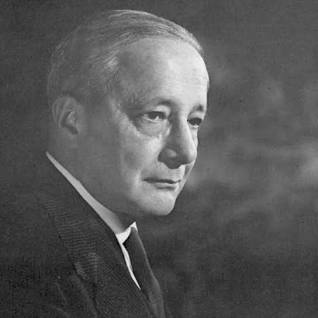 Polanyi spent much of his career showing how this phenomenon led to the tremendous injustice of Soviet communism and German National Socialism. He outlines a process he terms “moral inversion,” which he believes is a common characteristic of totalitarian régimes on the right and the left. Soviet Russia, Nazi Germany, and Communist China were all powered by an extreme moral energy unconnected with any form of traditional morality. Moral inversion, Polanyi believes, is the demonic power behind dehumanizing and violent social movements and the oppressive governments they create. Despite the destruction they cause, the leaders of these movements understood themselves to have utopian visions of the common good. Moral inversion is not limited to totalitarian regimes. It can exist in capitalist régimes where everything is reduced to the search for economic success. It can exist in bureaucratic régimes where everything is reduced to rules and rule-following. It can exist anywhere where the fullness of the human person is reduced to something less than fully human.
Moral Inversion
Michal Polanyi argued that the strong demand for moral perfection characteristic of Christianity, when combined with the materialist reductionism of modern thought, results in a form of moral nihilism in which reason and morality work destructively. Human beings have an innate desire to act morally and achieve moral ends, but when education or training fails to provide a clear rationale for their moral passions, those passions can become uncontrollable, flowing in whatever direction their society takes them. In the modern world, revolutionary violence is one of the most common ways this displaced moral energy finds expression. It is not possible to understand notions like justice, goodness, truth, or beauty on reductive, materialistic terms. These are “noetic” or mentally created spiritual and moral ideals. When cut off from a holistic community of tradition dedicated to the study and illumination of such ideals, the human mind turns on itself or “inverts,” losing contact with moral foundations.
The problem is not that such people have given up having a moral sense. Instead, that moral sense has become unsupported and irrational—even contemptuous of morality. When that happens, a kind of contempt for moral values, such as truth, beauty, compassion, or justice, can emerge.
Divided against himself, he seeks an identity safe against self-doubt. Having condemned the distinction between good and evil as dishonest, he can still find pride in the honesty of such condemnation. Since ordinary decent behaviour can never be safe against the suspicion of sheer conformity or downright hypocrisy, only an absolutely a-moral, meaningless act can assure nun of his com· plete authenticity. All the moral fervour which scientific scepticism has released from religious control and then rendered homeless by discrediting its ideals, returns then to imbue an a-moral authenticity with intense moral approval. This is how absolute self-assertion, fantasies of gratuitous crime and perversity, self-hatred and despair arc aroused as defences against a nagging suspicion of one’s own honesty.[3]
In today’s materialistic societies, that direction has often taken the form of revolutionary movements aimed at building a new society based solely on materialist ideas. Ideologies such as Communism (currently masquerading as various forms of critical theories) or National Socialism have frequently been chosen as pathways. Unfortunately, many of the tragedies of the 21st century have stemmed from this shift of moral energy into destructive outlets. When individual moral inversion is translated into social action, the result is totalitarian harshness, whether communist, national socialist, capitalist or bureaucratic.
Conclusion
The issue of human thought collapsing into a materialist framework isn’t merely hypothetical. We can see its effects in our national politics, city riots, and in the way leaders in the media and academia often use revolutionary language. The breakdown of our social order is rooted in a human moral drive that’s disconnected from the imagination, spiritual grounding, and moral traditions that can foster progress without endless nihilistic and political conflicts. As one author put it:
Dostoevsky grasped what is painfully obvious today: as authority collapses, institutions implode, and intellectual and moral anarchy predominates, the liberal elite is apt to combine with revolutionary ideologues to unleash destructive forces that neither group can control.[4]
If the notion of an iconic eclipse or collapse that I’ve been discussing is correct, then the problems we face with institutional corruption, a lack of faith in our democratic and republican ideals, and a failure to uphold the fundamental tradition of our constitutional form of government are deeper than the notion that we simply elected the wrong leaders or have been led by the wrong political party. The corruption of our society and the emergence of deep injustices are rooted in a deeper problem.
Did this problem is in order to recover in order for our society to recover social and institutional health, we must develop a new way of thinking and reintroduce the nonreusable reality of such concepts as goodness, truth, and beauty. In particular, with respect to politics, we must reintegrate into our thinking the notion that justice cannot be reduced to either a kind of procedural adequacy or material equality. Justice is its own thing and cannot be reduced to anything else.
To achieve this, we must reconnect with the ancient traditions that emphasize the organic bond between the knower and the known, the individual and the community, human beings and their environment, as well as leaders and those they guide. It’s also important to move away from the radical notion that we can create a perfect society, and instead focus on making small, thoughtful, and loving improvements that promote human well-being. Whether this can be done without returning to a fundamentally religious view of reality and to some notion of the unattainable yet actual reality of ideals, such as the possibility of an increasingly just society in which human beings can flourish, is an open question.
Copyright 2026, G. Christopher Scruggs, All Rights Reserved
[1] Id, 223.
[2] Id, 26-27. In The Transforming Moment, Loder notes his dependence upon both Jurgen Habermas and his work Knowledge and Human Reason (Boston, MA: Beacon Press, 1971); and Michael Polanyi, Personal Knowledge: Towards a Post-Critical Philosophy (Chicago, IL: University of Chicago Press, 1962, 1974). Parenthetically, the problem of “eiconic eclipse” is not the only kind of iconic event one can imagine. One can also imagine a kind of “eiconic inflation” in which human imagination loses contact with reality, as ideals ungrounded in reality dominate. Counting the number of angels on the head of a pin might qualify as an example.
[3] Michael Polanyi, “On the Modern Mind” Encounter Volume 24 https://www.polanyisociety.org/MP-On–the-Modern-Mind-1965-ocr.pdfdownloaded January 23, 2026, 19.
[4] Jacob Howland, “Demons at 150” The New Criterion (March 2021) https://newcriterion.com/article/demons-at-150/ (Downloaded January 20, 206).