Mature Disciples and Differentiation

One of the key concepts in Emotionally Healthy Discipleship is “Differentiation.” Basically, a well-differentiated person can preserve their sense of self while fostering healthy relationships with others. Mature differentiation is an essential element of emotional maturity. Differentiation is also a core concept for followers of Christ and those who lead them. As Christians, we aim to be the people God calls us to be (differentiated) and to share that love through meaningful relationships (socially connected). Of course, no one is perfectly differentiated or perfectly socially adapted. However, the life of a disciple of Christ is (or should be) a life in movement towards becoming both the person we are called to be in Christ and the member of the body of Christ God would have us become. This means that differentiation is essential for the church, which should model what an emotionally healthy community looks like.

Self and Others in the Christian Life

This need for Christians to be differentiated stems from the very nature of God. In Christian belief, the Father is not the Son or the Spirit, but the Father. The Son is not the Father or the Spirit but the Son. The Holy Spirit is not the Father or the Son but the Spirit. They are differentiated and distinct. However, the creed states that the Father, the Son, and the Holy Spirit are one God, existing in relationship with one another—so close that they are “one being and one essence.”

Though this remains a mystery, it sheds light on human beings created in God’s image and our need to become our true selves while maintaining close relationships. It also offers guidance on what the Church and disciple-making relationships should look like. We do not want to make disciples who are robotic followers of a strong leader—that would resemble a cult. Instead, we seek to create disciples who think independently and possess a strong sense of their Christian identity. In fact, we want disciples who are so self-differentiated that they can engage in deep relationships where they give of themselves for others—just as Christ gave Himself for the church.

Differentiation involves maintaining a healthy sense of self along with healthy relationships with others. Essentially, a healthy sense of self includes the ability to stay in relationship with others while also being attuned to your inner self, with integrity to who you really are and what you truly believe and value. A person with a healthy sense of self can listen to criticism, valid or invalid, and endure conflict, necessary or unnecessary, while remaining open to reality even when things are confusing. Reality is difficult to discern, and, importantly, to act and respond out of a deep understanding of who they are and the call to be in Christ, despite the temptation to compromise. In other words, healthy selfhood involves the kind of integrity that can say “No” when it must.

Competing or Integrating Values

From a psychological perspective, we need to recognize two values that are important for healthy discipleship and healthy community:

  1. Healthy Selfhood. We need to understand ourselves—our strengths, weaknesses, talents, limits, and similar qualities. Until we know ourselves, we will always be at the mercy of others. A healthy person can resist pressures to act or behave in ways that violate their core identity. For Christians, this means being willing and able to live as Christian disciples despite pressures to compromise their true selves.
  2.  Healthy Relationship. On the other hand, we must be able to live and be in community with others. Jesus, when he was among us, lived in a concentric circle of healthy relationships: his family, his closest disciples, and the crowd he ministered to.

The key is to be so well defined as a person that we can integrate smoothly into the communities we belong to, especially our church community. People lacking a strong sense of self are often at the mercy of others, trying to meet their expectations, sometimes long after their parents are gone. This is one reason why disciples need to understand their family history and system. We cannot become the individuals we aspire to be unless we know the psychological and other forces that influence and distort our self-identity. In this regard, no set of forces impacts us more than our family systems and family of origin.

The Importance of Families and Communities of Origin
We internalize our level of differentiation as we are integrated into and emerge from our parents and family of origin. Children initially accept and reproduce their parents’ levels of differentiation or lower because that is what they know. Our sense of self develops over our lifetime through the families we originate from and the communities we join. Family and social communities exist before we become self-aware. Humans are born into a social fabric that is already in place—such as families, communities, nations, churches, friendships, and more—long before they become conscious, make choices, or influence their environment. In other words, people are born into communities, and the qualities of those communities greatly affect the person they become and shape the events that form their sense of self. [1]

On the other hand, we need to be healthy individuals. Much is said about the excess of individualism in modern America. Still, we may focus too much on that and miss a more profound truth: people have always been and become individuals. The Bible speaks of the faith of people from Abraham to the apostles. Each of these people of faith had a distinct personality. Abraham, Isaac, Jacob, Joseph, Moses, Joshua, David, the prophets, or the Twelve were unique individuals. In the New Testament alone, anyone who studies it carefully cannot ignore the differences in the personalities of its authors, from the Gospels to Revelation. Peter was not Paul, and Paul was not John. This is true throughout the Bible’s entire history.

We must make the same journey from families and communities of origin to authentic selfhood in Christ. This is where we come to Emotionally Healthy Discipleship. Essentially, EHD seeks to help Christians become authentic selves in the image of Christ, so they can be genuine members of Christian communities and share the gospel more lovingly and wisely with others. But, to do this, we must look deeply into ourselves and our families of origin.

Differentiation and the Capacity to See a Person as a Thou

Several weeks ago, I discussed Martin Buber and I-Thou relationships. According to Buber, relationships can be categorized as either “I-Thou” or “I-It.” In a healthy I-Thou relationship, people experience a mutual sense of connection, respect, and engagement. Conversely, an “I-It” relationship involves treating others as objects or instruments. An individual treats the other as an object, often involves seeing the other person as something to be used, manipulated, or controlled for personal benefit. This creates a sense of detachment and objectification, leading to a superficial connection.

Teaching about the distinction, I sometimes talk about a former executive assistant of mine from the years I practiced law. We actually became very good friends because we were together about 12 hours a day, five days a week, for about six years. I knew her personal life, social struggles, and every other aspect of her life. Because she kept my schedule and made sure I took care of business and family, she knew a lot about me. Sometimes, when we talked, we had what might be called an eye-to-eye relationship. We treated each other as people for whom we wish the best. On the other hand, every year I had to decide on pay raises for the staff, including my executive assistant. It was very interesting to me how objective I could be and how little I was concerned with her feelings in those circumstances. The reason? Well, it was a law firm, and I was going to take home every dollar I didn’t spend. I would treat her as an object or a tool in making salary and other performance decisions. Could I have escaped that? No. It was part of my job to decide how much to pay certain staff members.

Nevertheless, the people we are close to—our family, friends, close associates, and fellow church members—are human beings, and our relationships with them must involve a certain element of an I-Thou relationship; otherwise, they will not be healthy. As I mentioned, well, sometimes my assistant had to be treated as an object, as an employee of the firm who stood in a relationship with other employees of the firm, our effectiveness as a team required that we have a deep, personal understanding and appreciation for the other person. We are called to model healthy relationships in all the relationships of life, including those in which it is easy to fail to do so.

What does this have to do with differentiation? Everything. People who lack a strong sense of their own selfhood often find it very difficult to maintain healthy relationships with others. Good I-Thou relationships with others depend on my having good relationships with myself and with God. God in particular is never an object—an it. God is always a Thou—a person. One of the problems with much academic religion begins at just this point: God is a person, in fact THE PERSON, the person who has made human beings persons in his own image and therefore infinitely valuable. Buber describes God as the Eternal Thou, that is the one person who was, is, and will always be a Thou to me.

An implication of the I-Thou relationship is that differentiation does not mean separation. If I see another person as a genuine thou, I recognize that we are connected as persons within a web of personal relationships, of which both of us are a part. My individual differentiation cannot be so complete that it prevents the other from their own personal differentiation and identity. In fact, the I-Thou relationship involves a kind of interpersonal regard that Christians call self-giving love, which is the ability to want and seek the best for the other, even in difficult situations, sometimes requiring personal sacrifice. The process of emotional maturity is not about seeing myself as isolated from others but about perceiving myself as an individual within a deep, self-giving relationship with others.

People who are emotionally wounded and lack proper self-regard rarely consider others. In fact, this is a significant issue in our society. Conversely, emotionally mature individuals are characterized by their ability to appropriately respect the feelings, needs, hopes, and dreams of both others and themselves.

Differentiation, Being and Doing

One of the main principles of Emotionally Healthy Discipleship is promoting what is called “slow down perch spirituality” in Christian discipleship. We slow down so that we can be ourselves (a true thou before God) and find our primary sense of meaning in that relationship with the Divine Other.

A major problem among Christians is the tendency to try to find our sense of self through what we do for God and others. Many pastors struggle with a kind of workaholism based on the belief that we are defined by our actions. Interestingly, when we fall into this trap, we treat ourselves as objects that gain their meaning from what they do. Of course, this leads us to judge ourselves by appearances, earnings, possessions, pleasures, and a host of other things that turn us into objects even in our own eyes. One of the main meanings of the Christian term “Grace” is that our identity has nothing to do with what we do, but with who we are as children of God. Our being as children of God comes before our doing as disciples or Christian leaders.

Copyright 2025, G. Christopher Scruggs, All Rights Reserved

[1] G. Christopher Scruggs, Illumined by Wisdom and Love: Essays on a Sophio-Agapic Constructive Postmodern Political Philosophy (College Station, TX: Virtual Bookworm, 2025).


Deep Discipleship and Grief and Loss

To be deep disciples, we must grieve the pain of grief and loss. Pete Scazzero begins his discussion of grief and loss by pointing out that Americans are naturally uncomfortable with the idea that the Christian life involves both. We live in a culture that idolizes success, happiness, and pleasure. The thought that grief and loss are part of human life is foreign to that way of thinking. Of course, our American mindset is entirely unrealistic. No matter how hard we try, we will experience grief and loss. Ultimately, we will lose our lives. Everyone dies. And before that, there are countless small deaths—failures, sicknesses, betrayals, losses, and the inevitable pains of human existence. From this perspective, our American way of life is less realistic than the Christian way. Christian disciples must accept grief and loss.

Leaders, Grief, and Loss

Leaders, in particular, must be willing to accept the reality of grief and loss. Scazzero puts it this way:

Leadership has losses all its own, and often a disproportionate number of them – people in whom we invest leave, dreams die, leaders and staff move on or don’t work out, betrayals happen, marriages in the church end, relationships shatter, and external crises such as natural disasters and economic downturns take a toll on the community. You can’t be a leader in the church and expect to escape loss.[1]

When I first read this, I realized I had gone through all the examples mentioned. Specifically, I remember a situation where a couple in our church invested much time and support, moved a little further away, and almost immediately decided to join a larger, wealthier church. I was deeply hurt. One of the spouses was an elder, and the other was active in one of our ministries. It felt as if I had been pierced in the heart. An older, wiser pastor smiled and said, “Chris, these things happen all the time.” He then reminded me that we help people not because of what they might do for the church, but because they are children of God. The same principle applies to all relationships in a disciple’s life. We help people because we want them to feel the love of God in one way or another. We don’t necessarily expect anything in return.

Avoiding Grief and Loss

One of the ways  American Christians often fail to be the people God calls them to be is in the vain and fruitless attempt to avoid experiencing grief and loss. And, when grief comes, most of us do all that we can to make our recovery as short as possible! In a culture that believes in success, grief and loss are not life experiences to be embraced, but interruptions to be overcome.

I can’t tell you how many times I’ve quoted —and others have quoted to me— Paul’s teaching that “all things work together for the good for those who love God and are called according to his purposes.” (Romans 8:28). Most of the time, we subconsciously interpret this as meaning that these quotes fit into our lives seamlessly. People think God will make everything turn out fine. I believe this is a misreading of the text. When Paul tells us that all things work together for the good, he’s admitting that bad things happen in a broken world. He’s acknowledging that sometimes we must endure failure, loss, and pain for a while. I’m not sure he is saying “get over it,” but rather, “God will be with you through it.” And there aren’t any promises as to how long “getting through it” will take.

Three Phases of a Disciple’s Grief and Loss

One of the sections of Scazzero’s treatment of grief and law that meant the most to me concerned the different ways of processing grief and laws. He begins by noting that Elizabeth Kubler-Ross famously outlined the five stages of grief: denial, anger, bargaining, depression, and acceptance. Later, she added new stages, with the final one being the incorporation of loss into our lives. I often include shock as well, making the total seven. While Scazzero urges us to incorporate Kubler-Ross’s insights, he also presents his own Christian response. It goes like this:

  1. Pay attention to the Pain,
  2. Wait in the Confusing Inbetween Time, and
  3. Allow the Old to give birth to the New.

Instead of avoiding pain, we need to experience it. To do this, we must understand that grief, loss, and all other emotions are neither good nor bad. They simply exist. If I get angry at a child without reason, the truth is, I am furious. It’s not the anger itself that is wrong; it’s my tendency to blame my children for things that aren’t their fault.

Regarding grief and loss, there’s no such thing as “bad” grief or loss. We must allow ourselves to feel that pain and accept it. We need to embrace our humanity and the humanity of those around us. Only by feeling pain and loss can we fully realize our humanity. Helping people understand this is one of the responsibilities of Christian leaders.

The second thing we must do is endure the confusing times of grief and loss. As part of this course, I’ve had to retrace a challenging period in my life. I lost something precious to me. That loss has not been recovered to this very day. On the other hand, I have experienced the truth of Romans 828, because God has worked this difficult situation for good in my life and our family’s life. But the wait was long. Years. And in those years, what I mostly did was ignore the pain. Occasionally, I would get angry, but mostly I just silently blocked the entire experience from my mind, thinking that was the right thing to do. It wasn’t. That coping mechanism of mine simply made the recovery more difficult and time-consuming.

Growing in Grief and Loss

Finally, we must allow the old to go away in the new to come. Surprisingly enough, although this is easy in some circumstances, it’s not easy in every circumstance. Sometimes, we are so accustomed to the pain and loss of our past that we actually fear becoming healthy! As I mentioned about a past loss of my own, it may be that we never receive what it is we lost again in this life. However, you may receive some things that are much more valuable:

  • A new revelation of God and his love for us,
  • A softer and more compassionate heart, and
  • A clear understanding of ourselves and our true selves in Christ.

One thing God may reveal through our experiences with failure is a clearer understanding of who we are and our limitations. A downside of being a high achiever is constantly ignoring human limitations. I often overworked throughout my professional career as a lawyer and pastor. Physically, I was capable of doing it, and I did. But it was not the right choice for our family or for me. It would have been better to understand my healing limitations.

Additionally, understanding ourselves may involve recognizing specific strengths we have, but for years, we either covered them up or didn’t recognize them as strengths. Someone who is always trying to overcome feelings of weakness may overlook that they are also in touch with their emotions and the pain and suffering of others. Finally, during times of grief, loss, and patient waiting, we come to see that God has been working in love in our lives all along. It’s an opportunity to notice the unquenchable love of God, who loves us not only in our successes, health, and achievements but also in our weaknesses, failures, and stumbles. A key to effective leadership is recognizing that you don’t always have to be right, successful, or victorious. It’s OK to be human.

Examining the Iceberg

One image Emotionally Healthy Discipleship uses is that of an iceberg. Most of an iceberg lies hidden under the ocean. Ships can sink after colliding with a completely submerged and invisible iceberg. The Titanic did not sink because it hit the iceberg’s visible part. It sank because a hidden portion caused a gash that went the length of several water-tight compartments—an event the designer thought impossible.

The same thing is true of our own lives. We often fail not because of our known weaknesses and brokenness, but because of those that lie submerged beneath the carefully managed exterior we have created. Sometimes, this exterior (sometimes called a “false self”) was created when we were quite young.

Last week, toward the end of our teaching session, Pete Scazzero made two points related to the subconscious iceberg that we need to examine if we are to become the people God calls us to be:

  • Time does not heal all wounds; it hides them.
  • Pain unhealed is inevitably transferred to someone else.

In other words, if we do not put in the effort to identify, uncover, and heal old wounds, they remain hidden in our subconscious, where they can hurt us and those we care about without us even realizing they are there. Worse, if we do not take the effort required to become the people God calls us to be, we will transfer our brokenness to others around us, generally unaware of what we are doing and what motivates our actions. I am reminded of the advice that Screwtape gives Wormwood about allowing the demonic to be seen by the human race: “Our policy, for the moment, is to conceal ourselves.”[2] We are often our own worst enemy, allowing our brokenness to lie concealed beneath the surface of our lives where it can cause failure, pain, emotional weakness, and the like, without any fear of discovery or resistance.

Two Exercises for Emotional Healing

Significant Events. We can do two exercises (though it’s better in a group) to help us achieve healing and wholeness. First, we can list the most significant events that have shaped our lives, including painful ones. When I did this, I used a spreadsheet with three columns: The date, the event, and the consequences. Just to give an example from my own past, when I was five years old, my parents went to dinner with another couple in San Francisco, across the bay from where we lived.

On the way home, a drunk driver hit them, killing both of my parents’ friends, throwing my father through the windshield into a nearby field, and crushing my mother from head to toe. It was months before my parents came home—and in that time, much had happened. The driver was uninsured. Our family was committed to paying astronomical medical bills. We had to move from our comfortable home to a distant place where I had no family or friends. My mother was a completely different person, having spent months in surgery and recovery from her multiple injuries.

I was five years old. I had no way of understanding the situation. Like most children, I just continued with my life. Years later, I noticed that I was often angry when people left for whatever reason. Eventually, a counselor pointed out that I might have subconscious fears of abandonment. My healing began the moment those words were said to me. I immediately knew they were true. Since then, I have learned to manage this deep psychic wound so that it cannot injure my relationships with family and friends. Without the hard work of coming to understand my family and its past, it would have been impossible to change and become the person, family member, or pastor I wanted to be.

Genogram. The second exercise we can do is create a “genogram,” or a chart of our family across generations, highlighting significant issues that have affected us. Many online resources are available for charting, including some that allow you to create and download your chart, usually for a small fee. In Emotionally Healthy Relationships, Pete Scazzero describes and even includes such a chart in the materials. Tracing back at least three generations is essential, but you can go further with relevant information.

Here’s another example from my experience: a family member was harsh toward children. One of my parents was impacted by this, and indirectly, I was too. By the time I realized what had happened, our children had been affected as well. The healing process began once this issue was identified (unfortunately, not that many years ago).

Conclusion

It is helpful to remember the core of Emotionally Healthy Discipleship: most of us do not become the disciples of Christ we are capable of because of emotional brokenness—often from childhood—that we have not addressed, which affects our ability to model Christ. Another piece of advice from Pete Scazzero is that the goal is not to blame our ancestors for our flaws. Their ancestors influenced them, and most tried their best. We aim to gain self-knowledge and become the people God calls us to be. Throughout the journey to wholeness in Christ, we must pray for self-knowledge and the ability to show grace to all people.

Copyright 2025, G. Christopher Scruggs, All Rights Reserved

[1] [1] Pete Scazzero, Emotionally Healthy Discipleship: Moving from Shallow Christianity to Deep Transformation (Grand Rapids, MI: Zondervan, 2021), 112.

[2] C. S. Lewis, The Screwtape Letters (New York: HarperCollins 1996, 31 (Letter VII).

Old Self to New Creation to New Life

From the moment I became a new Christian until today, my favorite Bible verse, perhaps even my life verse, has been, “If anyone is in Christ, they are a new creation. The old has gone; The new has come” (Second Corinthians 517). Unfortunately, there is another Bible verse that is equally important in my spiritual life. This one is not quite so happy. It comes from one of my spiritual heroes, the apostle Paul:

For I do not do the good I want, but the evil I do not want is what I keep on doing. Now, if I do what I do not want, it is no longer I who do it, but sin that dwells within me. So I find it to be a law that when I want to do right, evil is close at hand. For I delight in the law of God in my inner being, but I see another law in my members waging war against the law of my mind and making me captive to the law of sin that dwells in my members. Wretched man that I am! Who will deliver me from this body of death? (Romans 7:19-24).

It seems to me that the Christian life is a movement from the person we are before we accept Christ to the person God calls us to be in the image of Christ. The movement is not without its difficulties. We all live between who we are today, and what we hope to become.

Going beyond Naive Discipleship

There is a naive form of discipleship that assumes we will change simply because we believe certain things to be true. Believing in Christ and that he has died for my sins is the most essential starting point I can have in overcoming harmful, self-destructive, and sinful behaviors. However, it’s not long before we realize that even as Christians, even as we try to live our lives in Christ as members of God’s family, we are not yet the people God intends us to be. It will take a lifetime of effort to reach full spiritual maturity. This moment of self-awareness is crucial for two reasons:

  • It motivates us to undertake the hard work of change, and
  • It gives us the freedom not to be perfect in the present.

I’ve spent almost my entire Christian life as a teacher, both as a person and an elder in a church, and as a pastor for approximately 30 years. One thing I know for sure is that it’s not enough just to understand the Bible or to know good theology. It’s not unimportant, but discipleship is not a matter of what we believe alone. I often comment in the Bible studies I teach that, “If I could just put into practice all the Bible, I already know, I’d be Mother Theresa.”

My problem is not that I need to know more. My problem is that I need to put what I know into practice. I need to be changed in my mind, my emotions, my spirituality, and in my actions. This is not just a problem for experienced Christians. Almost all of us quickly learn something about what it means to be a Christian, and we must put it into practice in our daily lives. In addition, as Pete Scazzero so clearly points out, we must overcome the emotional blockages that prevent us from being the people we were called to be.

Steps to Spiritual Maturity

Over and over again in his books, Pete Scazzero highlights the dangers of emotionally immature discipleship. This week, I read the following: “The church was engaged in a thin discipleship that ignored the impact a person’s past has on their ability to follow Jesus in the present.”[1] He also points out that those in Christian leadership cannot possibly lead a congregation into deeper discipleship and transformation unless they have done the hard work of becoming more emotionally mature themselves. If I look back upon the failures of my own ministry, most of them were not caused by other people. They were caused by defects in my own character.

We can’t become spiritually mature until we understand how our past, and particularly our family’s past, has impacted our current personality. When the Bible speaks of the sins of the father being visited upon the children to the third and fourth generation, the word can actually mean “tends to be repeated.”[2]

In other words, there’s a natural tendency for our past to determine our future. This is true for us as individuals, and it is also true of the family systems we are part of. God is not a mean, judgmental, and angry God. But the universe in which we live was created in a certain way. One way it was created is that we are all influenced by the character of our families, our communities, our churches, our nation, and our world. It is only with great difficulty that we escape any negative patterns in any of those relationships we enjoy.

In a completely unrelated context, many years ago, I had the following experience. A church that I was involved in and loved very much went through a church split. During that period, I was able to read the history of that church from its formation to the 1980s. Interestingly, that church had split several times in the 20th century. Something was happening within the family system of that church that made it vulnerable to placing excessive trust in leaders and then, in disappointment, rejecting the community as a whole. The same is true for families. I’ve counseled numerous couples contemplating divorce. It’s interesting how often their parents or grandparents also divorced or suffered unhappy marriages. The fact is, we may want to escape our past, but we can’t always do it. Part of becoming a better disciple of Jesus is learning how to navigate this problem so that we do not simply repeat negative behaviors from the past.

Hard Questions We Must Ask

One of the benefits of Emotionally Healthy Discipleship is the practical questions that it asks us to examine as we look at our past and family systems. Here are a few of the questions:

  • How would you describe each member of your family (parents, caretakers, grandparents, siblings, etc. with two or three adjectives?
  • How would you describe your parents’ (or caretakers’) and grandparents’ marriages?
  • How was conflict handled in your extended family over two or three generations? Anger? Gender roles?
  • What were some generational themes in your family (for example, addictions, affairs, losses, abuse, divorce, depression, mental illness, abortions, children born out of wedlock, etc.)?
  • How well did your family do in talking about feelings?
  • How was sexuality talked or not talked about? What were some of the implied messages?
  • Were there any family secrets, such as unwanted pregnancies, incest, or financial scandals?
  • What was considered success in your family?
  • How was money handled? Spirituality, relationships with extended family, and so on?
  • How did your family’s ethnicity, race, and culture shape you? Were there any heroes or heroin in your family? Escape goats, losers? Why?
  • What addictions, if any, existed in the family?
  • What traumatic losses has your family suffered? For example, sudden death, prolonged illnesses, stillbirth, miscarriage, bankruptcy, or divorce?
  • What additional losses or wounds resulting from those traumas have occurred?

These are all questions worth pondering, as they provide clues to how we became the people we are today. Not all of these questions apply to everyone or to the same degree, but they are worth asking.

Questions for the Local Church and Its Leaders

One of the principles of Emotionally Healthy Discipleship is that a leader cannot possibly take a congregation on a spiritual and emotional journey unless that leader has first taken such a journey for themselves. One of the biggest mistakes churches make is relying on a very few individuals who exhibit a kind of spiritual excellence to bear the burden of emotional and spiritual health for an entire congregation. I’ve tried it myself. I’ve preached many sermons highlighting specific individuals throughout history who have exemplified Christian discipleship. Unfortunately, I wasn’t consistently modeling that Christian discipleship myself!

In the end, for a church to grow, its entire family system must change. It must change the way people are treated, leaders are chosen, people are trained for ministry, and a host of other changes in many areas of our lives together. For this to happen, the church’s culture must change. Any leader will tell you that cultural change does not happen quickly or without pain and sacrifice. It is not enough to develop a new long-range plan or a set of values. Individuals and groups must internalize a new way of being in community.

Our American crisis of discipleship is not really a crisis of preaching, or of evangelical techniques, or of programmatic insufficiencies, or even of the technical aspects of church leadership. The fix is not more celebrity preachers holding leadership conferences. I’ve been part of huge and talented churches with extremely capable leaders who made terrible decisions and suffered the consequences. We need the slow, yet essential, task of building mature, sensitive, and emotionally intelligent disciples. Some of these mature, sensitive, emotionally intelligent disciples will become leaders in the church. Not everyone will because not everyone has that spiritual gift. But some will.

On the other hand, if we do not build strong communities of emotionally intelligent disciples, we will not succeed in our own calling to share Christ in our own generation. Techniques cannot solve the current discipleship crisis. It can only be solved by transformed lives—and that begins with transforming the lives of individuals within the local congregation, hopefully led by leaders who themselves have embraced the journey of self-transformation into the image of God.

Scazzero offers a simple yet powerful roadmap for change in his books and seminars. In the end, it comes down to this:

  1. I must confront myself and why I am the way I am.
  2. I must take up my own cross and follow Jesus on the road to personal transformation.
  3. I must accept my past and build on it. (Think of the stories of Abraham, Joseph, David, and others.)
  4. I must break the power of my past and the past of my organization in every area.[3]

Most of those who read my blogs are leaders of some kind in some kind of organization. On an average week, people from between 10 and 20 nations read my blog. Some are Christians and others are not. All of us have the same problem: We want to be wiser and more loving. At one point, Pete Scazzero recounts attending a conference on raising children and the numerous difficulties families face. What he said is at least true of my family, “You parent the way you were parented. That is why your children’s greatest problem is you. Just ask any youth pastor.”[4]

A similar principle applies in any organization: We lead the way we were led. That is why our churches, businesses, and governments have troubles. The first problem to be solved in creating a better world is me (and you).

Copyright 2025, G. Christopher Scruggs, All Rights Reserved

[1] Pete Scazzero, Emotionally Healthy Discipleship: Moving from Shallow Christianity to Deep Transformation (Grand Rapids, MI: Zondervan, 2021), 163.

[2] Id, at 164-5. The Biblical reference is from Exodus 20:5-6.

[3] Id,169ff.

[4] Id, 179.

Into Christ/Into Others

Over the next few weeks, I will be writing again on discipleship. I begin with one of Paul’s favorite terms, “In Christ.” “If anyone is in Christ, they are a new creation. Behold: The old has gone and the new has come.” (2 Corinthians 5:17). The “in Christ is what is called a spherical dative. In other words, if anyone is the sphere of Christ’s influence, they are a new creation. Jesus puts the “in Christ” in a slightly different way in John:

 I am the true vine, and my Father is the gardener. He cuts off every branch in me that bears no fruit, while every branch that does bear fruit he prunes so that it will be even more fruitful. You are already clean because of the word I have spoken to you. Remain in me, as I also remain in you. No branch can bear fruit by itself; it must remain in the vine. Neither can you bear fruit unless you remain in me.

I am the vine; you are the branches. If you remain in me and I in you, you will bear much fruit; apart from me you can do nothing. If you do not remain in me, you are like a branch that is thrown away and withers; such branches are picked up, thrown into the fire and burned. If you remain in me and my words remain in you, ask whatever you wish, and it will be done for you. This is to my Father’s glory, that you bear much fruit, showing yourselves to be my disciples.

As the Father has loved me, so have I loved you. Now remain in my love. If you keep my commands, you will remain in my love, just as I have kept my Father’s commands and remain in his love (John 15:1-10).

The Greek word (Meno) has many similar meanings, each of which makes it clearer what it means to be a disciple.

  • to remain
  • to abide, to stay (in a place)
  • to expectantly await or continue (in a state)
  • to endure (in a task)
  • to exist permanently in, inseparably united in a relationship [1]

Remaining in God

It seems to me that Jesus intends for each of these meanings to be included in our relationship with God and others. We are to stay connected to Jesus, remain with Him, expectantly wait for His next “mighty act of God,” and endure through difficult times. Our relationship with God is meant to be permanent as we remain united with God in Christ. The same thing might be said of our relationship with a church and other Christians. We need to “abide” with those people God has placed in our care and into a relationship with us.

The Jewish theologian and author, Martin Buber, emphasized the importance of personal, loving relationships—what he called “I Thou” relationships—with nature, other people, and God. Buber begins by recognizing that God is not merely an idea or a principle of the universe that we can understand abstractly or objectively, but a person whom we come to know through His creative, revealing, and redeeming acts. It is God’s initiative in revealing Himself as the Divine Person that makes it possible and necessary for us to intimately know God as a “Thou.”[2]

This is crucial for understanding why we must keep personal relationships with God and others as we grow as disciples. It also reminds us that there are limits to the spiritual growth that biblical and theological knowledge can provide. When our level of abstract (“I-It”) knowledge of God, the Bible, theology, etc., exceeds our personal (“I Thou”) relational knowledge with the living God, our discipleship stalls and declines. In ministry, I have repeatedly seen, both in my own life and in the lives of other pastors and teachers, how too much abstraction and not enough loving communion with God can hinder not only our spiritual lives but also the spiritual lives of others. One reason why annual retreats, times of silence and solitude, and sabbaticals are so vital for Christian leaders is that these periods help us build a relationship with God.[3]

Remaining with Others

In the letter of James, we find one of the most convicting passages in all of Holy Scripture: “Whoever claims to love God yet hates a brother or sister is a liar. For whoever does not love their brother and sister, whom they have seen, cannot love God, whom they have not seen” (I John 4:20). When Jesus speaks of “abiding” or “remaining in him,” he concludes his teaching with some words about loving one another:

As the Father has loved me, so I have loved you. Now stay in my love. If you keep my commands, you will remain in my love, just as I have kept my Father’s commands and remain in his love (John 15:10).

The idea is that if we love God, we will love other Christians; indeed, we will love the entire world just as God has loved us. Recently, I have been listening to the Gifford Lectures by Yale theologian Miroslav Volf. In this fourth lecture, he discusses the agapic love of Jesus. In doing so, he quotes from Fyodor Dostoevsky’s The Brothers Karamazov.

A true act of love, unlike imaginary love, is hard and forbidding. Imaginary love yearns for an immediate heroic act that is achieved quickly and is seen by everyone. People may actually reach a point where they are willing to sacrifice their lives, as long as the ordeal doesn’t last too long, is quickly over-just like on stage, with the public watching and admiring. A true act of love, on the other hand, requires hard work and patience, and, for some, it is a whole way of life.

And again:

Brothers, have no fear of men’s sin. Love a man even in his sin, for that is the semblance of Divine Love and is the highest love on earth. Love all God’s creation, the whole and every grain of sand in it. Love every leaf, every ray of God’s light. Love the animals, love the plants, love everything. If you love everything, you will perceive the divine mystery in things. Once you perceive it, you will begin to comprehend it better every day. And you will come at last to love the whole world with an all-embracing love. Love the animals: God has given them the rudiments of thought and joy untroubled. Do not trouble it, don’t harass them, don’t deprive them of their happiness, don’t work against God’s intent. Man, do not pride yourself on superiority to the animals; they are without sin, and you, with your greatness, defile the earth by your appearance on it, and leave the traces of your foulness after you–alas, it is true of almost every one of us! Love children especially, for they too are sinless like the angels; they live to soften and purify our hearts and, as it were, to guide us. Woe to him who offends a child! Father Anfim taught me to love children. The kind, silent man used often on our wanderings to spend the farthings given us on sweets and cakes for the children. He could not pass by a child without emotion. That’s the nature of the man.[4]

The notion is that we must love the world with exactly the same kind of love that we must have for God. Just as it was hard, dreadfully hard for God to love the world enough to give of his Word and rescue the world in awful suffering and patience, we too must show that same kind of love to others. None of us can be everywhere or love everyone, so we are called to love those closest to us, family, friends, co-workers, fellow church members—all those with whom we come into contact in our day-to-day lives.

Back to Buber (and Pete Scazzero)

When introducing Buber’s insight, Scazzero shares a meaningful story from Buber’s life. One day, during an inspiring spiritual moment in Buber’s life, a young man visited him. Martin Buber paid attention to the young man and said all the right things, but he wasn’t truly listening to him as a person. Later, he learned that the young man had committed suicide after leaving his office. This experience made him realize that he had been relating to the young man as an object —a student —rather than as a person. It was this realization that prompted his first steps toward understanding and teaching the importance of the “thou” relationship.[5]

I don’t know a single counselor or pastor who hasn’t had a similar, though less dramatic, experience. I can’t tell you how many times I’ve listened to an older person tell stories, thinking, “I am going to fall asleep if this goes on much longer.” Or how many times someone came to my office for counseling for the third or fourth time, repeating the same story. In these moments, it’s easy to treat the other person as an object: “This is my parishioner. I have to pay attention,” rather than seeing them as a person: “This is a child of God whom I’m called to help.”

In his books and teachings, Pete Scazzero asks us to ask ourselves three important questions as we relate to people:

  1. Am I fully present or distracted?
  2. Am I loving this person or judging them?
  3. Am I open to being changed by this encounter?

Two of these three questions are obvious. The third needs a bit of explanation. Being open to being changed doesn’t mean “Being open to deny my faith.” It means that each person we relate to causes us to change and grow in some way. [6]

I think this is similar to the difference between being a tourist and living in a different culture. I’ve been both. When you’re a tourist, you’re there for just a few days or maybe weeks. Although you’re interested in the differences between your culture and theirs, you aren’t really being changed. You’re just visiting. But when someone spends a long time in another culture, they’re subtly changed. You never see your own country quite the same way again. If it’s a different part of our country, you never see our country in quite the same light again. You haven’t stopped being an American. You haven’t stopped being a Christian, but you have become deeper and richer as a human being.

Becoming a deeper disciple does not necessarily mean becoming a different kind of disciple. It means becoming more fully what Christ desires us to be. It means allowing the Holy Spirit to transform our lives, including in completely unexpected ways.

Copyright 2025, G. Christopher Scruggs, All Rights Reserved

[1] See Meno in Greek Lexicon https://biblehub.com/greek/3306.htm

[2] Martin Buber, I and Thou 2nd ed. (New York, NY: Scribners, 1958). In his book, he describes the difference between relationships in which we view nature, other human beings, or spiritual realities as persons (a “thou”) or objects (an “it”). God, as a spiritual being can be objectified, but not personally known as an object, only as a person. Id, at 135.

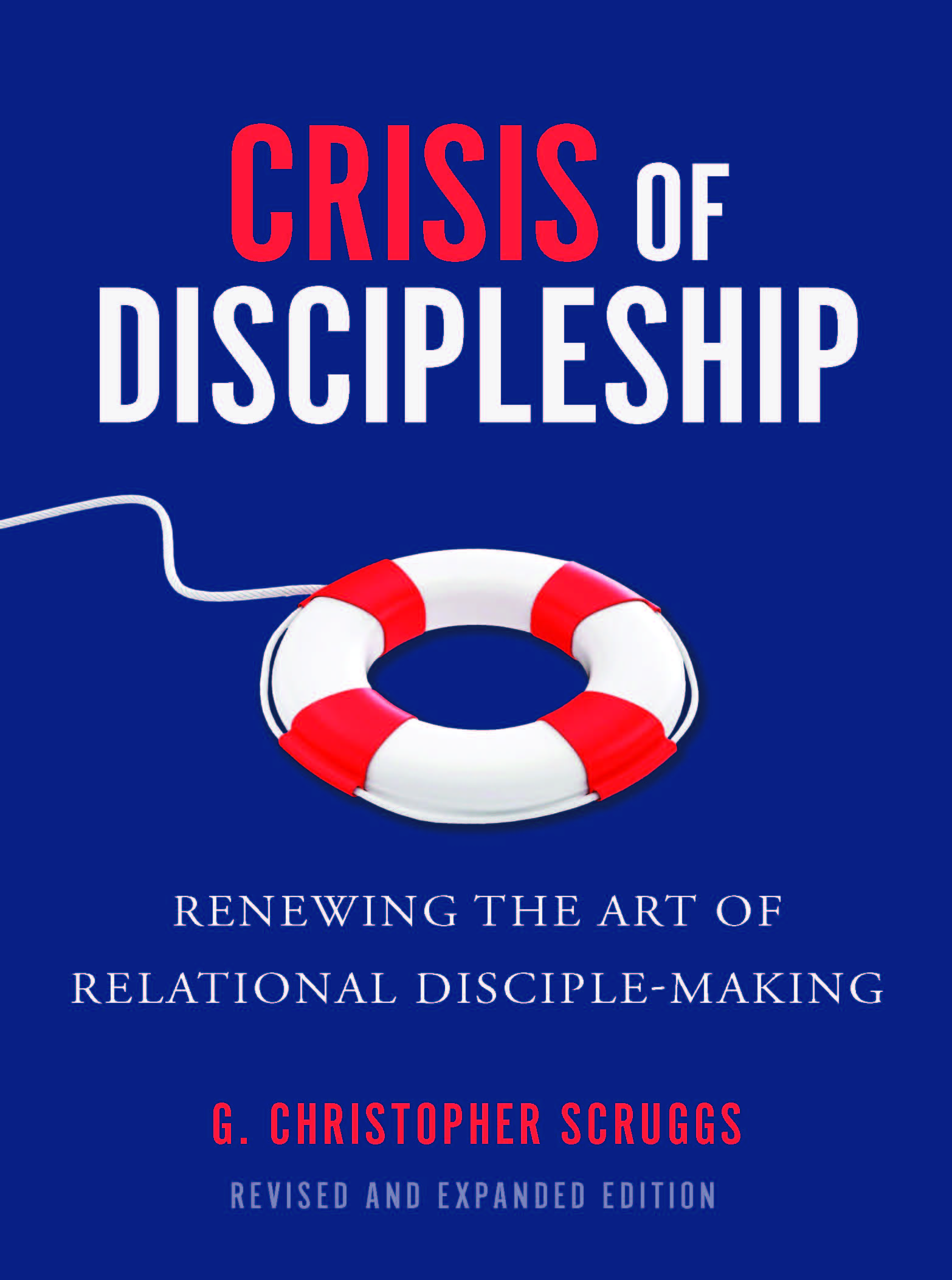
[3] G. Christopher Scruggs, Crisis of Discipleship: Renewing the Art of Relational Disciplemaking, Revised and Expanded Edition (Richmond, VA: Living Dialog, 2023), 49. This section of the blog is excerpted from the book, which can be obtained from Living Dialog Ministries.

[4] Fyodor Dostoevsky, The Brothers Karamazov, found at https://homepages.bluffton.edu/~bergerd/classes/las400/handouts/karamazov/book6chapter03c.html, and https://dostodec.wordpress.com/2016/12/18/some-of-my-favorite-zosima-quotes/ (Downloaded October 2, 2025). Volf’s lectures, Gifford Lectures 2025 Lecture 4: Dostoevsky and Genesis on Unconditional Love for the World, can be found at https://www.youtube.com/watch?v=-Pd9FsK7uf8. I recommend all his lectures.

[5] Pete Scazzero, Emotionally Healthy Discipleship: Moving from Shallow Christianity to Deep Transformation (Grand Rapids, MI: Zondervan, 2021), 134-5.

[6] Id, at 146-7.