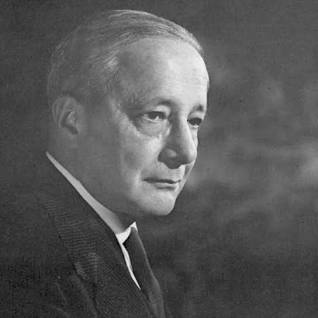
Moving Towards a Post-Nihilistic Polity and Avoiding Moral Inversion

This week, I am going to begin a four-week look at Michael Polanyi’s notion of “moral inversion,” which is a concept that I believe is important to fully understand to help Western culture, and indeed world culture, escape from current problems. In his Gifford Lectures, published as Personal Knowledge: Towards a Post-Critical PhilosophyMichael Polanyi gave his fullest philosophical defense of a free and moral society. [1] He begins by noting that any human undertaking, and most importantly the creation and maintenance of a free society, requires a community that respects the values of that society and acknowledges the personal obligation of its members to maintain and extend those values into the future. The love of freedom requires a society that fosters the character and determination to maintain and extend that society’s freedom as a cultural obligation.[2]

Polanyi discusses his theory of social interaction and the problem of moral inversion in a chapter entitled “Conviviality.” [3]The word “conviviality” derives from a Latin root (con+ vivere), meaning “to live with others.” More interestingly, the English term is derived from the French term “convivialis,” meaning “pertaining to a feast or celebration.” One hopes that a post-Nietzschean, post-nihilistic society might return to a social vision of human flourishing as a feast.[4]

Humans as Social Creatures

Humans are naturally social creatures, and as a result, they are inherently connected through various responsibilities to their family, friends, colleagues, and the wider community. These bonds help us support and collaborate with one another, enriching our lives and strengthening our sense of belonging. Polanyi points out that this human propensity toward social interaction is not limited to humans; it exists in other creatures; however, it is most highly developed in humans and in the vast array of social institutions they have created and can create.[5]

These social systems are established and maintained largely through human language and the capacity of human beings to develop political philosophies, constitutions, legal systems, bureaucratic systems, and other incidents of a complicated social structure. These articulated systems, whether scientific or legal, demonstrate the capacity of human beings to create systems of understanding that support human flourishing. Human beings, instinctively and often tacitly, or capable of extending the conditions of human flourishing, as a kind of social beauty, as well as creating systems of oppression.[6]

In political systems, the constitutions and laws that form them are largely composed of written documents, such as the constitution adopted by the founders, the positive laws enacted by the legislature, and the many opinions issued by the judiciary as it seeks to resolve conflicts arising under those laws. No one can understand or participate in such a system without some form of education that enables them to become part of the community. In a political community, such as the United States of America, there are varying degrees to which someone becomes part of the community.

The basics of our system of government should be known by everyone; however, to become a practitioner of the art of being part of society, a person must undertake an apprenticeship through which they learn the community’s basic values and the details of its articulation in human language. To do this, before any important formation can take place, the learner must believe in the tradition’s core values. Polanyi’s favorite appropriation of Saint Augustine, “one must believe before one knows.” [7]

Trusting the tradition of which one is becoming a part does not eliminate the personal nature of the knowledge to be gained, nor does it deprive the one entering a period of apprenticeship in a tradition of their own powers of questioning and doubt. Since one of the primary principles of Polanyi’s system is the principle of fallibility (the idea that whatever my opinions are might be wrong, and therefore I must hold them with a willingness to change my mind), it is part of a free tradition that one joins by personal choice.[8] This requires the virtue of holding ones opinions with a degree of humility and recognition of human limits.

It is impossible to overemphasize the role of conviviality or fellowship in the creation of any society. [9] For example, although the founders of quantum physics disagreed on many matters, they met regularly, discussed them in depth, and respected one another, even during disagreement. There was a degree of conviviality, even among those who consider themselves intellectual opponents. One important indication of the problem with American political culture is precisely this lack of conviviality among those in high positions with great influence who disagree on the specifics of policy. No communal search for freedom can endure a situation in which the participants have lost the ability to communicate and to fellowship with one another.

From Foundations to Institutions

It is impossible to overestimate the importance of the basic point: Free societies sit upon a foundation of common values, interpersonal relationships, and trust in a common endeavor, in the case of a free society, the gradual improvement of society through agreement and common action. The structure of the process of institutional evolution looks like this for Polanyi:

  1. Shared common convictions
  2. Shared social interaction and fellowship
  3. Cooperation towards common goals
  4. Structures of authority and social coercion.[10]

It is important to note the order: authority and coercive structures, such as law and police, are not primary; they are not first but last. This is crucial to understanding what is wrong with totalitarian regimes, whether soft (relying on bureaucratic and social coercion) or hard (relying on brute force). In a free society where human beings can flourish, shared convictions, social interaction, and cooperation are more fundamental than any coercive structure and rest on the legitimacy conferred by the group’s shared values, community, and action. Structures of authority and the exercise of power should be developed to protect the common convictions, fellowship, and free common action of the society.[11]

Dangers to Modern Societies

Prior to the Enlightenment, throughout most of human history, it was taken for granted that all societies had to have a hierarchical structure of some kind. These hierarchical structures either modified themselves gradually (and were renewed) or were changed by certain cataclysmic events, such as the defeat of the Persian empire by Alexander, the great. With the advent of the modern world, the conviction spread that societies could be improved indefinitely by the exertion of the political will of the people, and that the people should therefore be sovereign, both in theory and in fact. This, in turn, led to the potential for what might be called democratic totalitarianism, or what Marx called the “Will of the Proletariat.” The founders of the United States were well aware of this danger, which is why they attempted to create a system of checks and balances. While the people would have the final say in their government, the Constitution incorporated various safeguards against the abuse of that freedom. Modern totalitarian governments are a return to a pre-Enlightenment static society in which the government can comprehensively impose its will on a society and its members. This is the essence of totalitarianism.[12]

The Moral Foundation of Free Societies

As the foregoing makes plain, Polanyi understood that society and social institutions rest upon a foundation of morality that is deeper than the external features of the social system or society. Morality, custom, and law all perform important functions within any society. Moral judgments are individual actions that involve the whole person and influence every facet of society. [13]Unfortunately, in a critical aid, such as ours, the capacity of morality to sustain itself as a stable course of society Is always precarious.[14]

Using science as an example, Paul argues that the key to maintaining moral values and other cultural norms in a free society lies in the self-organization of people working together on a common task, such as scientific discovery. He also emphasizes the importance of freely adopting standards, under expert leadership, to help the group achieve its shared goals.[15] As in science, there must be enforceable standards (which may change over time), but those standards are maintained not so much by force as by consensus.[16] In fact, I would argue that where force is required, there has been an unwillingness or inability to maintain a rational consensus within the group.

In a free society, civic culture works much like a friendly neighborhood where everyone gradually agrees on shared values. Over time, civic authorities earn the right to uphold these community standards, owing to the collective effort of people who are passionate about understanding what is right—especially those involved in philosophy, religion, and related fields. Constitutions and laws are built on this delicate moral agreement, which needs constant nurturing and care through ongoing reforms. Naturally, such a process involves healthy discussions, debates, and thoughtful decisions to keep everything moving forward positively.

If a fundamental degree of social consensus cannot be reached or honored, the society is in a state of latent civil war. In such situations, the government may resort to coercion under the influence of a dominant group. However, the society itself has lost cohesion and the capacity to make progress, and is in decline.[17] It is almost impossible to deny that this is precisely the situation in which Western democracies, including the United States, find themselves. They have failed to maintain and build that social consensus upon which all free nations rely for their legitimacy and stability.

In the next installment, I will examine both the inevitability of power and coercion, even in free societies, and the dangers posed by resorting to power and its glorification to sustain a free society. When power and its exercise are used to warp the free exercise of individuals’ moral capacities and to force obedience to a fragile or nonexistent consensus, power has been abused, often in the name of “the Will of the People,” God, or national values. Any society that allows this is on the road to totalitarian government.

Copyright 2026, G. Christopher Scruggs, All Rights Reserved

[1] Personal Knowledge: Towards a Post-Critical Philosophy (Chicago, IL: University of Chicago Press, 1962, 1974).

[2] Id, 203.

[3] Id, Chapter 7.

[4] There is here a connection with a prior series of blogs on the morality of beauty, especially in Orthodox thinking. The vision of human society as a kind of feast of human flourishing is a vision of a society that is beautiful, and beautiful to live in where human beings can achieve their full potential. See my prior reviews of Timothy Patisis, The Ethics of Beauty (Maryville, MO: St. Nicholas Press, 2020).

[5] Id, 209.

[6] Id, 204.

[7] Id, 208.

[8] Id.

[9] Id.

[10] Id, 212.

[11] Id, 213.

[12] Id, 213-4.

[13] Id, 214-5.

[14] Id, at 216.

[15] Id, at 217.

[16] Id, at 218.

[17] Id, at 223.

The Heart Attitude of the Wise

Most of us can remember a time when we felt our parents, pastors, and teachers were hopelessly behind the times. One of our children, at the ripe old age of fourteen, announced to us: “Your job is done. I am raised now. I can take care of myself.” Many of us never said that to our parents, but we harbored the same prideful belief that we had reached the point where we knew pretty much all our parents and elders had to teach us. I happened to be such a person. Most human beings reach a point in life when they temporarily lose the habit of trusting God for the answers to life’s questions—and a number of us never develop the habit.[1]

The Awesome Respect God Deserves

Most versions translate the motto of Proverbs as “The fear of the Lord is the beginning of wisdom…” (Proverbs 1:7, NIV [emphasis added]). Right away, contemporary people have a problem with this statement. The idea that we should be motivated by “fear” is not congenial to our way of thinking. We have the notion that a person ought to be motivated by love or admiration. It is, therefore, important for contemporary people to understand why and in what sense wisdom writers spoke as they did and the nature of the “fear” we ought to have for God.

In the ancient world, rulers were to be feared and respected. God, as the ultimate and supreme ruler of the entire universe, was to be feared and respected above all persons and powers (Colossians 6:10-12). To the ancient Jews, the Lord God of Israel was not just another god among many. The God of Israel was the supreme creator and ruler of all. The Lord God Almighty was not just a god but the only, all-powerful God. Jehovah God was not just a powerful force in the world but the most powerful and important force in the world. God was to be feared and respected—even worshiped—above anything or anyone else.

In the modern, democratic West, people do not consider “fear” an appropriate word to describe citizens’ relationship with their government. This is one reason I substituted the word “respect” in the paraphrase of Proverbs 1:7 at the beginning of this chapter. Unfortunately, “respect” does not fully capture the quality of our relationship with God, even for modern people. There is more to our relationship with God than simply “respecting” him for his status as the creator of the world. We respect the President for his status as the leader of our country. Elections, however, give citizens some degree of control over elected leaders. God, on the other hand, remains the uncontrollable source of all that is and will ever be, immeasurably beyond our control or direction. Therefore, the respect we must have for God is infinitely greater than the respect we have for people, however important.

The respect we owe to God is a deep reverence for Someone infinitely wiser and more powerful than ourselves. I remember when I was young, I once accidentally put my finger in a wall outlet. That experience taught me to respect the incredible power of electricity. Honestly, I still feel a bit wary of electricity today. Whenever I need to do some home repairs involving electrical work, I am extra cautious—I certainly don’t want to get shocked again. Friends who have watched a space shuttle launch describe the incredible amount of power needed for lift-off. Even from miles away, you can feel the ground shake from the force. The energy that propels a space shuttle is comparable to many large bombs, and if mishandled, it could cause serious damage. That’s why it’s so important to always respect such power.

Years ago, while working on a “tie gang” near Black Rock, Arkansas, I looked up and saw a freight train bearing down upon our small group of workers. Because of unusual circumstances, our foreman had not given the normal warning to get off the tracks. Faced with the oncoming power of that locomotive, all members of that tie gang finished what we were doing and ran to get safely off those tracks. The sheer energy and power of the train compelled us to work better and faster than we normally would have. We respected the power of that train. In a similar way, we should respect the silent, patient, loving, but uncompromising love of God.

The path of wisdom begins with respecting the One who is the ultimate power behind all the powers in and of the created universe. Christians confess that we believe in “God the Father Almighty, the Creator of the Heavens and the Earth.” The word “Almighty” makes clear that, when we deal with God, we are dealing with One who is the ultimate source of power, including the power of wise living. Thus, the source and ground of all human wisdom lies beyond human wisdom—even beyond created reality. It is a power we cannot control. We can only respect it and live in awareness of its reality. The source and ground of wisdom is the Deep Light of the uncreated wisdom of an all-wise, all-loving, and all-powerful God.

Once we have a proper respect for God, something wonderful happens: we have a sense of our own limited understanding and power. We become humble and, in humility, we become teachable. This attitude is important in any kind of learning. To learn, we must respect our teachers, those who went before us in the field we are studying, the subject matter itself, and the reality it is intended to illuminate. To learn anything, we must understand that we do not know everything we need to know. Without a humble respect for teachers, for a tradition, and for a reality outside us, it is impossible to learn anything.

Wisdom literature teaches that the “Fear of the Lord is instruction in wisdom; and humility comes before honor” (Proverbs 15:33, ESV). These two great qualities, respect for God and personal humility, are closely related and necessary for a wise life. Without a sense of our own finite, limited understanding, we cannot have the kind of humility that believes hopes and loves under the guidance of a loving God. Without a sense of the infinite wisdom and power of God, we will not trust and properly respect the source of wise living.

Respecting the Divine Lover

This brings us to a specifically Christian understanding of what it means to respect and reverence God. In the First Letter of John, we read the following:

God is love, and whoever abides in love abides in God, and God abides in him.  By this is love perfected with us, so that we may have confidence for the day of judgment, because as he is so also are we in this world. There is no fear in love, but perfect love casts out fear. For fear has to do with punishment, and whoever fears has not been perfected in love (I John 4:16-18, ESV).

A Christian fear of God is a loving response of respect towards one who first loved us, who draws us into his community of love, who gave himself for us, and who now dwells within in love.

God is not a Cosmic Despot. God is the Divine Father who loves us enough to take on our humanity, suffer our human limitations, and die for our pervasive foolishness, error, and sin in order to heal our separation from the source of Divine Wisdom. Our relationship with God should not be characterized by fearful obedience, but by a loving response to God’s self-giving love. Thus, the “fear” of which wisdom literature speaks is actually a loving, reverent, respectful response to our Divine Parent who loves us and wishes us the best in life.

The wisdom imparted by God the Father is the source of both a natural and supernatural kind of living. It is natural in that it connects us with the world as God created it and human beings as they are. It is supernatural in that it is not finally grounded in the created order or in our own wisdom or experience. This wisdom is the wisdom of the creator God, the ground and source of all human existence.

This is why “the fear of the Lord” is the beginning of wisdom. Without respect for God and trust in his faithful and orderly creation of the world and of human life, we have not taken the first step—a step that puts us into a proper relationship with the personal God who created and sustains all things by his wisdom, love, and power and who loves his creation, including the human race in general and us in particular.

Once we have deep respect for God, we develop an appropriate self-confidence based upon a relationship with God. A relationship with God is a fountain of life and a source of wisdom for our lives (Prov. 14:26-27). The wise person humbly seeks a Godly wisdom that is “pure, then peace-loving, considerate, submissive, full of mercy and good fruit, impartial and sincere” (James 3:17, NIV). Such a person reacts wisely and without pride to the problems of life. Developing awe and respect for God does not result fearful, dependent lives. A life-giving relationship with God and others results in humble self-confidence. This kind of wisdom can only be gained in a personal relationship with the one who is the source of all wisdom.

The Unimaginable Wisdom God Reveals

This reverent respect for God, the One Who Is and Will Be, is the beginning place of our search for wisdom. Christians do not believe that we can be content with simple shrewdness in order to live wisely and well. The Deepest Wisdom, what I have elsewhere called “Deep Light,” is the uncreated wisdom of God. [2] This wisdom is reflected in the material order of the universe and the moral order of the world we human beings inhabit. However, as wonderful as practical and scientific understanding may be, as magnificent as the meditations of the great moral thinkers of the past may be, they point toward one who is the inexhaustible source and ground of wisdom and understanding. God’s wisdom is the deepest wisdom of all.

We cannot come to the end of God’s infinite wisdom. Throughout the Old Testament, God teaches his people that his wisdom is ultimately beyond human understanding. By the time of Isaiah, the prophets understood that the full nature of divine wisdom was beyond human understanding.  God speaks through Isaiah saying,

“For my thoughts are not your thoughts, neither are your ways my ways,” declares the LORD. “As the heavens are higher than the earth, so are my ways higher than your ways and my thoughts than your thoughts” (Isaiah 55:8-9, NIV).

It was the conviction of the Jews that, while human wisdom reflects God’s wisdom, God’s wisdom infinitely transcends human wisdom. The rationality of the universe and its moral and aesthetic character reflect and point to a greater wisdom by which and through which the world was created.

For Christians, the secret wisdom of God is immeasurably greater than any human wisdom. Paul, when he writes of the revelation of Christ to the early church, puts it this way:

Where is the one who is wise? Where is the scribe? Where is the debater of this age? Has not God made foolish the wisdom of the world? For since, in the wisdom of God, the world did not know God through wisdom, God decided, through the foolishness of our proclamation, to save those who believe. For Jews demand signs and Greeks desire wisdom, but we proclaim Christ crucified, a stumbling-block to Jews and foolishness to Gentiles, but to those who are the called, both Jews and Greeks, Christ the power of God and the wisdom of God. For God’s foolishness is wiser than human wisdom, and God’s weakness is stronger than human strength (I Corinthians 1:20-25, NRSV).

Paul perceives that in Christ the God of Israel revealed a surprising hidden wisdom that forms the basis of God’s being, love, and power. This power is a wise love that works in self-giving sacrifice and weakness, even to the point of dying on a Cross. This is a “secret” or hidden wisdom that humans can only receive by revelation. After all, who would expect that the heart of the all-powerful God of Abraham, Isaac, and Jacob is unlimited, self-giving, self-sacrificial love? Without the cross no one would ever have guessed at the full and deepest nature of God’s wisdom.

The Wisdom of Common Grace Revealed to Faith       

Despite the limits of human wisdom, human reflection on life and its problems reveals an orderly universe and a common human situation to which men and women may conform as they live and work in the everyday world. This human aspect of wisdom is not to be despised or undervalued. In fact, human understanding and wisdom are the most valuable things one can acquire in this world. Thus Proverbs teaches,

Get wisdom, get understanding; do not forget my words or swerve from them. Do not forsake wisdom, and she will protect you; love her, and she will watch over you. Wisdom is supreme; therefore get wisdom. Though it cost all you have, get understanding (Prov. 4:5-7, NIV).

Once we have humbled ourselves before the Creator and the creation and respect our human limits, our minds and hearts are freed to receive a kind of wisdom that will prosper us all the days of our earthly existence. Next to the wisdom revealed in Christ, this wisdom is the most valuable possession we can obtain.

This “wisdom for life” is the practical, earthly expression of the uncreated wisdom of God. It is characterized by an understanding of people, of the world and of day-to-day situations human beings face. This wisdom is bred of experience and observation. It is the product not only of personal reflection but embodies the reflections on life of countless, nameless generations of human beings from the beginning of human history. As part of the created order, it is available to anyone. [3] The common nature of wisdom should not blind believers to its basis in the uncreated wisdom of God.

The Virtue of Respectful Teachability

In order to receive and benefit from any kind of wisdom, we must be teachable. We must understand our human personal limitations, not think too highly of ourselves, and respect God and others. We think and act from the perspective that the created world has lessons to teach. We understand that human life, though externally different from the life of our forbearers, is lived by fallible human beings and governed by the same moral and practical laws applicable to former generations.

In submitting ourselves to God and to the witness of prior generations, we put ourselves in a position to become wise and avoid mistakes that have haunted human life throughout history. This is a hard attitude for contemporary people to adopt. We are accustomed to thinking that all new ideas involve progress. We are inclined to think of the modern world as having escaped the superstition of the past. We are likely to think in terms of our individual ideas, hopes, and dreams. We find it difficult to accept the notion that the past and our forbearers have important lessons to teach us—lessons that we ignore to our peril.

Habits of the Heart

The lessons of wisdom are not fully learned until they are made a part of our heart and mind. Years ago, the sociologist Robert Bellah and his colleagues wrote an influential book called, Habits of the Heart. [4] The book was about the need to recover community and communitarian values in our society. The title speaks volumes about the deepest unmet need of our culture. We are inclined to believe that what we know is most important, as if mere knowledge is sufficient to change behavior. It is not. What we need is a change of heart.

In the Bible the “Heart” is not just a pump that powers the circulatory system. It is the seat of our mind and emotions. The heart is where what we know, desire and will meet in the unity of a person. It is the center of our personality which powerful guides who we are, who we become, the decisions we make, and the instincts we follow. The change of heart we need is a change induced by a changed relationship with God, with other people, and with God’s creation.

Relational knowing and relational changes take time. Changes of heart normally do not occur in an instant, and when they do, there is often a long period of time before that change of heart is reflected in behavior. In fact, the deepest changes of our personality require both a change of mind and a change of behavior. This change of behavior finally results in a deep change in our personality.

One of the biggest changes our culture needs is from a kind of untrammeled individualism to a deep sense of belonging to and being in communion with a spiritual, natural and moral order created by God and a community formed in congruence with order. Both the order of the world and the order of society are older, bigger, and wiser than we are. Humility and teachability are two of the most important qualities we can develop as human beings. It is a first step—and a big step—toward happiness and success in life.

Copyright 2025, G. Christopher Scruggs, All Rights Reserved

[1] This blog is based on a chapter from G. Christopher Scruggs, Path of Life: The Way of Wisdom for Christ-Followers (Eugene, OR: Wipf & Stock, 2014), 36-46.

[2] G. Christopher Scruggs, Centered Living/Centered Leading: the Way of Light and Love (Memphis, TN: Permisio Por Favor, 2010).

[3] Theologians distinguish between “common” and “natural” grace, the loving provision that God gives to everyone and “supernatural or saving grace,” the special grace by which we know the true God and understand his provision for us in Christ. See, Emile Brunner, The Christian Doctrine of God, previously cited, 89ff.

[4] Robert Bellah, Richard Madsen,William M. Sullivan, Ann Swidler, and Steven M. Tipton, Habits of the Heart (Berkeley, CA: University of California Press, 1986).

Nine Men 2: From the Civil War Era to Brown v. Board of Education

This week, I continue with Fred Rodell’s, Nine Men: A Political History of the Supreme Court of the United States from 1790 to 1955. One of Rodell’s strongest points involves his assertion that the period between the end of the Civil War and the beginning of the First World War is probably the most neglected in U.S. Constitutional history. [1] The Court emerged from the Civil War a much-damaged institution. It took a long time for it to recover from the disaster of its decision in Dred Scott and the inevitable adjustments to a post-Civil War era, in which the Reconstructionist Congress claimed ascendancy over both the Presidency and the Court.

The Civil Rights Cases

There can be no doubt that the most significant outcomes of the Civil War were the Emancipation Proclamation and the 13th, 14th, and 15th Amendments to the Constitution. Of these three amendments, the 14th Amendment has generated the most litigation and Supreme Court decisions.[2] Superficially, one would think that interpreting the 14th Amendment would be pretty straightforward.

On April 9, 1868, three years after the War’s end and Lincoln’s death, the Fourteenth Amendment was ratified by the requisite number of states. Section 1 of this Amendment provides as follows:

All persons born or naturalized in the United States, and subject to the jurisdiction thereof, are citizens of the United States and of the state wherein they reside. No state shall make or enforce any law which shall abridge the privileges or immunities of citizens of the United States; nor shall any state deprive any person of life, liberty, or property, without due process of law; nor deny to any person within its jurisdiction the equal protection of the laws. [3]

Superficially, the 14th Amendment seems to have a simple goal: to prevent the states from interfering with the rights to life, liberty, or property of former slaves. However, its effects went further. Congressman John Bingham of Ohio, the principal author of the first part of the 14th Amendment, sought to nationalize the Bill of Rights by making it binding on the states. When introducing the amendment, Senator Jacob Howard of Michigan clearly stated that the privileges and immunities clause would extend to the states “the personal rights guaranteed and secured by the first eight amendments.”

There is some debate over whether Congress, when passing the amendment, or the various states, when ratifying it, understood the law’s broader implications. For many years, the Supreme Court ruled that the amendment did not extend the Bill of Rights to the states.[4] Rodell sees in the adoption of the amendment the seeds of later misinterpretation, for he believes that property owners wanted to ensure that their property rights were not interfered with by State or National governments. This was the root of future problems and Constitutional errors by the Court.[5]

The Civil Rights Cases

Wars leave populations physically, mentally, morally, and emotionally drained. The Civil War was no exception. By 1865, the North achieved a significant victory. They had built a formidable army. But that army was mainly made up of civilian volunteers eager to return home to their families. The country lacked the stomach for a protracted guerrilla war, which many feared might erupt. Many of those who wanted to free the slaves did not necessarily want to make the former slaves equal, nor did they want to face the social pressures of a prolonged occupation of the South. The result was a brief period of radical Reconstruction followed by one of accommodation.

Following the Civil War, Congress enacted the Civil Rights Act of 1866. The law declared that citizens of all races or colors, regardless of their history of slavery or involuntary servitude, would have the same rights as any other American to make contracts, inherit property, sell, and transfer real estate, and enjoy equal protection under the law for their safety, just like white citizens.

President Andrew Johnson vetoed that law, which prompted Congress to pass the 14th Amendment. One purpose of the 14th Amendment was to explicitly state that former slaves were citizens with the same rights as all other citizens. These rights and protections had been outlined years earlier in a significant decision by Justice Bushrod Washington sitting as a Circuit Judge.

We feel no hesitation in confining these expressions to those privileges and immunities which are, in their nature, fundamental; which belong, of right, to the citizens of all free governments; and which have, at all times, been enjoyed by the citizens of the several states which compose this Union, from the time of their becoming free, independent, and sovereign. What these fundamental principles are, it would perhaps be more tedious than difficult to enumerate. They may, however, be all comprehended under the following general heads: Protection by the government; the enjoyment of life and liberty, with the right to acquire and possess property of every kind, and to pursue and obtain happiness and safety; subject nevertheless to such restraints as the government may justly prescribe for the general good of the whole. The right of a citizen of one state to pass through, or to reside in any other state, for purposes of trade, agriculture, professional pursuits, or otherwise; to claim the benefit of the writ of habeas corpus; to institute and maintain actions of any kind in the courts of the state; . . . and an exemption from higher taxes or impositions than are paid by the other citizens of the state; . . . the elective franchise, as regulated and established by the laws or constitution of the state in which it is to be exercised. These, and many others which might be mentioned, are, strictly speaking, privileges and immunities.[6]

Substantive Due Process

The nation grew rapidly after the Civil War. At the outset, the nation was primarily agrarian, but the war spurred rapid industrialization that continued for the remainder of the 19th and well into the 20th century. At the time the 14th Amendment was passed, industrial interests sought to ensure that the record included testimony that corporations had civil rights. Eventually, as states enacted legislation to restrict corporate activities, industrial companies challenged the states’ right to regulate on the basis that such regulation deprived them of property without due process of law. The notion that certain property regulations deprived owners of due process was the original form of substantive due process, which has been viewed differently in the 20th and 21st centuries.[7]

Many justices from the 19th and early 20th centuries were lawyers heavily involved in representing railroads and their associated industries. Justice Miller, who disagreed with some of the court’s substantive due process actions, believed it was almost impossible to shift the perspectives of judges who entered the bench with set beliefs. These views were often formed through their legal work for the railroads.[8]

Ultimately, the development of substantive due process to safeguard property interests has been a complex and often controversial journey. I personally believe that many of the innovations from the 20th Century, where substantive due process was used to prevent regulations on activities that many states managed and that some citizens felt uncomfortable with, have also faced difficulties and disagreements.

The problem of judges arriving at court with “fixed opinions” has become even more serious as the professional and moral consensus that often transcends ideological disagreements has eroded. When law is only about who has power and who wins, justice is never served. Increasingly, we see the negative impact of judges whose ideological commitments blind them to deeper issues. This is one reason these blogs often emphasize the need for a transcendent commitment to justice.

Oliver Wendell Holmes

I’ve shared insights on Oliver Wendell Holmes’s life and philosophy before, but I can’t pass up the chance to highlight his significant influence on the Court, especially when it comes to due process and some parts of freedom of speech. Holmes was, in many ways, a kind of social Darwinist. His time in the Civil War shaped him into a resilient and tough individual. His sharp mind was evident in his clear, focused thinking and logical approach.

Nevertheless, he consistently argues against restrictions on the power of the state or federal government to regulate commerce under either the 5th or the 14th Amendment Due Process clauses. In one case, he spoke eloquently about the problem:

“If an act is within the powers specifically conferred upon Congress, it seems to me that it is not made any less constitutional because of the indirect effects that it may have…. Congress is given the power to regulate interstate commerce in unqualified terms…[9]

It took time, and a great deal of political conflict, but by the end of the New Deal, the Court had ceased attempting to limit either state legislatures or Congress from regulating commerce for the public good. Today, many scholars believe that the situation has evolved beyond the framers’ original intentions, as Congress sometimes encroaches on areas that were once primarily the states’ domain.

In Patterson v. Colorado, a newspaper editor was convicted of contempt after printing articles and cartoons depicting members of the Colorado Supreme Court in a derogatory manner. [10] Writing for the majority, Holmes once again wrote that no First Amendment issues were at issue because the amendment limited only the actions of the national government. [11] Then, in Fox v. Washington, Holmes rejected Jay Fox’s claim that his First Amendment rights had been infringed upon in his misdemeanor conviction for printing an article, “The Nude and the Prudes,” in praise of nudity.[12]At that point, it seemed the Holmes “Hands off” judicial philosophy applied not just to property but also to other rights.

World War I gave rise to numerous significant legal cases in which the government sought to hold individuals accountable for seditious activities. In the case of Schenck v. United States, Holmes provided the majority opinion that supported the conviction of Charles Schenck, a socialist, who was charged under the Espionage Act of 1917 for trying to dissuade draftees from responding to their draft notices. [13] In Schenck, Holmes acknowledged that, in some instances, speech might be limited—particularly when it interferes with the government’s ability to assemble troops. He introduced the idea of the “clear and present danger test,” which helps decide when speech is not protected under the First Amendment. According to Holmes, such decisions should depend on whether the words used create an immediate and serious risk of harm that Congress has the right to prevent. These risks could include plots to overthrow the government, inciting riots, or causing harm to lives and property.

Then, in Abrams v. United States, Holmes broke with the majority and dissented when the Court upheld the convictions of five petitioners also charged under the Espionage Act of 1917. [14] In his dissent, Holmes stated that the principle of free speech remained the same during wartime as in peacetime; he reiterated his belief that congressional restraints on speech were permissible only when speech posed a “present danger of immediate evil or an intent to bring it about.” Holmes had begun to see the limits the Constitution might place on what Congress and administrations might do to restrict freedom of speech.

Finally, in 1927, the Court revisited sedition in Whitney v. California, a case that challenged California’s criminal anti-syndicalism law. The Court upheld the law and recognized that Charlotte Whitney, as a member of a Communist organization, was in a position to attempt to carry out seditious activities, not merely discuss them. Holmes agreed with Brandeis’s concurring opinion, often praised as a beautiful defense of free speech. He pointed out that the First Amendment didn’t protect Communist conspiracies because those involved had both the intention and the means to attempt to overthrow the government.[15] Whitney remains of continuing interest, as it suggests that groups intending to overthrow the government of the United States, or those funded by foreign nations or their designees, may not have unlimited First Amendment Rights.

Conclusion

This is where I’m ending my discussion of Nine Men. The book continues with Brown v. Board of Education, which I have previously covered in these blogs. Its discussion of the Depression years is strong and offers a clear explanation of Roosevelt’s court-packing plan and Charles Evans Hughes’s prudent conduct during that period. The book is sufficient for this discussion. I’ll revisit the First Amendment before I wrap up this series of blogs, as it reignited my passion for constitutional law. Next week, I’ll share an early case that highlights the impact of judicial overreach.

Ultimately, histories of the Supreme Court reveal that it has sometimes made serious mistakes. It has often been quick to cater to powerful special interests and overly supportive of existing factions, which can overshadow its duty to protect citizens’ rights. Additionally, as a product of the Enlightenment, the Court has sometimes lacked the humility needed to genuinely question its own beliefs and those of others.

Copyright 2026, G. Christopher Scruggs, All Rights Reserved

[1] Fred Rodell, Nine Men: A Political History of the Supreme Court of the United States from 1790 to 1955 (New York: Random House, 1955), 141.

[2] The Thirteenth Amendment provided that, “Neither slavery nor involuntary servitude, except as a punishment for crime whereof the party shall have been duly convicted, shall exist within the United States, or any place subject to their jurisdiction.” [2] Its impact was to undo the Dred Scott decision granting property rights in slaves and nationalize the freedom granted to slaves by the Emancipation Proclamation. The 15thAmendment to the Constitution was added to the Constitution to clarify the voting rights of former slaves.

[3] Constitution of the United States of America, Amendment XIV (1868).

[4] National Archives, “14th Amendment to the U.S. Constitution: Civil Rights (1868)” https://www.archives.gov/milestone-documents/14th-amendment (downloaded September ).

[5] Nine Men, 149.

[6] Corfield v. Coryell, 6 Fed. Cas. 546 (No. 3, 230) (CCED Pa. 1825). Bushrod Washington was the nephew of George Washington and his executor. He served as a highly regarded Associate Justice of the Supreme Court from 1798 to 1829. The quoted provision is one of the most important judicial statements in American history, which is why I have quoted it here.

[7] Substantive Due Process is the view that that the Due Process Clause of the 14th Amendment not only requires that the government respect fundamental procedural rights, but also protects basic substantive rights, such as the right to own and dispose of property without interference. In the 20th Century, it has been used to protect substantive personal rights, such as the right to procure an abortion. I intend to return to whether corporations should be deemed full persons and whether the late Warren Court and beyond abused the 14th Amendment to make substantive changes in the Constitution.

[8] Nine Men, 148,

[9] Id, 185.

[10] This portion of the blog is based on Elizabeth R. Purdy, “Oliver Wendell Holmes, Jr” at The Free Speech Center of Middle Tennessee State https://firstamendment.mtsu.edu/article/oliver-wendell-holmes-jr/ (downloaded January 6, 2026). See also, Patterson v. Colorado, 205 U.S. 454 (1907).

[11] This is an example of the refusal of the court to declare that the 14th Amendment made the requirements of the Bill of Rights applicable to the states, which was its intent.

[12] Fox v. Washington, 236 U.S. 273 (1915).

[13] Schenck v. United States 249 U.S. 47 (1919).

[14] Abrams v. United States, 250 U.S. 616 (1919).

[15] Whitney v. California 274 U.S. 357 (1927).


Nine Men No. 1: A Great but Flawed Work

For nearly half a century, the copy of Nine Men: A Political History of the Supreme Court of the United States from 1790 to 1955 has been sitting half-read on my bookshelf. [1] I discovered this fact when I began reading it for his blog and realized it had my college underlining and margin notes in portions of the book.) As I started rereading the book, I was struck by two things that influenced my reaction.

The book suffers from excessive bias. Rodell openly admits he’s a political liberal. He does not recognize that this bias could make him unfair to many figures. Rodell judges the justices of the court and their decisions by only one standard: whether that judge or decision reflects his personal commitment to political liberalism, which we sometimes mistakenly call “progressivism.” (Presumably, all judges, liberal or conservative, believe they are trying to help society move forward toward a better future for others.)

The book also suffers from an unacknowledged subtext. Rodell also fails to acknowledge his reliance on the work of Charles Beard, particularly his influential book titled “An Economic Interpretation of the Constitution of the United States” (1913). In his most renowned work, Beard proposed an economic theory of the Constitution, arguing that it primarily reflects the Founding Fathers’ personal economic interests. Throughout his other works, Beard consistently reinforced his belief in the significant influence of financial interests on governmental actions, reflecting the influence of Marx on this thinking.

Rodell saw himself as part of the legal realism school, which believes that laws and judges’ opinions stem from the economic and social interests of those in power, including judges themselves. This perspective suggests that judges don’t just follow abstract rules but also take into account social interests and public policies when they decide cases. For legal realists, laws are shaped by the social conditions and the needs of people at the time. A notable early example of this approach is the Brandeis Brief, which used socioeconomic data and scientific evidence to help make legal decisions.

These commitments sometimes lead Rodell and others to overlook the deep philosophical and moral beliefs that motivate leaders, especially those with whom he disagrees. For example, it’s well known that Madison carefully studied numerous historical works on political philosophy and practice while preparing for the Constitutional Convention. His primary goal was to create the most effective government, guided by the ideas of the leading thinkers of his time. Although his social class and economic interests may have influenced him, they were not the only factors.

Unfortunately, the fundamental problems outlined above weaken Nine Men and diminish its many virtues. Rodell consistently appeals to the class and economic interests of the founders and the judges of the court, almost ignoring the positive philosophical and moral commitments that underpin the work of many judges, even though he disagrees with them. He is often petty and demeaning in his critique of their work. One of my favorite law school professors, and the leading expert of his time on federal procedure, referred to Rodell as the “bad boy” of legal scholarship. His assessment is, sadly, accurate.

Despite its weaknesses, the book remains a classic on constitutional law. Most notably, it is readable and concise. In just over 300 pages, it summarizes the history of the court from its inception to the start of the Warren Court. If readers take away anything from this brief review, I hope it will be a twofold suspicion towards two aspects of what is sometimes called “progressive legal theory”:

  1. Legal reductive nominalism in which words like “justice,” “reasonableness,” and “public interest” are merely names we place on ideas and actions we approve of.
  2. The assumption that liberal political ideas are the only positive response to the problems of modern society needs to be questioned, and most people need to be constantly vigilant in recognizing this in much of the journalism and scholarship.

Powerful, Irresponsible, and Human

Rodell sees the drafting, approval, and interpretation of the Constitution as inherently political, mainly influenced by the self-interest of its founders. Likewise, he views the U.S. Supreme Court as mainly a political instrument, but he doesn’t fully acknowledge its specific role within the constitutional process. He describes the Court as powerful, often irresponsible, and motivated by human emotions. He also tends to minimize or criticize the key ways the Court manages its docket—such as its ability to decline hearing certain cases, avoid cases that aren’t ready for decision, refuse to give advisory opinions, and limit decisions to the specifics of a case.[2]

Throughout all of this, Rodell seems to miss an important point. While the court is a powerful institution, its abilities are bound by Article 3 of the Constitution. Just like any other human institution, it is appointed for life, has protections, and can sometimes act irresponsibly. But the purpose of its powers is to allow it to act responsibly. Looking at history, the court has generally acted responsibly more often than irresponsibly. And at the end of the day, the court is made up of human beings. It’s interesting that this might seem like such an obvious observation. Of course, the court is human. Naturally, many different men and women with diverse political and social perspectives have served on the court. And yes, the court functions as a human institution, providing justice to people. I really don’t think any of that should be seen as problematic. What’s unfortunate is that Rodell tends to go on rants—and quite often, they’re irresponsible ones.

From A Gleam in the Founders’ Eyes: Marbury v Madison

No book on constitutional law is complete without discussing Marbury v. Madison.[3] I’ve sat in more than one classroom studying the case. It’s interesting how often people blithely state that Chief Justice Marshall invented judicial review. As I read the Constitution and the Federalist Papers, it’s clear that most of the founders assumed, to some degree, that the Supreme Court would be able to declare laws unconstitutional. In Federalist 78, Hamilton defends the principle at length. [4]

The interpretation of the laws is the proper and peculiar province of the courts. A constitution is, in fact, and must be regarded by the judges, as a fundamental law. It therefore belongs to them to ascertain its meaning, as well as the meaning of any particular act proceeding from the legislative body. If there should happen to be an irreconcilable variance between the two, that which has the superior obligation and validity ought, of course, to be preferred; or, in other words, the Constitution ought to be preferred to the statute, the intention of the people to the intention of their agents.[5]

Madison, who was perhaps the most important drafter of the Constitution, is a notable example. He clearly understood that the courts would and should have the power of review. In his own contribution to the Federalist Papers, he concludes:

It is true that in controversies relating to the boundary between the two jurisdictions, the tribunal which is ultimately to decide, is to be established under the general Government. But this does not change the principle of the case. The decision is to be impartially made, according to the rules of the Constitution; and all the usual and most effectual precautions are taken to secure this impartiality. Some such tribunal is clearly essential to prevent an appeal to the sword, and a dissolution of the compact; and that it ought to be established under the general, rather than under the local Governments; or to speak more properly, that it could be safely established under the first alone, is a position not likely to be combated.[6]

Although Madison was most interested in the national government’s power to declare state actions unconstitutional, this provision shows that important drafters of the Constitution anticipated judicial review.

Despite claims of judicial innovation, as Marshall puts it in Marbury v Madison, the principles on which courts base their disregard of statutes they find unconstitutional were “long and well established” prior to that case. In his decision, Marshall puts it:

So, if a law be in opposition to the Constitution, if both the law and the Constitution apply to a particular case, so that the Court must either decide that case conformably to the law, disregarding the Constitution, or conformably to the Constitution, disregarding the law, the Court must determine which of these conflicting rules governs the case. This is of the very essence of judicial duty.

If, then, the Courts are to regard the Constitution, and the Constitution is superior to any ordinary act of the Legislature, the Constitution, and not such ordinary act, must govern the case to which they both apply.[7]

He goes on to say:

This doctrine would subvert the very foundation of all written Constitutions. It would declare that an act which, according to the principles and theory of our government, is entirely void, is yet, in practice, completely obligatory. It would declare that, if the Legislature shall do what is expressly forbidden, such act, notwithstanding the express prohibition, is in reality effectual. It would be giving to the Legislature a practical and real omnipotence with the same breath which professes to restrict their powers within narrow limits. It is prescribing limits, and declaring that those limits may be passed at pleasure.[8]

The founders intended for the Supreme Court to have the power of judicial review, and one implication is that the courts could not enforce laws passed by Congress or the states that violate the written Constitution. In other words, such laws would have to be declared unconstitutional.

This directly contradicts Rodell’s claim that the Supreme Court was meant to be a supremely powerful, anti-democratic institution. Quite the opposite, it was the duty of the Supreme Court and lower federal courts to uphold the laws of the land, especially the Constitution. Moreover, this duty would have to be carried out even when the country’s majority opinion was mistaken. The founders trusted that, over time, the best interpretation would win out, either by the Court changing its mind or by the enactment of an Amendment that would clarify the founders’ intent and the public’s desires.

Dred Scott and the Road to War

If John Marshall is to be celebrated as the greatest of our Chief Justices, his successor, Roger Taney, is almost unanimously considered the worst. As Rodell points out, this is unfortunate because it rests on a single terrible decision. If there is any decision that can be said to have divided the country and created serious political instability, Dred Scott v. Sanford is it.[9]

It is hard to understand the Dred Scott decision without understanding the problem it was designed to solve. It is well known that the Constitution acknowledges the existence of slavery. It was necessary to recognize its existence and allow it to continue for the southern states to agree to ratify the Constitution. Privately, many members of the Constitutional Convention, including Washington, Jefferson, and Madison, southerners and slave owners, believed the institution to be evil and that it needed to disappear in time.

Unfortunately, after the adoption of the Constitution, the existence of slavery became a source of national conflict. In the North, where there were few slaves, the entire institution of slavery was seen as unworkable. In the South, many wealthy individuals owned substantial amounts of property and invested heavily in slaves. In the North, a powerful abolitionist movement emerged. In the South, a strong, proslavery movement grew.

Throughout this period, Congress repeatedly sought a solution to the problem. The most significant event related to the Dred Scott decision is the Missouri Compromise of 1820, which admitted new states and drew a line at 36°30′ latitude, prohibiting slavery north of that line. Then, in 1854, Congress passed the Kansas-Nebraska Act, which repealed the Missouri Compromise, organized new territories, and allowed settlers to decide whether these territories would permit slavery or remain free.

Amid this toxic situation, the Dred Scott case came before the court. Dred Scott had been a slave in Missouri. Then, from 1833 to 1843, he lived in Illinois (a free state) and in the Louisiana Territory, where the Missouri Compromise forbade slavery. After returning to Missouri, Scott filed suit in a Missouri court for his freedom, claiming that his residence in free territory made him a free man. After losing in the state court, Scott brought a new suit in federal court. Scott’s master maintained that no “negro” or descendant of slaves could be a citizen in the sense of Article III of the Constitution. Eventually, the case reached the United States Supreme Court.

On March 6, 1857, Chief Justice Roger B. Taney delivered the Court’s opinion, ruling that enslaved people were not citizens of the United States and, therefore, not protected by federal law. This decision alone would have been enough to incite strong feelings in the North. However, the opinion also declared the Missouri Compromise unconstitutional, stripping Congress of the power to set the boundaries of slavery. Additionally, it overturned the Kansas-Nebraska Act, leaving Congress without authority to prohibit slavery in a federal territory.

While it is possible that Chief Justice Tawney and the Court believed they were removing the issue of slavery from the national debate, the result virtually guaranteed the Civil War. The decision clearly held that Congress could not restrict the growth of slavery or create a popular sovereignty that would prevent it from expanding in the northern part of the country, or, frankly, that the institution of slavery could not be profitable.

Dred Scott really shows how the Supreme Court can sometimes create division and challenges to national unity, especially when the idea of a “government of laws, not of men” is at stake. Instead of providing clarity, the decision was “overly broad” and closed off many options lawmakers could have pursued. It’s an example of judicial overreach, which can and does have serious consequences. Dred Scott should remind all courts of the potential harm when they overreach and try to address political issues best left to Congress and the Executive Branch.

Conclusion

Having covered about one-half of Nine Men, next week I will discuss another early case in which the Court overstepped its bounds and harmed the institution. In that particular case, an Amendment to the Constitution was passed to overturn the decision. In the case of Dred Scott, thousands of lives were lost, and the nation was divided, before the decision was overturned. It is a lesson to judges and citizens alike of the dangers of judicial overreach and the politics of deadlock, both which we see today.

Copyright 2026, G. Christopher Scruggs, All Rights Reserved

[1] Fred Rodell, Nine Men: A Political History of the Supreme Court of the United States from 1790 to 1955 (New York: Random House, 1955).

[2] Id, Chapter 1.

[3] Marbury v. Madison 5 US 1, Cranch 137 137 (1803).

[4] Hamilton, Federalist Papers, No. 78.

[5] Id.

[6] Madison, Federalist Papers, No. 39.

[7] Marbury Madison, supra at 178.

[8] Id.

[9] Dred Scott v. Sanford 60 U.S. 393 (1857).