
 From the moment I became a new Christian until today, my favorite Bible verse, perhaps even my life verse, has been, “If anyone is in Christ, they are a new creation. The old has gone; The new has come” (Second Corinthians 517). Unfortunately, there is another Bible verse that is equally important in my spiritual life. This one is not quite so happy. It comes from one of my spiritual heroes, the apostle Paul:
For I do not do the good I want, but the evil I do not want is what I keep on doing. Now, if I do what I do not want, it is no longer I who do it, but sin that dwells within me. So I find it to be a law that when I want to do right, evil is close at hand. For I delight in the law of God in my inner being, but I see another law in my members waging war against the law of my mind and making me captive to the law of sin that dwells in my members. Wretched man that I am! Who will deliver me from this body of death? (Romans 7:19-24).
It seems to me that the Christian life is a movement from the person we are before we accept Christ to the person God calls us to be in the image of Christ. The movement is not without its difficulties. We all live between who we are today, and what we hope to become.
Going beyond Naive Discipleship
There is a naive form of discipleship that assumes we will change simply because we believe certain things to be true. Believing in Christ and that he has died for my sins is the most essential starting point I can have in overcoming harmful, self-destructive, and sinful behaviors. However, it’s not long before we realize that even as Christians, even as we try to live our lives in Christ as members of God’s family, we are not yet the people God intends us to be. It will take a lifetime of effort to reach full spiritual maturity. This moment of self-awareness is crucial for two reasons:
- It motivates us to undertake the hard work of change, and
- It gives us the freedom not to be perfect in the present.
I’ve spent almost my entire Christian life as a teacher, both as a person and an elder in a church, and as a pastor for approximately 30 years. One thing I know for sure is that it’s not enough just to understand the Bible or to know good theology. It’s not unimportant, but discipleship is not a matter of what we believe alone. I often comment in the Bible studies I teach that, “If I could just put into practice all the Bible, I already know, I’d be Mother Theresa.”
My problem is not that I need to know more. My problem is that I need to put what I know into practice. I need to be changed in my mind, my emotions, my spirituality, and in my actions. This is not just a problem for experienced Christians. Almost all of us quickly learn something about what it means to be a Christian, and we must put it into practice in our daily lives. In addition, as Pete Scazzero so clearly points out, we must overcome the emotional blockages that prevent us from being the people we were called to be.
Steps to Spiritual Maturity
 Over and over again in his books, Pete Scazzero highlights the dangers of emotionally immature discipleship. This week, I read the following: “The church was engaged in a thin discipleship that ignored the impact a person’s past has on their ability to follow Jesus in the present.”[1] He also points out that those in Christian leadership cannot possibly lead a congregation into deeper discipleship and transformation unless they have done the hard work of becoming more emotionally mature themselves. If I look back upon the failures of my own ministry, most of them were not caused by other people. They were caused by defects in my own character.
We can’t become spiritually mature until we understand how our past, and particularly our family’s past, has impacted our current personality. When the Bible speaks of the sins of the father being visited upon the children to the third and fourth generation, the word can actually mean “tends to be repeated.”[2]
In other words, there’s a natural tendency for our past to determine our future. This is true for us as individuals, and it is also true of the family systems we are part of. God is not a mean, judgmental, and angry God. But the universe in which we live was created in a certain way. One way it was created is that we are all influenced by the character of our families, our communities, our churches, our nation, and our world. It is only with great difficulty that we escape any negative patterns in any of those relationships we enjoy.
In a completely unrelated context, many years ago, I had the following experience. A church that I was involved in and loved very much went through a church split. During that period, I was able to read the history of that church from its formation to the 1980s. Interestingly, that church had split several times in the 20th century. Something was happening within the family system of that church that made it vulnerable to placing excessive trust in leaders and then, in disappointment, rejecting the community as a whole. The same is true for families. I’ve counseled numerous couples contemplating divorce. It’s interesting how often their parents or grandparents also divorced or suffered unhappy marriages. The fact is, we may want to escape our past, but we can’t always do it. Part of becoming a better disciple of Jesus is learning how to navigate this problem so that we do not simply repeat negative behaviors from the past.
Hard Questions We Must Ask
One of the benefits of Emotionally Healthy Discipleship is the practical questions that it asks us to examine as we look at our past and family systems. Here are a few of the questions:
- How would you describe each member of your family (parents, caretakers, grandparents, siblings, etc. with two or three adjectives?
- How would you describe your parents’ (or caretakers’) and grandparents’ marriages?
- How was conflict handled in your extended family over two or three generations? Anger? Gender roles?
- What were some generational themes in your family (for example, addictions, affairs, losses, abuse, divorce, depression, mental illness, abortions, children born out of wedlock, etc.)?
- How well did your family do in talking about feelings?
- How was sexuality talked or not talked about? What were some of the implied messages?
- Were there any family secrets, such as unwanted pregnancies, incest, or financial scandals?
- What was considered success in your family?
- How was money handled? Spirituality, relationships with extended family, and so on?
- How did your family’s ethnicity, race, and culture shape you? Were there any heroes or heroin in your family? Escape goats, losers? Why?
- What addictions, if any, existed in the family?
- What traumatic losses has your family suffered? For example, sudden death, prolonged illnesses, stillbirth, miscarriage, bankruptcy, or divorce?
- What additional losses or wounds resulting from those traumas have occurred?
These are all questions worth pondering, as they provide clues to how we became the people we are today. Not all of these questions apply to everyone or to the same degree, but they are worth asking.
Questions for the Local Church and Its Leaders
One of the principles of Emotionally Healthy Discipleship is that a leader cannot possibly take a congregation on a spiritual and emotional journey unless that leader has first taken such a journey for themselves. One of the biggest mistakes churches make is relying on a very few individuals who exhibit a kind of spiritual excellence to bear the burden of emotional and spiritual health for an entire congregation. I’ve tried it myself. I’ve preached many sermons highlighting specific individuals throughout history who have exemplified Christian discipleship. Unfortunately, I wasn’t consistently modeling that Christian discipleship myself!
In the end, for a church to grow, its entire family system must change. It must change the way people are treated, leaders are chosen, people are trained for ministry, and a host of other changes in many areas of our lives together. For this to happen, the church’s culture must change. Any leader will tell you that cultural change does not happen quickly or without pain and sacrifice. It is not enough to develop a new long-range plan or a set of values. Individuals and groups must internalize a new way of being in community.
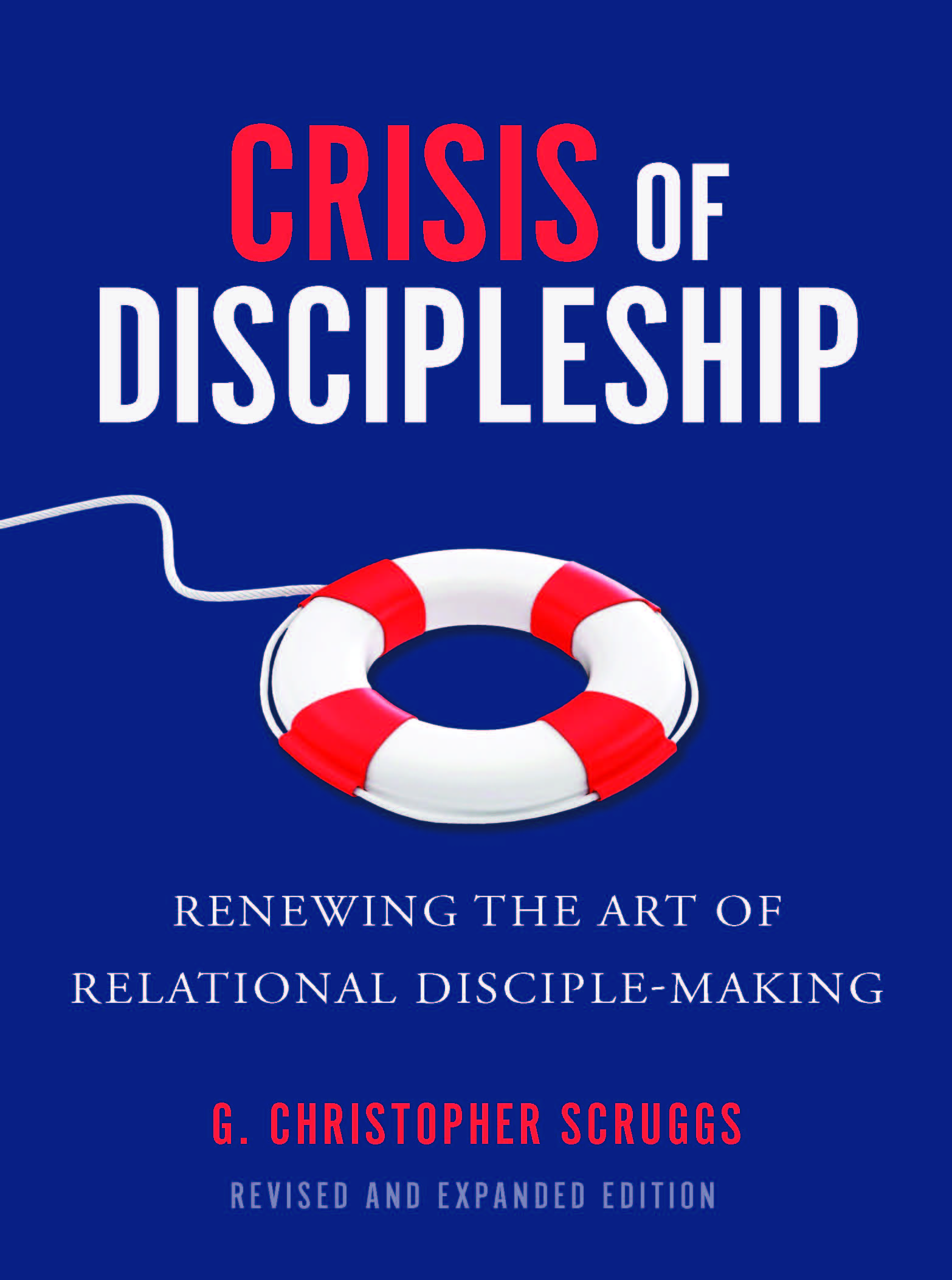 Our American crisis of discipleship is not really a crisis of preaching, or of evangelical techniques, or of programmatic insufficiencies, or even of the technical aspects of church leadership. The fix is not more celebrity preachers holding leadership conferences. I’ve been part of huge and talented churches with extremely capable leaders who made terrible decisions and suffered the consequences. We need the slow, yet essential, task of building mature, sensitive, and emotionally intelligent disciples. Some of these mature, sensitive, emotionally intelligent disciples will become leaders in the church. Not everyone will because not everyone has that spiritual gift. But some will.
On the other hand, if we do not build strong communities of emotionally intelligent disciples, we will not succeed in our own calling to share Christ in our own generation. Techniques cannot solve the current discipleship crisis. It can only be solved by transformed lives—and that begins with transforming the lives of individuals within the local congregation, hopefully led by leaders who themselves have embraced the journey of self-transformation into the image of God.
Scazzero offers a simple yet powerful roadmap for change in his books and seminars. In the end, it comes down to this:
- I must confront myself and why I am the way I am.
- I must take up my own cross and follow Jesus on the road to personal transformation.
- I must accept my past and build on it. (Think of the stories of Abraham, Joseph, David, and others.)
- I must break the power of my past and the past of my organization in every area.[3]
Most of those who read my blogs are leaders of some kind in some kind of organization. On an average week, people from between 10 and 20 nations read my blog. Some are Christians and others are not. All of us have the same problem: We want to be wiser and more loving. At one point, Pete Scazzero recounts attending a conference on raising children and the numerous difficulties families face. What he said is at least true of my family, “You parent the way you were parented. That is why your children’s greatest problem is you. Just ask any youth pastor.”[4]
A similar principle applies in any organization: We lead the way we were led. That is why our churches, businesses, and governments have troubles. The first problem to be solved in creating a better world is me (and you).
Copyright 2025, G. Christopher Scruggs, All Rights Reserved
[1] Pete Scazzero, Emotionally Healthy Discipleship: Moving from Shallow Christianity to Deep Transformation (Grand Rapids, MI: Zondervan, 2021), 163.
[2] Id, at 164-5. The Biblical reference is from Exodus 20:5-6.
[3] Id,169ff.
[4] Id, 179.