
Have you ever had a secret ambition that was never fulfilled? In my case, for years, I would tell Kathy that I’d like to write a murder mystery set in a large law firm. In my early years, I worked in a large law firm and was well aware that the large number of brilliant minds and large egos make multinational law firms a wonderful place to set a murder mystery. For more than thirty years, I did nothing about realizing my dream. Then, after I retired, I decided I needed to write a novel. You can underline the “a.” I intended to write one novel.
In addition, by the time I retired, I had not only been a young lawyer but also served as a pastor and written sermons, articles, and longer works on wisdom literature, discipleship, and leadership for three congregations. In other words, I knew just a little about religion and the spiritual and moral problems people face in their day-to-day lives. Over those years, I’d also read many religious books, some of them novels. So I set out to write a novel that would combine my legal, financial, and religious experiences with a spiritual orientation. The result was Marshland, written under the pen name “Alystair West.”
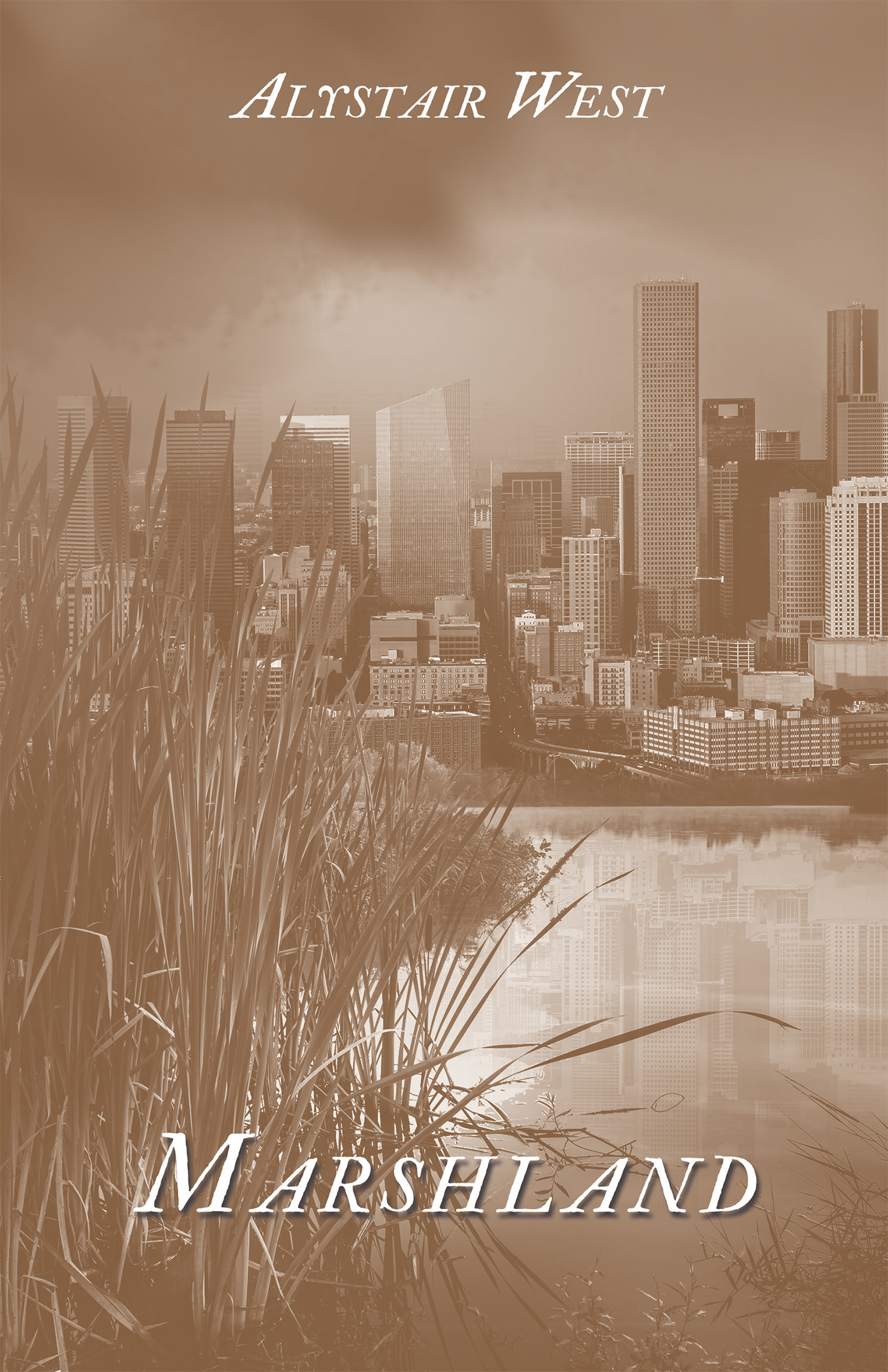 By the time Marshland was finished, I’d rewritten almost every aspect of the novel to make it something it never started out to be. (Most frustratingly, almost all the names were changed.) Somewhere before Marshland was finished, I realized that it could be part of a larger work that would become Peace at Battle Mountain and Leviathan and the Lambs.[1] My one novel became three. The latest, Leviathan and the Lambs, was published earlier this year. What began as a simple murder mystery with spiritual overtones became the story of a young man, his intelligent and beautiful bride, and an entire cast of characters over the course of forty or so years.
People ask me if I’m Arthur Stone. I always quickly clarify that I’m definitely not! There’s hardly anything about Arthur Stone that’s like Chris Scruggs. On the other hand, all the characters—even the villains—reflect a piece of me because, when you write, you naturally explore your innermost character, feelings, and motivations. One character, in particular, has become especially meaningful to me over time. That’s Ahn Winchester, who enters the story as the Vietnamese wife of a partner at Winchester & Wells, Arthur’s law firm. She’s a recurring presence throughout the novels, gently guiding everyone back to their true selves and helping them find genuine happiness.
Ahn is a Roman Catholic and a mystic. Her father was Catholic, but her mother continued to practice aspects of Buddhism that are an important part of Vietnamese culture, particularly meditative prayer. Her prayer life enables her to both distance herself from problems and enter more deeply into them and their impact on those she loves. One message of the Arthur Stone novels is the benefit of what I call “meditative decision making.” The most recent novel finds her attempting to offer wise guidance even as she faces a tremendous shock.
When I started writing the Arthur Stone series, I was a Presbyterian minister who always emphasized what C. S. Lewis called “Mere Christianity,” both in my churches and in my preaching. Since retiring, I’ve had the joy of visiting many different types of churches—from charismatic to Orthodox, with worship styles ranging from contemporary to highly liturgical. One exciting aspect of writing these books was learning about different religious traditions.
Gwynn Stone is an Anglican, Arthur and his brother are Presbyterians, and one of the characters is Jewish while another is Roman Catholic. Throughout the series, especially in Leviathan and the Lambs, we meet Episcopalian priests, mystical Muslims, Buddhist monks, Jewish prayer warriors, Orthodox monks in Greece, Roman Catholic Benedictines, and others. While it’s fair to say that I’m trying to interest readers in religion and Christianity. In particular, it’s not true that I’m trying to convert anyone to a particular faith.
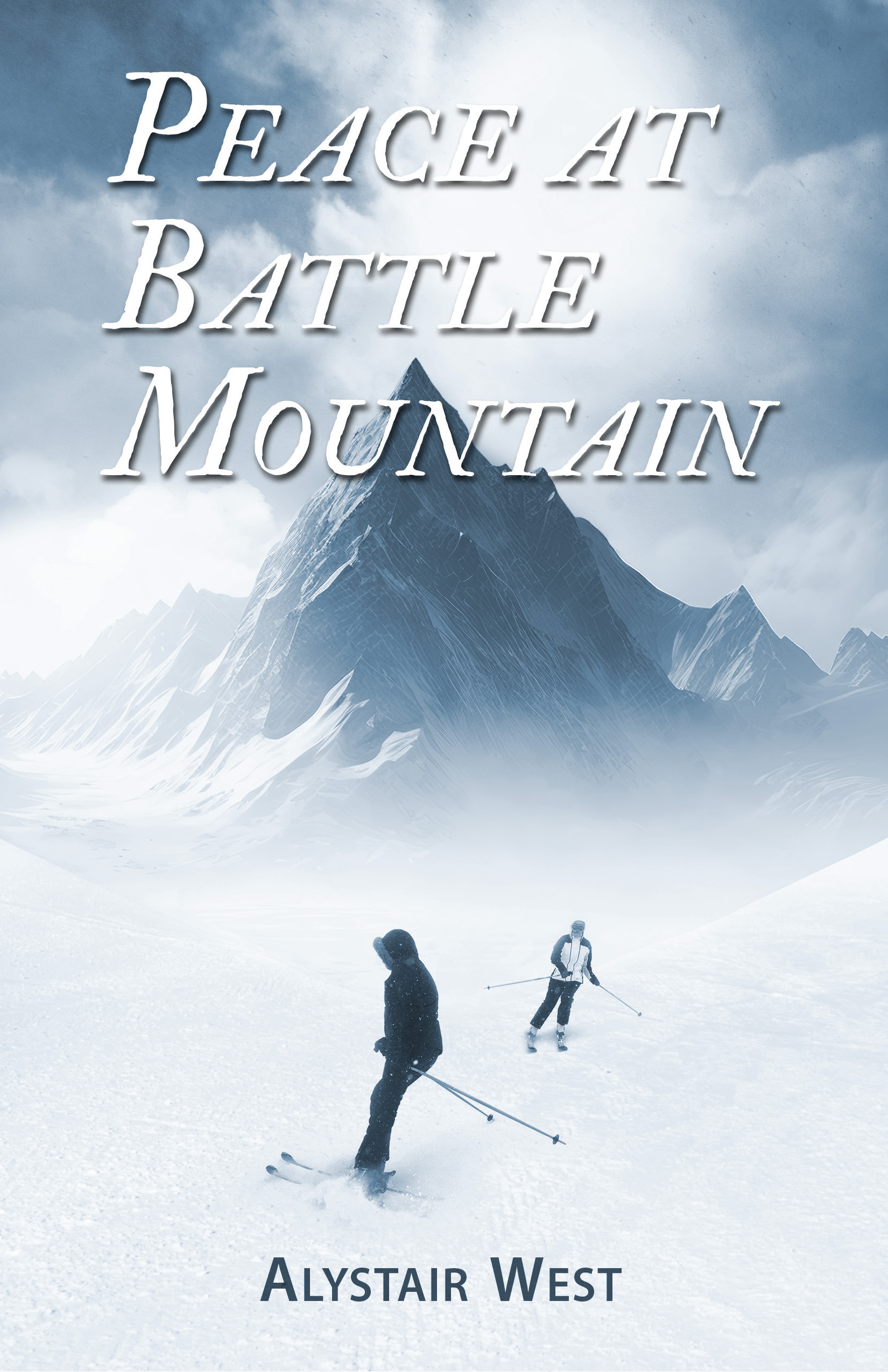 Each novel centers on an economic crisis. Marshland is set during the Texas Savings and Loan crisis, while Peace at Battle Mountain takes place during the time of the Enron collapse.
Leviathan and the Lambs explores the 2008 banking crisis and the years that followed. What I find particularly interesting is that all these crises reflect common flaws in human nature more than in the laws governing our financial system. People who want to take risks tend to do so regardless of the rules in place. One important message of this series is that a free market depends on morally responsible participants. Without that moral foundation, financial instability and greed-fueled crashes are inevitable.
 Despite the presence of fraud, murder, and mayhem, these elements are window dressing as one looks at deeper questions of life. In the case of Leviathan and the Lambs, we meet Arthur Stone at the peak of his professional career. He is rich, honored in his profession, and unfulfilled by his accomplishments. He suffers from what the mystics call, the “Demon of the Noonday Sun,” that lethargy and weariness that often attacks us in midlife.
I have a friend who loves to include real people in his novels. I take a different approach. I go out of my way to ensure that no living person appears in any way in the novels. As you’ll learn if you read all of them, and as I often say, “If there’s any living or dead person involved in the novels, they’ve been dead for over 1000 years.” Another one of my quips about the novels is, “Although none of the people are real, unfortunately, all of the spiritual realities are very real and attack us all.” It doesn’t take more than a look at the daily newspaper to know that human nature is pretty stable and that we human beings tend to repeat the same mistakes over and over again throughout history. I bet there was violence, greed, lust, and financial fraud among prehistoric humans.
I do not want to give away any of the details of Leviathan and the Lambs, but I think many people, secular and religious, would enjoy the read. Arthur Stone’s life, like ours is not “complete”, if the word “complete” means, “I have accomplished and experienced everything I planned or desired.” All human life is a combination of success and failure, pleasure and pain, plans that are achieved and plans that are not. Learning to live within limits is a part of achieving wisdom in this life.
Copyright 2026, G. Christopher Scruggs, All Rights Reserved
[1] Marshland (Westbow, 2023); Peace at Battle Mountain (Quansus, 2024); Leviathan and the Lambs (Quansus & Bookbaby, 2026), all written under the pen name Alystair West. All are available on Amazon and from other vendors.