The Decent Man

John Mirador, who becomes Juan de la Cruz Bardero, appears in all three of the Arthur Stone books. A former special forces officer, Bardero first appears as the “Watcher,” an operative sent into sensitive areas to watch and report. Unfortunately, in Marshland, Mirador is betrayed, nearly killed, and must hide from the government he faithfully served. It is the beginning of a new life.[1] Mirador grew up on a ranch in South Texas of a family of immigrants who came from Mexico in the 1920’s, when Mexico experienced political and economic unrest. Orphaned in his teenage years, he ended up enlisting in the armed forces and served in Viet Nam. A special forces operative, he was still active in the early 1980’s when Marshland takes place.

At the beginning of Marshland, Mirador is betrayed by someone. He was supposed to die during his mission in Mexico but fate saves him. Searching for a safe hiding place, his family in Mexico send him to a monastery outside of San Miguel de Allende, where he becomes an oblate in the Benedictine order while in hiding.  In Marshland, he is part of the uncovering of the connections between events in Mexico and the Texas Savings and Loan Crisis. During this time, he becomes friends with Arthur Stone and Ahn Winchester. After the events of Marshland, Mirador, now Juan Bardero, becomes a business man in San Miguel with Arthur, Gwynn, and Ahn as business partners.

In Peace at Battle Mountain, Arthur is forced to investigate a suspicious death in Los Cabos on the Pacific coast of Mexico. Bardero is the person who is responsible for personally undertaking the investigation. In the process, he meets and falls in love with Maria Mendoza, who appears in Marshland as well. Maria already has a child by a short-lived relationship. He appears again in Leviathan and the Lambs. Now in late middle age, he is called upon to assist Arthur in saving a member of his family.

The Decent Man

In the series, Bardero represents the decent man. He faithfully serves is country, his family, and his friends, often without being seen and without recognition. He is one of countless people who serve their nation and families in good and bad situations, not always agreeing with what is being done, but doing their own part with honor and strength. Not surprisingly, his life is punctuated with drama that others create while he brings a justice and health to the situations in which he becomes involved.

I am writing this on Memorial Day 2026. Memorial Day is a day in which we celebrate the many men and women who placed themselves in harm’s way to protect the liberties we enjoy. As I write this there are many, many John Mirador’s quietly going about the business of protecting our freedoms while decently living out their own private lives. Some of them are far from home and loved ones, a few I suspect are in very dangerous and hostile places, watching.

My Father

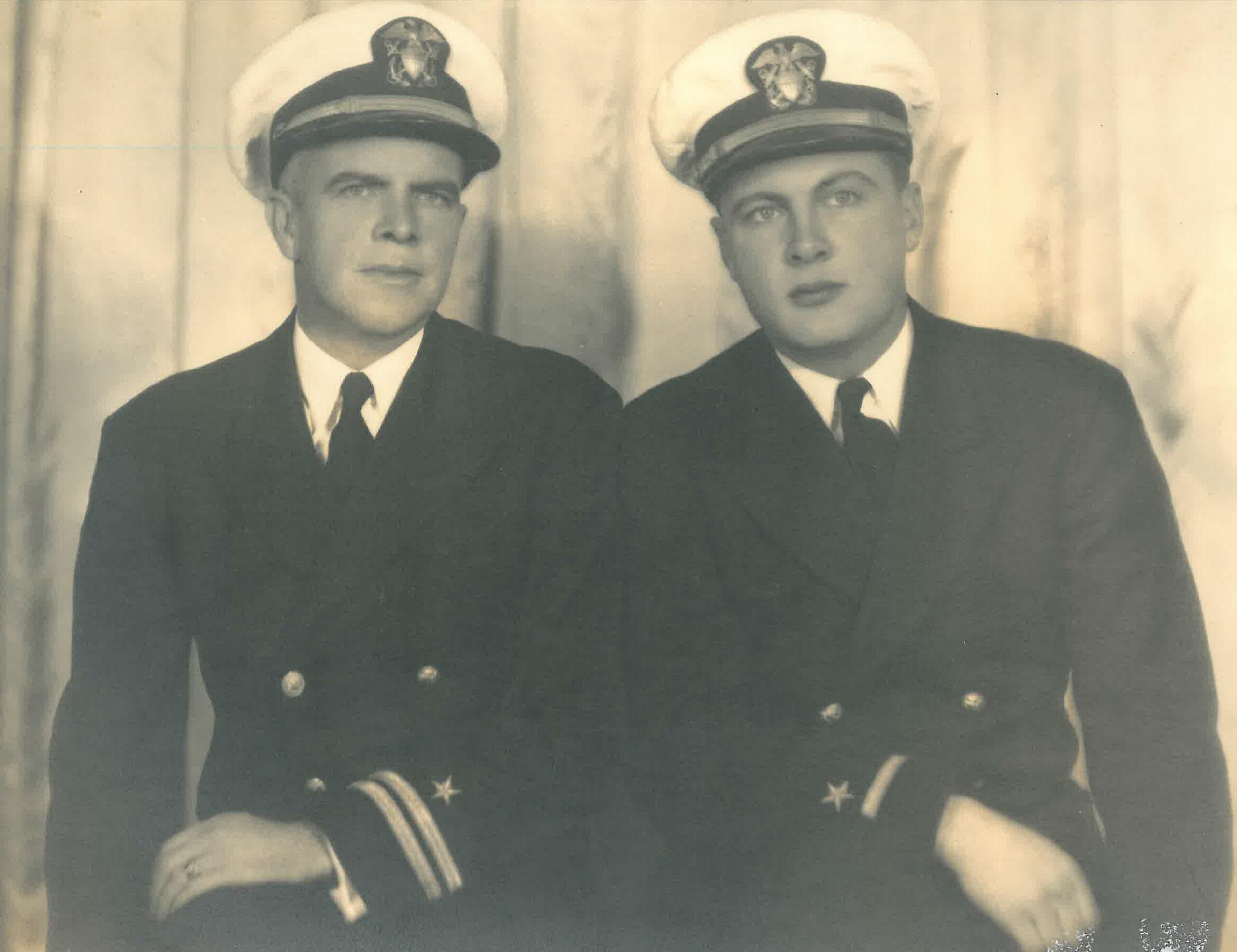
On Memorial Day and other days, I remember and celebrate the life of my father. Born in 1921, he was of draft age when World War II began. He served first in the Marine Corps and then in the Navy commanding a small ship as a First Lieutenant. After the war, he joined the FBI where he served for another thirty or so years. After retiring from the FBI he was a City Counselman and then Mayor of Springfield, Missouri. If you put it all together, he served our country in one capacity or another for fifty or more years—all of his adult life. He did not get rich in government or politics. He and Mom struggled to put two sons through college and to pay off debts from an accident that nearly ended both their lives. The driver of the car that hit them was uninsured. John Mirador is a fictional character. Dad was the “real deal,” decent man who did his duty to God, family and country and expected little in return.

Our news today is filled with political stories. One of them that caught my eye is about a candidate for public office who refuses to salute the American flag. I posted a simple reply: “You cannot lead with wisdom a person or organization you don’t love.” There is plenty to be said for developing a critical attitude towards our government and our culture. However, there is a limit. When people no longer love a country, a culture, a business, a church, or whatever, they cannot possibly heal it. All they can do is destroy—and what they build in its place will likely be a harmful monstrosity born of anger and rage instead of love and care for others.

Conclusion

This Memorial Day we are home with one of our children and a grandchild visiting. Soon, it will be June 6. During the seventy fifty anniversary year of D-Day, Kathy and I made a pilgrimage to Normandy. As a student of the battle, I enjoyed seeing the reality of what I had seen on maps and read about in books. But the most moving moment was visiting the cemetery where those who fell that day are buried. Rows upon rows of young men who never had a family, a career, children, or grandchildren. Instead, in terrifying and terrified wave after wave they landed on that beach behind their graves where they died for a nebulous notion of freedom and America’s call to preserve that freedom. My Dad and Grandfather came back from World War II. Today, we celebrate the lives of those who did not.

Copyright 2026, G. Christopher Scruggs, All Rights Reserved 

[1] This blog, as have three recent blogs deals with what I call the Arthur Stone series, written under the pen name,  Alystair West, The books are Marshland (Westbow, 2023); Peace at Battle Mountain (Quansus, 2024); Leviathan and the Lambs (Quansus & Bookbaby, 2026), all written under the pen name Alystair West and available on Amazon, Barnes & Noble, and from other vendors.


A Short Diagnosis of the Intellectual History of a Sick Culture

A contributor on X, Brivael Le Pogam, wrote a posting that I want to share with you with my comments. Those who are not on X can find him on his website.[1] I do not normally simply re-print another’s work, and I am not doing so today. However, I felt that what he is saying is so important that it needed to be sent along to my friends. He takes a subject of immense complexity and gives an introduction to what is deeply wrong with our elites in a few sentences. The bold type shows my reflections on what Le Pogam wrote. Here it is in its entirety.

“I want to offer my apologies, on behalf of the French, for giving birth to French Theory (which in turn gave birth to the worst of all ideological monstrosities: wokism).”

It’s helpful to refer to this as “Deconstructionism,” “Continental Postmodernism,” or even intellectual nihilism, which can go to extremes. Calling it “French,” a term a French person might use, adds a layer of race to the conversation. The term “Woke” has an interesting history. I think it is linked to the Enlightenment and Kant’s idea of “waking up” from his intellectual slumber to develop his idealistic theories. The term now often suggests becoming aware of racial, sexual, intellectual, and other injustices, as well as how society can be organized to benefit some groups over others. 
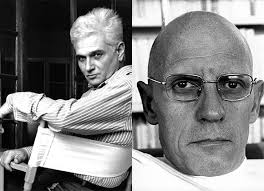
“We gave the world Descartes, Pascal, and Tocqueville. And then, in the intellectual ruins of post-1968, we gave Foucault, Derrida, Deleuze. Three brilliant men who forged, in the elegance of our language, the ideological weapon that today paralyzes the West.”

Descartes was an early Enlightenment figure, and Pogam is tracing the French Enlightenment from its beginning through its decay as French intellectuals turned against it, yet could not return to the innocence of the Age of Faith—that is, the Age of Roman Catholicism in Western Europe and the intellectual faith of the Reformation. Pascal was a French Catholic and a devout Christian. Tocqueville, who has been a subject of these blogs, was a French political theorist who visited the United States and wrote Democracy in America. [2]

“We must understand what they did. Foucault taught that truth does not exist, that there are only power relations disguised as knowledge. That science, reason, justice, the medical institution, the school, the prison, sexuality—everything is merely a staging of domination. “

The “postmodern age” is strongly Nietzschean. The reduction of all claims to Truth, Goodness, and Beauty to power relations enters Western thought through him. In such a world, there can be no real community, truth, reason, justice, or any other “noetic value.” Foucault focused his critique on the exercise of power within social systems to construct and maintain institutions of power. He saw history as consisting of thought systems that determine social activity and are constructed to serve the ends of those in power.

“Derrida taught that texts have no stable meaning, that every signifier slips away, that every reading is a betrayal, that the author is dead, and the reader reigns supreme. Deleuze taught that we should prefer the rhizome to the tree, the nomad to the sedentary, desire to the law, becoming to being, difference to identity.”

Deconstruction is a philosophical approach introduced by French thinker Jacques Derrida. His technique examines texts, binaries, and cultural institutions to reveal hidden assumptions, internal contradictions, and reliance on arbitrary structures. This approach ultimately shows us that texts have no fixed “meaning” and are unstable, and that meaning cannot be fully captured. If words are simply signs that create or sustain power relationships, then texts can have no absolute meaning. There is no definitive “truth,” “goodness,” or “beauty” that words can reliably point to. This idea influences modern debates and discussions widely and is present in movies, the media, and even politics. It is widely popular in academia. It suggests that texts have no specific meaning, and the author’s intent isn’t always the main point. Some see this as a challenging perspective within “reader-response” theory. While it offers valuable insights, it can also be viewed as a revolutionary ideology in an extreme sense. It emphasizes change over stability, which can sometimes be harmful to people, families, communities, and society as a whole.

“Taken individually, these are debatable theses. Combined, exported, and popularized, they form a system. And that system is a poison.”

Like all heresies, each of these movements contains a small element of truth that has been elevated into a theory of knowledge and existence. Words are used to create power relationships, but they are also used for many other purposes, such as expressing love, discovery, awe, friendship, appreciation, and the like. In a way, deconstructive postmodernism reflects the nihilistic end of reductive critical thinking. It is reason turned in on itself in science, morals, law, politics, and other areas of inquiry. It can also give rise to twisted moral positions and the justification of violence.

“For here’s what happened. These texts, unreadable in France, crossed the Atlantic. The departments of Yale, Berkeley, and Columbia absorbed them in the 1980s. They found there a soil that did not exist among us: American Puritanism, its racial guilt, its obsession with identity. French Theory married this substratum, and the child of that union is called wokism.”

Having studied philosophy and worked in theology earlier in life, I can honestly say that the specialized language can sometimes be quite difficult to understand. Unfortunately, some academics use this jargon as a mask for superficial ideas or a lack of real understanding. The ideas of American individualism, materialism, and the relentless pursuit of prosperity, peace, and personal happiness created ideal conditions for this theory, especially during the 1960s when a whole generation moved away from traditional values. At the same time, critical theory, with its Marxist leaning and skepticism of capitalism, traditional faith, and Western societal structures, started gaining ground in academic circles. Sadly, this led to a harmful influence on academia, the intellectual community, the media, the arts, and almost everything it touched.

In American English, “woke’ originally meant people who became aware of the injustices of racism. These days, however, the term has often been co-opted by political activists, many of whom lean far-left or socialist, and whose broader goals extend beyond just fighting racism. 

“Judith Butler reads Foucault and invents performative gender. Edward Said reads Foucault and invents academic postcolonialism. Kimberlé Crenshaw inherits the framework and invents intersectionality. At every step, the matrix is French: there is no truth, there is only power, so every hierarchy is suspect, every institution is oppressive, every norm is violence, every identity is constructed and thus negotiable, every majority is guilty.”

The French had one of the most oppressive colonial policies, perhaps only surpassed by the Belgians. In the end, feelings of guilt over past racism and colonial history fueled modern frustrations against current institutions. Once again, there’s a reasonable sense of guilt, but some postmodern thinkers turn it into a harsh rejection of Western culture. Apart from Theodore Roosevelt’s efforts, the United States has generally been more supportive of anti-colonial perspectives. In the hands of critical theorists, it is often combined with revolutionary Marxism and a hatred of all Western cultural institutions.

“That’s how three Parisian philosophers, who probably never imagined their practical consequences, provided the operating software to an entire generation of activists, university bureaucrats, HR managers, journalists, and legislators. That’s how we ended up with a civilization that no longer knows how to say whether a woman is a woman, whether its own history is worth defending, whether merit exists, or whether truth can be distinguished from opinion.

It’s shit for one simple reason, and it must be stated calmly. A civilization stands on three pillars: the belief that there exists a truth accessible to reason, the belief that there exists a good distinct from evil, the belief that there exists a heritage to be transmitted. French Theory set out to dynamite all three. Not out of malice. Out of intellectual play, fascination with suspicion, hatred of the bourgeoisie that had nurtured them. But the result is there. An entire generation learned to deconstruct and never learned to build. An entire generation knows how to suspect and no longer knows how to admire. An entire generation sees power everywhere and beauty nowhere.”

I apologize because we French bear a particular responsibility. It’s our language, our universities, our publishers, our prestige that gave this nihilism its chic packaging. Without the legitimacy of the Sorbonne and Vincennes, these ideas would never have crossed the ocean. We exported doubt the way others export weapons.

What is being built now, in Silicon Valley, in AI labs, in startups, in workshops, in all the places where people still make things instead of deconstructing them—that is the response. A civilization is rebuilt by builders, not by commentators. By those who believe that truth exists and is worth devoting oneself to. By those who embrace a hierarchy of the beautiful, the true, the good, and are not ashamed to transmit it.

So, forgive us. And back to work.”

Having traveled extensively in both capitalist and Marxist countries, I’ve noticed a certain spiritless starkness in much of Western society, as well as in the communist world. Sometimes, an intense focus on Right Philosophy and Right Theology can lead leaders to overlook the importance of building a wholesome society where everyone can truly flourish. This is particularly evident in the frankly nihilistic tendencies of postmodernism. Our culture often emphasizes science, materialism, and technology. In other words, we often worship power and technique, whether we admit it or not. What we need is a cultural return to the values that created our civilization and way of life, including the spiritual values that undergird the search for truth, goodness, justice, beauty, and the like.

The spirit of the Enlightenment has waned, leading to some challenging outcomes in both academic and political spheres. One significant change is the diminished belief that abstract ideals like justice are real and should guide our political and governmental decisions. This shift has resulted in a political landscape that could be described as “Nietzschean”—focused solely on a relentless pursuit of power, exercised without regard for values like truth, justice, prudence, or equity. It resembles a Hobbesian view of society, where self-interested individuals are caught in a “war of all against all.” You can see the effects in everyday life, from the breakdown of family structures to broader issues like the “economy of wars,” which threaten the well-being and growth of communities everywhere.

Just as science cannot exist without a commitment to investigating a reality independent of the observer, political and social life is debilitated when no underlying notion of justice and fairness guides policymakers’ thinking. What remains is the will to power, without effective intellectual and moral constraints beyond those imposed by the political realities of a given society. In some societies, that means little or no restraint.[3]

For those who would like to know more about postmodernism, I recommend Stanley J. Grenz, A Primer on Postmodernism (1996). It is quite readable and avoids technical jargon. Another excellent source is Postmodern Times(1994) by Gene Edward Veith. Postmodern Times is written from a Christian perspective. Finally, once again from a specifically Christian perspective, I can recommend Roger Luden’s The Culture of Interpretation: Christian Faith and the Postmodern World (1993). This book is slightly more academic. Naturally, no introduction, whether an article or even a book of a couple hundred pages, can fully replace struggling with the reality of the texts of experts. Personally, I find most postmodern oriented authors, especially the French originators, extremely difficult to digest.

 Copyright 2026, G. Christopher Scruggs, All Rights Reserved

[1] He can be found on X, on Linkedin, and at https://briva.medium.com/

[2] Alexis De Tocqueville, Democracy in America tr. Henry Reeve, abridged by Patrick Renshaw (Herefordshire, UK: Wordsworth Classics of World Literature, 1998), hereinafter “Democracy in America.” This is a one volume abridgement of the original two volume set published in 1835 (vol. 1) and 1840 (vol. 2).

[2] De Tocqueville did make a report on the American prisons of the early 19th Century.

[3] See, G. Christopher Scruggs, Illumined by Wisdom and Love: Essays on a Sophio-Agapic Constructive Postmodern Political Philosophy (Hunt, TX: Quansus Press, 2024).

 

Crawling Out of the Abyss

When I began writing my first novel, Marshland, and even more the second, Peace at Battle Mountain, I naively thought that women would be very interested in the character of Gwynn Murray Stone. I wasn’t that surprised when some of my more conservative women friends expressed a bit of judgmentalism about her character. I had a professional proofreader read Peace at Battle Mountain for me who shared some of it with her sister who had read Marshland. I knew the sister quite well. One day the proofreader called to ask a question. During our conversation, she advised me that her sister had told her that she never liked the character of Gwynn. The proof of you said, “well if you don’t like Gwynn in Marshland, believe me you’re not going to like her in Peace at Battle Mountain. [1]

Peace at Battle Mountain involves Gwynn making a series of mistakes driven by a brokenness from her childhood, living with the consequences, and emerging as a whole and healed human being. I was surprised that more women didn’t enjoy her pilgrimage, which is not unlike a pilgrimage. I’ve watched more than one person make as a pastor.

In the final book, Leviathan and the Lambs, Gwynn has matured into someone with rare wisdom and insight, and a fearless courage in defense of her family. In the end, despite their separation, she is Arthur’s closest human relationship and a wise counselor. She is not the central character, as she is in Peace at Battle Mountain, but she plays a very important role in the book.

There is a simplistic form of religious faith in which one becomes a believer in a religious system, and God or the ultimate, however it conceived, prevents you from making any mistakes or messing up our lives due. Unfortunately, it doesn’t take a lot of experience as a believer or pastor to know that that’s not the case. We all make mistakes. All human beings make mistakes. Some of those mistakes haunt us for years, even for the rest of our lives. The process of overcoming the wounds of our childhood is neither quick nor easy nor automatic. Faith is about forgiveness and healing, not about attaining perfection.

Learning by Reading

Over the years, I’ve learned a lot by reading novels. I’ve learned a lot about human nature and a good bit about history. One advantage of reading a novel where someone like you make a mistake is that you have the opportunity not to make that mistake. Reading alone will not make a person wise, moral, or even capable. But internalizing great truths is never a mistake. In my own case, books like the Lord of the Rings trilogy by J.R.R. Tolkien and a book, The Glass Bead Game (sometimes printed as Magister Ludi) by Hermann Hesse, have changed and enriched my life. Our children know that at every moment of decision in my life, I usually read one of the two of them. For some reason, they have the capacity to focus my mind on the truly important and the character of those who successfully navigate the difficulties of life.

I am not so arrogant as to believe that the Arthur Stone trilogy, and is especially Leviathan and the Lambs, have the capacity that great literature possesses to mold us and shape us with a kind of nobility. Nevertheless, it is my small attempt to look at one family with their friends and associates, and how it is faith allowed them to navigate the problems of life.

Gwynn at Battle Mountain

In Peace Battle Mountain, Gwynn attends a woman’s Bible study in Houston quite by accident that begins a process of self-reflection that ultimately changes her life. I didn’t attend my first Bible study in quite the same situation, but the same result obtained. I found a direction out of the problems I had created for myself, found new friends, entered the life of faith, and ultimately met my wife. It was worth two hours in the life of a 27-year-old to begin a process that would lead to wholeness and happiness.

Gwynn Stone is also not alone in her recovery. Ahn Winchester, as always, provides a wise and spiritual guide to a deeper self-understanding and healing for Gwynn. In addition, she has law partners and family, all of whom help in her recovery. Then, of course, there is God acting by the Holy Spirit.

Healing as Becoming Like God

One of the images that can be important for contemporary people in reconnecting with faith is the image of Christ the healer. In particular, the Orthodox Church sees the life, death, and resurrection of Christ as primarily about restoring humanity to a lost or besmirched image of the divine implanted in each one of us. This healing is not merely forgiveness. Forgiveness begins a process of sanctification, or becoming like God in Christ.

The Apostle John tells us that “God is love” (I john 4:8; 4:16). The process of becoming more like God (theosis in Greek) is a process of becoming increasingly filled with the wisdom and love of God in Christ Jesus. In Peace at Battle Mountain we see Gwynn enter the process of loving unselfishly and unconditionally, a process that ultimately changes her life mentally, physically, and emotionally. In Leviathan and the Lambs a rogue agent, E. J. Mueller, has a similar experience, perhaps a bit more dramatically illustrated in the book.

Christianity as a Life

Most pastors are aware that the earliest name for Christians was “the People of the Way.” This implied that Christianity was not just “believing Jesus is the Son of God” but entering into the life of the Son of God coming to health and full humanity through inviting God into one’s life physically, mentally, morally, and emotionally. In Crisis of Discipleship, I put it this way:

Discipleship is not just about learning information. It involves a life-transforming relationship with a person—The Triune God revealed in Jesus Christ. As God is in relationship, so we must have healthy relationships in order to grow as disciples.Christians proclaim Jesus Christ as the “the Way, the Truth and the Life.” In other words, the key to abundant living is not an idea but a person and relationship with that person through which we are transformed into the likeness of the One who is the Way, the Truth, and the Life. Head knowledge is not enough. In order to know the Way, the Truth, and the Life of Christ, we must become imitators and obedient followers of Christ. As the New Testament puts it, “Christ must dwell in us richly” (Colossians 3:16).[2]

There is abundant evidence that young people today are not looking for easy answers or a faith that demands little change. Those Christian groups that provide a new way of life, healing of the past, and a discipline for the future are the most likely to grow as people find new meaning, purpose, and direction in life. What God desires is transformation, which is one of the basic messages of Leviathan and the Lambs and the entire Arthur Stone series.

Copyright 2026, G. Christopher Scruggs, All Rights Reserved

[1] See, Alystair West, Marshland (Westbow, 2023); Peace at Battle Mountain (Quansus, 2024); Leviathan and the Lambs (Quansus & Bookbaby, 2026), all written under the pen name Alystair West. All are available on Amazon and from other vendors.

[2] G. Christopher Scruggs, Crisis of Discipleship (Richmond, Va: Living Dialog Press, 2023).

No Life Is Perfect, but Every Life is Meaningful

Have you ever had a secret ambition that was never fulfilled? In my case, for years, I would tell Kathy that I’d like to write a murder mystery set in a large law firm. In my early years, I worked in a large law firm and was well aware that the large number of brilliant minds and large egos make multinational law firms a wonderful place to set a murder mystery. For more than thirty years, I did nothing about realizing my dream. Then, after I retired, I decided I needed to write a novel. You can underline the “a.” I intended to write one novel.

In addition, by the time I retired, I had not only been a young lawyer but also served as a pastor and written sermons, articles, and longer works on wisdom literature, discipleship, and leadership for three congregations. In other words, I knew just a little about religion and the spiritual and moral problems people face in their day-to-day lives. Over those years, I’d also read many religious books, some of them novels. So I set out to write a novel that would combine my legal, financial, and religious experiences with a spiritual orientation. The result was Marshland, written under the pen name “Alystair West.”

By the time Marshland was finished, I’d rewritten almost every aspect of the novel to make it something it never started out to be. (Most frustratingly, almost all the names were changed.) Somewhere before Marshland was finished, I realized that it could be part of a larger work that would become Peace at Battle Mountain and Leviathan and the Lambs.[1] My one novel became three. The latest, Leviathan and the Lambs, was published earlier this year. What began as a simple murder mystery with spiritual overtones became the story of a young man, his intelligent and beautiful bride, and an entire cast of characters over the course of forty or so years.

People ask me if I’m Arthur Stone. I always quickly clarify that I’m definitely not! There’s hardly anything about Arthur Stone that’s like Chris Scruggs. On the other hand, all the characters—even the villains—reflect a piece of me because, when you write, you naturally explore your innermost character, feelings, and motivations. One character, in particular, has become especially meaningful to me over time. That’s Ahn Winchester, who enters the story as the Vietnamese wife of a partner at Winchester & Wells, Arthur’s law firm. She’s a recurring presence throughout the novels, gently guiding everyone back to their true selves and helping them find genuine happiness.

Ahn is a Roman Catholic and a mystic. Her father was Catholic, but her mother continued to practice aspects of Buddhism that are an important part of Vietnamese culture, particularly meditative prayer. Her prayer life enables her to both distance herself from problems and enter more deeply into them and their impact on those she loves. One message of the Arthur Stone novels is the benefit of what I call “meditative decision making.” The most recent novel finds her attempting to offer wise guidance even as she faces a tremendous shock.

When I started writing the Arthur Stone series, I was a Presbyterian minister who always emphasized what C. S. Lewis called “Mere Christianity,” both in my churches and in my preaching. Since retiring, I’ve had the joy of visiting many different types of churches—from charismatic to Orthodox, with worship styles ranging from contemporary to highly liturgical. One exciting aspect of writing these books was learning about different religious traditions.

Gwynn Stone is an Anglican, Arthur and his brother are Presbyterians, and one of the characters is Jewish while another is Roman Catholic. Throughout the series, especially in Leviathan and the Lambs, we meet Episcopalian priests, mystical Muslims, Buddhist monks, Jewish prayer warriors, Orthodox monks in Greece, Roman Catholic Benedictines, and others. While it’s fair to say that I’m trying to interest readers in religion and Christianity. In particular, it’s not true that I’m trying to convert anyone to a particular faith.

Each novel centers on an economic crisis. Marshland is set during the Texas Savings and Loan crisis, while Peace at Battle Mountain takes place during the time of the Enron collapse.

Leviathan and the Lambs explores the 2008 banking crisis and the years that followed. What I find particularly interesting is that all these crises reflect common flaws in human nature more than in the laws governing our financial system. People who want to take risks tend to do so regardless of the rules in place. One important message of this series is that a free market depends on morally responsible participants. Without that moral foundation, financial instability and greed-fueled crashes are inevitable.

Despite the presence of fraud, murder, and mayhem, these elements are window dressing as one looks at deeper questions of life. In the case of Leviathan and the Lambs, we meet Arthur Stone at the peak of his professional career. He is rich, honored in his profession, and unfulfilled by his accomplishments. He suffers from what the mystics call, the “Demon of the Noonday Sun,” that lethargy and weariness that often attacks us in midlife.

I have a friend who loves to include real people in his novels. I take a different approach. I go out of my way to ensure that no living person appears in any way in the novels. As you’ll learn if you read all of them, and as I often say, “If there’s any living or dead person involved in the novels, they’ve been dead for over 1000 years.” Another one of my quips about the novels is, “Although none of the people are real, unfortunately, all of the spiritual realities are very real and attack us all.” It doesn’t take more than a look at the daily newspaper to know that human nature is pretty stable and that we human beings tend to repeat the same mistakes over and over again throughout history. I bet there was violence, greed, lust, and financial fraud among prehistoric humans.

I do not want to give away any of the details of Leviathan and the Lambs, but I think many people, secular and religious, would enjoy the read. Arthur Stone’s life, like ours is not “complete”, if the word “complete” means, “I have accomplished and experienced everything I planned or desired.” All human life is a combination of success and failure, pleasure and pain, plans that are achieved and plans that are not. Learning to live within limits is a part of achieving wisdom in this life.

Copyright 2026, G. Christopher Scruggs, All Rights Reserved 

[1] Marshland (Westbow, 2023); Peace at Battle Mountain (Quansus, 2024); Leviathan and the Lambs (Quansus & Bookbaby, 2026), all written under the pen name Alystair West. All are available on Amazon and from other vendors.

Healing a Sick Political Culture

This week, I intended to return to write a blog post involving my latest novel, “Leviathan and the Lambs.” Then, a gunman attempted to kill the President and perhaps his wife, cabinet members, and their families. Over the past few days, as I have read and listened to politicians and media personnel defend our unhealthy political culture, I have decided to write this blog, which is itself an update to a prior blog on the problem. Quite frankly, we should all fear for the future of our nation if we do not put this kind of behavior behind us as a nation.

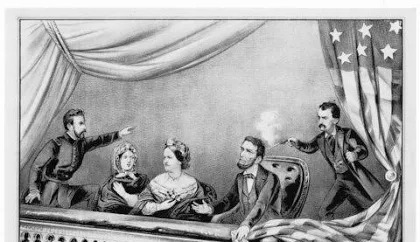
The United States of America has an historic problem with political violence. Four United States Presidents have been assassinated: Abraham Lincoln, James A. Garfield, William McKinley, and John F. Kennedy. In addition, attempts have been made on the lives of Andrew Jackson, Theodore Roosevelt, Franklin Delano Roosevelt, Harry Truman, Gerald Ford, Ronald Reagan, George H. W. Bush, and Donald Trump. Presidential candidates have also been targets of assassination attempts. Attempts have been made on the lives of Theodore Roosevelt as a candidate, Robert Kennedy (successful), George C. Wallace (seriously wounded), and former President Trump. What does this say about our political culture? What does it say about our national fascination with violence? What does it say about the deluded capacity of Americans to believe that the ends justify the means? [1]

The Myth of Redemptive Violence

In these blogs, I’ve had the opportunity to introduce readers to the notion of the “myth of redemptive violence.” The Myth of Redemptive Violence holds that violence can be redemptive. The term was coined by Walter Wink, a liberal Protestant theologian at Union Theological Seminary in New York. Wink believed that American society was and is deeply affected by a subconscious belief that violence can be redemptive; that is, violence to overcome evil is warranted and even positive. Polls show that substantial numbers of members of both our political parties subscribe to this nonsense. Wink believed the myth of redemptive violence needed to be demystified to show how deeply misleading it is. For Christians, the myth is contrary to the gospel. In other words, we all need to see that this is not true. It is a myth, and we must all avoid allowing ourselves and others to be motivated by this false narrative.

From the French Revolution to Today

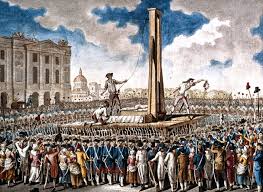
The problem of glorifying and accepting violence as a political tool is as old as the human race. However, it has its modern roots not so much in theology as in a culture that has lost its moorings in history and in a tradition of political accommodation and embraced the revolutionary ideas that began with the French Revolution. People were fascinated and inspired by the French Revolution, then progressively horrified by the Reign of Terror it produced. The decline of religion and morality in pre-revolutionary France made the Reign of Terror possible. At the very beginning of the modern era, a focus on power and a materialistic view of the world tended to elevate violence over wisdom and concern for others as political virtues.

Whenever governments exclude religious and moral virtues from political action, there is a tendency toward madness and excess, and the political result is violence and decay.[2] We should all be concerned by the way in which much of American culture has come to resemble aspects of the culture that produced the guillotine in revolutionary France. The statements of many current political and media celebrities are chillingly familiar to the rhetoric of that resulted in mindless slaughter at the beginning of the modern era.

We need to be concerned about how Marxism and its modern derivatives, such as Critical Theory, can and do create an immoral political culture inclined to violence. “One can’t expect to make an omelet without breaking eggs.” In 1790, Maximilian Robespierre used those words to welcome the horrific French Revolution that had begun the year before. Lenin, Stalin, Mao, and other 20th-century radicals have both voiced and put Robespierre’s slogan into practice, which involved the murder of millions of innocent people. [3]

The idea that killing a person or persons with whom one disagrees politically is part of creating a better society is sometimes called “moral inversion” or, as I would call it, twisted morality. The idea behind moral inversion is that one is entitled to violate common moral standards, for example, “Thou shalt not kill,” when violence is used to create a better social situation. The result is a kind of moralism in which any behavior, including the assassination of political leaders, can be justified on the grounds that one is trying to overcome what one believes is a great social evil.[4]

This notion that violence is justified for political reasons is easily channeled into violent words and actions by those who are infected with this disease, especially among the emotionally unstable. It is particularly common among those who have rejected traditional religion or the moral values of a culture and who are thus thrown back upon themselves and their own personal prejudices and desires in making moral commitments. In all these situations, a person who has become morally homeless falls victim to their own prejudice.

People are naturally moral, and when education or training fails to provide a proper intellectual foundation for their moral passions, those passions can spill over uncontrollably, like a river that overflows its banks. In today’s materialistic societies, this energy often finds a new outlet in revolutionary actions and violence. Preferred channels have included communism or national socialism. Sadly, the tragedies of the 21st century have been fueled by this redirected moral energy, which has been used destructively.

Negative Politics and Media Greed

Politicians have responded to the situation by leveraging it to their advantage. By the mid-1970s, they realized it was often easier to persuade people to vote against a disliked opponent than to support their own party’s views. This marked the beginning of what we now call “negative politics” and “negative campaigning.” Such campaigns play on our natural fears and anxieties, portraying opponents as villains who must be defeated at all costs. Particularly from the left, opposing candidates are depicted as embodiments of evil, even labeled Nazis. The result is predictable. If I am opposing someone like Hitler, the kind of total war the United States waged in World War II seems justified from a political standpoint. Whether or not the truth is on my side, or love and morality matter, don’t necessarily come into play when I’m slandering a villain. What truly counts is the effort to save the world from this perceived evil. In this context, the idea of redemptive violence can be used to justify the aggressive tactics involved. The tactic is particularly tempting to the mentally unbalanced, as we have repeatedly seen.

The media has also discovered that threats of violence, sensational language, and false accusations can attract more attention and generate more advertising revenue. One of the more unfortunate aspects of cultural postmodernism is the rise of what’s called advocacy journalism, where the focus is less on helping readers or viewers truly understand the facts and more on influencing emotions and encouraging actions, often aligning with what is considered politically correct. Sadly, whether due to a lack of moral scruples or other reasons, some journalists might even support false stories they know are wrong just to attract attention and boost sales. The result has been a visible decline in the quality and accuracy of the media and a corresponding decline in public trust.

Conclusion

It’s evident that living in a free society, where diverse opinions and free expression are cherished, can be challenging, especially in a culture that often feels nihilistic and accepts violence. Social media makes it easy for violent and thoughtless messages to spread widely. Because of this, it’s important for all of us in America to work together to calm the heated political debates.

Some of these blogs relate to the Constitution. While I haven’t yet delved deeply into the First Amendment, I can share my current perspective: it was created to enable people to share information and opinions, not to promote violence or deliberately disseminate false information. I would think this would include some people’s tendency to create false images using artificial intelligence. In addition, there may need to be some ability for public figures to sue when false or inflammatory information is broadcast over social media.

America was the first Enlightenment nation. The founders shared a worldview shaped by Isaac Newton and refined in the political arena by figures such as Locke and Rousseau. It was an optimistic age, and figures like Jefferson applauded the French Revolution even after the violence and death became wholly unjustified. They never gave up their support of revolutionary ideologies. Others, like Edmund Burke, were less inclined to justify what happened in France. Burke, for example, saw the violence of the French Revolution as stemming from a breakdown in cooperation among various elements of French society, combined with a failure to draw on aspects of the French intellectual and moral tradition that might have averted disaster.[5]

Whether America can avoid the potential political and cultural chaos ahead depends on all of us working together—academia, the media, politicians, everyday citizens, religious groups, and more—to build a more peaceful and cohesive society. It will require sacrifices from everyone and fundamental shifts in our political approach, which may have worked in the past but clearly aren’t doing the job today. In particular, voters play a crucial role in this change. Politicians from both parties who use violent language should face consequences at the polls. If they recognize that their strategies are no longer effective and may even be harmful, that recognition will motivate a quick and positive transformation in our political scene.

What is needed more than anything else is a truly postmodern, constructive political philosophy that values dialogue, conversation, compromise, and the search for social harmony over the acquisition of power and a “winner-take-all” mentality. I’ve written a preliminary exploration of this on my own. The title is Illumined by Wisdom and Love: Essays on a Sophio-Agapic Constructive Postmodern Political Philosophy. I’m not a professional philosopher, nor was the book intended to be much more than my own study notes as I developed my way of looking at the problems of our society. However, I do think it was helpful.[6]

Copyright 2026, G, Christopher Scruggs, All Rights Reserved 

[1] This and the following paragraph are updates to a prior blog, G. Christopher Scruggs, “Our Unhealthy Political Culture,” found at www.gchristopherscruggs.com (July 18, 2024).

[2] The quotations from this work and from other works of Burke upon which this blog is based are found in Edmund Burke: Selected Writings and Speeches Peter J. Stanis, ed. (Washington, DC: Regency Publications, 1963), at 540.

[3] It is hard to fully trace the linage of this quote, which is also attributed to Lenin and Stalin.

[4] I believe that modern Western society, lacking a transcendent faith in the reality of moral values, has entered a period of moral nihilism that can affect even those who deny accepting it. The power orientation of our culture is part of its plausibility structure. Lesslie Newbigin, Truth to Tell: The Gospel as Public Truth (Grand Rapids, MI: William B. Eerdmans, 1991)

[5] G. Christopher Scruggs, “Burke 3: Response to the French Revolution” found at found at www.gchristopherscruggs.com (May 13, 2021).

[6] G. Christopher Scruggs, Illumined by Wisdom and Love: Essays on a Sophio-Agapic Constructive Postmodern Political Philosophy (Hunt, TX: Quansus Publishing & College Station, TX: Virtual Bookworm, 2024).