
 A few weeks after the events of 9/11, I found myself at the airport in Springfield, Missouri, on my way home after seeing my mother. The airport in Springfield is pretty small and up to that date I had never had to go through much security on my way home. This trip was different. There was a lot of security. In the waiting room before we boarded, I noticed a Middle Eastern couple. I also noticed that everyone sitting at the gate around me was staring at the couple. I was uncomfortable, and I think everyone in the terminal, including the couple, was uncomfortable. When we boarded, lo and behold, I was seated next to one of them. We had a very nice conversation and by the time we landed, my discomfort was gone.
The second story reflects on the events of the past few years and the troubling rise of antisemitism. A particularly distressing development has been the resurgence of antisemitism on American college campuses following the recent war in Gaza. It’s heartbreaking to see this hatred unfold even at some of the most historic and respected universities in our country. I was discussing this situation with someone, and we both agreed that if someone had told us in 1973 that we would witness antisemitism at major universities in America, we wouldn’t have believed it. That’s exactly what is happening now.
It is part of human nature to notice differences. We automatically notice differences in races, religions, social, standings, and alike. It’s also human nature to be somewhat fearful of the unknown other. That day in Springfield, as I boarded the airplane, I was fearful because I was seated next to an unknown other in a situation where it was quite possible that his former country and mine were engaged in a kind of conflict. Now just occasionally, these kinds of fears are justified. But, good bit of the time they are not.
When people are stereotyped because of their race (and it’s important to remember that there’s even an anti-white bias in our country these days) or religion or any other characteristic and prejudice is allowed to take place, there’s been a kind of moral inversion. That is to say something that really should not be thought to be justified is justified. Antisemitism is an extreme variant of an ancient human problem.
Moral Inversion and Anti-Semitism
These blogs examine moral inversion, a phenomenon in which what is traditionally considered immoral is reinterpreted as moral through distorted reasoning. Michael Polanyi observed that modern people often have intense moral aspirations. However, because they are disconnected from the profound moral goals of the Judeo-Christian tradition, they tend to make moral choices without the full guidance of traditional morality. Additionally, the basic worldview of modern people leads them to deny the reality of moral aspirations. Finally, Marxist-influenced postmodernism, which reduces all moral claims to bids for power over others, allows people to pursue material goals (like power) with the passionate fervor of Western moral traditions, resulting in terrible acts of violence seen in Nazi and Communist regimes.
Those who subscribe to a materialistic, Marxist-inspired worldview hold the view that moral claims are not real or binding, yet they remain motivated by the moral fervor of traditional moral systems. In the end, things that were traditionally known to be immoral (such as killing 6,000,000 Jews or terrorizing them on college campuses) become morally acceptable and even required by their misguided search for a better and more just world. This process is what scholars call moral inversion. It is an upside-down morality made possible by an impoverished moral imagination. Those adopting this mindset frequently come to see raw force as morally acceptable, and some go so far as to support power without hesitation.
Contemporary Anti-Semitism
 The ongoing conflict in Gaza has, unfortunately, led to a noticeable rise in antisemitism in Western societies. It also sometimes exposes biases that were quietly present beneath the surface all along. When people compare Israel’s response to the October 7, 2023 attack with Nazi aggression, it can feel like they’re overlooking important differences, creating a kind of moral reversal. For instance, during World War II, Germany was clearly the aggressor, initiating the war through a campaign of conquest. Saying otherwise would distort the moral reality of those events. In the case of Gaza, the conflict was not started by Jewish aggression but by Hamas’s attack. Claiming that Israelis are the “new Nazis” and that Gazans are simply an oppressed group flies in the face of the obvious facts. Engaging in antisemitic activities is a serious moral distortion.
An Article in the Times of Israel interviewing an American commentator, Victor Davis Hansen put it this way:
On elite campuses, opposition to Israel has become a moral credential. Yet, Hanson observes, much of this rhetoric bleeds easily into classic anti-Jewish tropes: charges of global influence, financial manipulation, and dual loyalty. The movement couches itself in humanitarian terms, but the fury it unleashes is rarely matched against any other state—not even regimes engaged in ongoing genocide or mass repression.
For Hanson, who has spent his career studying the moral inversions of late civilizations, this is not surprising. “The Israeli-Gaza thing,” he notes, “gives people a legitimate platform” to express a deeper, latent anti-Semitism. In other words, Israel becomes the proxy through which old prejudices regain social respectability.[1]
The rise of antisemitism in the West is a complex issue that reveals the dangers of moral reversal. Many of those involved in recent demonstrations are young people, energized by youthful idealism. They often learn in institutions where traditional positive views of the Jewish people and the Jewish state have been challenged, especially on American and European college campuses. They’ve been told that Jews are the aggressors. Additionally, these institutions often receive significant funding from Middle Eastern governments, which can influence faculty perspectives to be sympathetic to the causes supported by these countries. Sadly, this has led to terrorists, who attack and kill innocent people, being described as freedom fighters. Moreover, due to Marxist influences in American campuses, groups like Hamas are sometimes seen as heroes simply following the inevitable course of history, and this perspective can extend to Western protesters as well.
I want to be sure to clarify what I am saying. I’ve traveled in Israel and the West Bank. I’ve never been to Gaza, but I know a little about its history. There’s no question that Israel could treat the citizens of the West Bank and Gaza differently. The United Nations’ intent in establishing the State of Israel has not been fully realized. There’s no question that concerned people should be able to speak to the situation and suggest reasonable solutions that would grant the Palestinian people non-violent self-rule and independence. My argument is not against thoughtful critique and dialogue about the best course of action in the West Bank and Gaza. My argument is against the inverted morality of those who foment violence and intolerance of the Jewish people.
The example of the protests against the War on Gaza and the anti-Semitic behavior of some of the protesters gives us a window into a world in which the nuances of situations are ignored in a simplistic reaction, in which media players exacerbate the situation by offering sound-bite analysis, and in which educational institutions, with their own morally inverted prejudices, fail in their duty to ensure that students are able to see the complexities of difficult problems. The result is not better decision-making by governments, better education of the young, or better understanding by citizens at large. The result is moral thinking and behavior turned upside down.
Racism and Moral Inversion
In this article, it was difficult to decide whether to discuss racism generally and then antisemitism, or to discuss antisemitism first and then racism generally. In my view, antisemitism is a particularly virulent form of the broader problem of human beings’ inclination toward prejudice against people who are different, and one obvious category of difference is race. The history of racism in America makes this an even more difficult problem.
It’s unfortunate that a long-standing human challenge has become even more complex due to the influence of Neo-Marxist ideas, especially in the form of critical theory that many American elites engage with. This way of thinking often simplifies the world into two groups: the oppressed and the oppressors. Politicians often see an advantage in this straightforward division. The current climate of negative politics makes officials eager to find reasons why certain groups might not support others, and unfortunately, prejudice often plays a role in this. The result is not greater social cohesion but greater social tension.
In our society, it’s often easy to see how the tendency to assign blame by creating scapegoats persists. Our educational institutions, media, social platforms, and many conversation outlets sometimes unintentionally foster stereotypes. This challenge is compounded by critical theory, which often views issues through the lens that racism, sexism, or similar ‘isms’ are the root causes. Such perspectives can lead to dividing people—men against women, whites against Blacks, Asians against Hispanics, Christians against Muslims, Jews, Buddhists, or others, and heterosexuals against gays—each cycle aiming to build a political base that maintains some group’s power. Sadly, this approach reflects a distorted sense of morality, rooted in hatred and bias, regardless of which side is involved. Ultimately, it erodes social harmony and understanding.
Moral Inversion Feeds on Prejudice and Social Disharmony
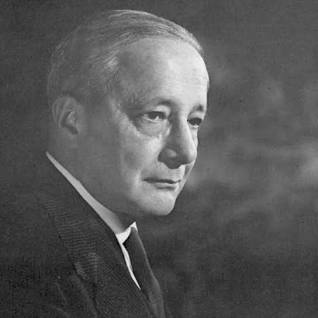 Michael Polanyi’s concern with moral inversion came as a result of his experiences, both with respect the Nazi Germany regime, and especially with the antisemitism present there, and with the Soviet communist regime, in which class hatreds and other factors were used to divide people and created a totalitarian state. Marx’s entire program was founded upon creating and exploiting resentment between what he called the bourgeoisie, that is the ownership and professional class of a society, and the proletariat, or the working class.
In the Middle East, we see the tragic consequences of societies which demonize other societies while governments do not serve the best interest or flourishing of their own people. We’ve also seen this in the leadership of various totalitarian regime in the 20th century. Sadly enough, it even appears that Western culture is beginning to degenerate into this kind of moral decay. As I’ve mentioned previously, critical theory, with its fundamentally mechanical view of human nature and view of human society, based upon a conflict between various groups, feeds this dysfunction.
Fortunately, constructive postmodernism, of which Polanyi is one example, provides a way forward beyond racial, class, education, educational status, professional, or other forms of social conflict. This does not mean that the inevitable conflict between groups can be completely eliminated in any society. As we shall see at the end of this series, Polanyi held no such illusions. From a Christian perspective, if we are all falling creatures, then we are not going to be able to eliminate all forms of oppression or all forms of envy from a society. We simply have to do the best we can to build social cohesion while allowing conflicts to exist.
The problem is not with differences of opinion or differences between people. The problem is when people fail to engage in respectful relationships with those with whom they disagree and even fear. Polanyi believed that social dialogue and the creation of meaningful social interaction was an important part of overcoming moral inversion. It would seem that America today is in precisely this kind of a situation. We need to back away from all forms of negative politics and stereotyping, all forms of scapegoating, and focus on creating that basis of social cohesion and mutual respect upon which a freeze society must rest.
Conclusion
For a free society to thrive over time, what I call a “politics of love’ is essential. [2]This isn’t about romantic or superficial love, but rather a love that understands the importance of a shared commitment to the core values of a free society—truth, goodness, justice, and beauty. The main goal here is to foster social harmony and create an environment where each individual can truly flourish. In such a society, you’ll always encounter what postmodernists often refer to as “the other.” This “other” could be someone of a different gender, race, religion, socioeconomic background, or political belief, and the list goes on. In this kind of society, strategies that divide or dominate—sometimes called “negative politics’—would be mostly out of place, replaced instead by a spirit of unity and mutual respect.
Copyright 2026, G. Christopher Scruggs, All Rights Reserved
[1] Tim Orr, “Anti-Semitism and the Collapse of Moral Clarity in Higher Education” Times of Israel at https://blogs.timesofisrael.com/anti-semitism-and-the-collapse-of-moral-clarity-in-higher-education/ Anti-Semitism and the Collapse of Moral Clarity in Higher Education (Oct 23, 2025), downloaded February 5, 2026/,
[2] G. Christopher Scruggs, Illumined Public Square: Essays on a Sophio-Agapic Constructive Postmodern Political Philosophy (Hunt, TX Quansus Press & College Station, TX, Virtual Bookworm, 2025). The entire work is a long argument for a communal approach to political life characterized by a commitment to wisdom (truth) and deep relationality (love) in which political life is transformed by a deeper understanding of reality than our contemporary power-oriented politics provides.