
 Across different types of media—Mainline, Print, Network, Television, Internet, and Alt-Media (sometimes called “Alt Right Media’), and various social media sources of information and opinion—it’s clear that the media does not always report stories with the accuracy and detail consumers hope for. As someone who reads widely across all kinds of media, I find it genuinely worrying how often the value of recording the truth seems to be overlooked. For example, I remember a newspaper publishing a story I knew was false. I reached out to the editor with both a complaint and proof that the story was incorrect. To my surprise, I was told that “Truth isn’t our paper’s responsibility.” If this had been an isolated incident, it might not be as concerning—yet a friend of mine living in a major East Coast city also reported experiencing the same issue with balance in news reporting.[1]
To be fair, I believe both editors were fundamentally good people who conducted their journalistic careers according to the standards they were taught in school—standards that treated truth not as the fundamental category for journalists but as a truth they believed would help society reach a more perfect state. In a world in which everything is about gaining power, truthfulness is not a fundamental value. What people don’t seem to understand is that what they were taught was not only false but also a path to a kind of soft totalitarian state.
Although the cause can be questioned, it is without question that the media in the West is in a kind of crisis. Studies show an astounding lack of confidence in the media. Here is how one report puts it:
Americans’ confidence in the mass media has edged down to a new low, with only 28% expressing a “great deal” or “fair amount” of trust in newspapers, television, and radio to report the news fully, accurately, and fairly. This is down from31% last year and forty percent five years ago. Meanwhile, seven in 10 U.S. adults now say they have “not very much” confidence (36%) or “none at all” (34%).[2]
This is not an isolated study. There is no question that people have lost a great deal of confidence in the media in recent years and believe it is neither fair nor responsible in reporting the facts.[3]
Polanyi’s Concern
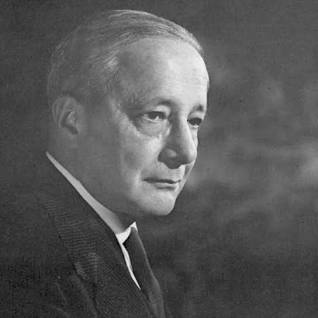 Michael Polanyi repeatedly warned that propaganda and media lies, amplified by modern technology, threaten to destroy free society by replacing objective truth with enforced ideological “moral inversion.” He argued that truth is defenseless unless intellectuals, scientists, and journalists actively uphold free, independent, and impartial criticism rather than submit to ideological control. He lived through the terrible lies of the Soviet regime and those of Hitler, Mussolini, and others. He believed that no society can remain free if there is a loss of respect for truth and the disciplined search for fair and just solutions to social issues.[4]
What is the Media?
The term “media” comes from a Latin word “medi,” which means “middle.” This word forms the root of many English words. “Mediators” stand in the middle between parties to a dispute, helping them resolve their difficulties. “Intermediaries” negotiate on behalf of parties who cannot meet in person. The “Media” are intermediaries of information. Citizens cannot be everywhere. Therefore, we need the media to mediate news. Because of the volume of events that occur on any day or given period of time, the public relies upon the media to sort through events, prioritize by importance, summarize events in a meaningful and truthful way, and convey the resulting information to those who cannot be present to view and participate in events. When the media fails in this task, becomes prejudiced in the task, ceases to trust in the ability of ordinary people to interpret and act upon the facts, a disaster for our democracy is in the making. [5]
An Outmoded World-View
Behind the decline of American media is a mindset, a way of looking at the world, an orientation in which words do not convey meaning about reality. Instead, words are bids for power. Having given up the notion that the voters should be given the facts whether or not they support the views of the elite, the media is left with using their constitutionally protected position to put into office the candidate/s that support their biases, left, right, or whatever.
This way of looking at the world has two aspects: First, a strictly postmodern (really, “hyper-modern”) view holds that there is no “public truth” out there for citizens to discover over time as we elect candidates and evaluate their performance. There is only an ideology of the left or right that they would like to enact into law, and whoever gets the votes can do as they please. There is no truth, no justice, just ideology. This is a prejudice that practitioners of hyper-modern journalism share with politicians on the left and right—and increasingly with those who control and teach in our universities.
This prejudice contributes to many of our greatest public failures. Just to give one current example, no one seriously denies that Americans cannot permit the unlimited entry of foreigners into our nation. Almost no one believes that foreign nations should be able to empty their jails into the United States or send foreign agents or illegal gang members into the nation to cause social chaos. On the other hand, America was built by immigrants and very few people think that there should be no immigration whatsoever into the United States. Nevertheless, the media often presents exactly these two alternatives, failing to create any real sense of nuance in their reporting.
The media’s failure to fully and accurately cover this story appropriately had led to social unrest, resistance to proper police action, and overreach by some. As in the past, the party the media is trying to “help” will likely pay the price in successive elections. In the meantime, the real concerns of the nation to have a government of a proper size, a budget that is more or less in balance, a politically neutral police, defense and military establishment, goes unaddressed.
In a variety of areas, ideological predispositions of an essentially irrational political and media elite are driving legislation that ensures past problems will repeat. This is dangerous because the problems we face require new solutions, not necessarily available to those trapped in historic ideological positions.
A loss of belief in truth cannot help but be followed by another, perhaps worse, phenomenon. If facts are not important than sensational, overblown, and highly emotional visual and other images are. If all that counts is power, then getting it by playing on voters’ prejudices is what works. The public interest is harmed if media and politicians engage in such behavior.
The problem of loss of faith in truth is complicated by a focus on sensationalism. The politics of negative sensationalism prevents us from having a conversation about serious national problems. It is easy to win office by stating that the candidate you oppose is worse than the candidate you support. It is harder to prove that your candidate had good ideas and is capable of solving a social problem. When you combine a lack of respect for the truth with a focus on the sensational, you have a recipe for democratic disaster.
The Wrong Response
Despite the saying, “All the Truth that is Fit to Print,” [6] contemporary “post-structuralist journalism” has lost its foundation in the search for truth—the media’s duty to mediate facts so people can form sound opinions on social issues. If you don’t believe in truth or that language is a means of reflecting reality, then everything is interpretation. And, in a culture of interpretation, there is no lasting concern for truth.
Of course, people do not always agree on the proper interpretation of the facts, and there is always the possibility of error. This is the fallibilist view that our knowledge is always partial and open to correction. Polanyi repeatedly reaffirmed that every human endeavor carries the potential for error.[7] This would include journalism and the media. Because all humans err, humility and restraint are important intellectual virtues.
The Right and Wrong Approaches
Despite the uncertainties and challenges in accurately reporting and interpreting news, it is the media’s duty to pursue and speak the truth as best they can. It’s important to point out the media’s shortcomings, but change can be difficult when people feel under attack. In a critique of the current use of the term “Fake News,” including the President’s use of it to describe those in the media who treat him unfairly, David Atkinson offers the following advice:
Experience shows that when people are attacked, they tend to dig in their heels — and that’s what we’re seeing now. Instead of responding with personal attacks, anger, or rallies against the media and its people, what really helps is strong, calm leadership from the president. Looking back at President Eisenhower’s experience can give us some insight. Although the media didn’t always report his actions fairly or accurately, portraying him as disconnected and old, the facts told a different story. Ike responded by building good relationships with the media and avoiding pointless conflicts, which earned their respect. Despite facing bias, he managed to accomplish a lot of his goals, proving that patience and calm resolve can lead to success.[8]
While it’s important to critique the media for sometimes losing sight of the truth and for showing ideological bias on all sides, it’s also helpful to approach this with a touch of understanding and sympathy. This does not excuse the deliberate distortion of facts about events or, in some cases, the manufacturing of stories or the repetition of what the journalist knows is false information.
Developing a Media Community of Truth
Like both C. S. Peirce and Josiah Royce, Polanyi holds up science and its practices as a way forward for other endeavors. Science is based on mutual trust among scientists, who constitute a truth-seeking community with shared goals and a shared commitment to seeking the kind of truth science can discern. Science involves committing oneself to a faith that science can lead to knowledge about the world. This commitment is evident in the long years of preparation, training, education, apprenticeship, and the like that science requires. It also involves taking personal responsibility for publishing and reviewing one’s own work and that of others. It involves subjecting oneself to the critique of one’s own mistakes or limitations by the greater scientific community.[9]
For media of all kinds to regain trust, it’s important that it begins to resemble science more closely. It should evolve into a true community of inquiry, with standards upheld not by mere government mandates but by the shared internalized moral values of its members. This dedicated pursuit of truth needs to be open to ongoing criticism, which is best supported by a diverse range of media outlets presenting different perspectives on public matters. Still, having many outlets with diverse viewpoints doesn’t absolve each individual, no matter their perspective, of the duty to actively seek out the truth as much as possible within journalism and the media.
Conclusion
The American press needs to pause for reflection. Voters need more information, less pure opinion, and more neutrality from a press dedicated to the search for truth, not power. The media needs to report the facts surrounding the initiatives as accurately as possible. Everyone needs to be held accountable to the democratic process. For this to work, and for republican democracy to work, there must be something more important and more fundamental than victory for our side.
There must be shared values and a shared belief that the democratic process works, not always immediately but over time. There must be a shared commitment to seeking solutions beyond ideology and prejudice that are the best and most reasonable for our national problems. There must be a shared belief in truth, justice, fairness, and the capacity of our nation to create a fair and just society for all people. Without that shared commitment, the future is dark. With such a commitment, whatever darkness may periodically erupt, there is always hope for a better future for all people.
Moral inversion in the media undermines the values of a free society, the search for justice in public life, and ultimately the rule of law. While it is important that we revisit the values of openness, tolerance, and free speech—principles that truly honor the dignity of all people, it is also important that we recover the notion that those who mediate information to others in a free society must do so conscious of their sacred trust—the trust that they are truly seeking in a non-biased way to give the public valuable information. As one author puts it, ultimately, we face a choice between two different paths:
- Freedom —> openness —> confidence —> truth-tracking —> dignity;
- Despotism —> concealment —> diffidence —> bad science —> serfdom and servility.[10]
Copyright 2026, G. Christopher Scruggs, All Rights Reserved
[1] These kinds of statements are made more incredible by the fact that there is a code of ethics to which journalists are supposed to subscribe and follow. See, Society of Professional Journalists Code of Ethics at https://www.spj.org/spj-code-of-ethics/ (downloaded February 2, 2026). Its preamble reads: “Members of the Society of Professional Journalists believe that public enlightenment is the forerunner of justice and the foundation of democracy. Ethical journalism strives to ensure the free exchange of information that is accurate, fair and thorough. An ethical journalist acts with integrity. The Society declares these four principles as the foundation of ethical journalism and encourages their use in its practice by all people in all media.”
[2] Gallup, “Trust in Media at New Low of 28% in U.S.” https://news.gallup.com/poll/695762/trust-media-new-low.aspx (downloaded February 2, 2026).
[3] See for example, Kirsten Eddy & Elisa Shearer, “How Americans’ trust in information from news organizations and social media sites has changed over time” Pew Research Center (October 29, 2025), https://www.pewresearch.org/short-reads/2025/10/29/how-americans-trust-in-information-from-news-organizations-and-social-media-sites-has-changed-over-time/ (downloaded February 2, 2026).
[4] Michael Polanyi, Science, Faith, and Society Chicago, Ill: University of Chicago press, 1946), 19.
[5] This blog is partially a rewrite of a previous blog on the subject of the incipient nihilism of media as it relates to politics. See, “An Independence Day Meditation: Media, “Alt-Media” and News Media Lost in Post-Modernism” (July 4, 2017) at www.gchristopherscruggs.com.
[6] Humorously, “All the News That’s Fit to Print” is the motto of The New York Times, originally developed in 1896 by publisher Adolph S. Ochs to distinguish the paper from sensationalist “yellow journalism”.
[7] This and the succeeding paragraph are inspired by and reflect the views of David Atkinson, “The Quest for Truth and Freedom: Some Polanyian reflections – Introducing Michael Polanyi to a post-truth world” Fulcrum (March 14, 2018) https://www.fulcrum-anglican.org.uk/articles/the-quest-for-truth-and-freedom-some-polanyian-reflections-i-introducing-michael-polanyi-to-a-post-truth-world/(downloaded February 2, 2026).
[8] Id.
[9] Zolt Ziegler, “Michael Polányi’s fiduciary program against fake news and deepfake in the digital age” Open Forum Published: 27 April 2021 Volume 38, pages 1949–1957, (2023) https://link.springer.com/article/10.1007/s00146-021-01217-w#citeas (downloaded February 2, 2026). See also, Michael Polanyi, Personal Knowledge: Towards a Post-Critical Philosophy (Chicago, Ill: University of Chicago Press, 1958), 160-171. I have outlined the views of Peirce, Royce, and Polanyi in detail in G. Christopher Scruggs, Illumined by Wisdom and Love: Essays on a Sophio-Agapic Constructive Postmodern Political Philosophy (College Station, TX: Virtual Bookworm, 2025).
[10] Daniel B. Klein, “ Misinformation Is a Word We Use to Shut You Up” 40 Years of Liberty Institute (May 31, 2023) https://www.independent.org/article/2023/05/31/misinformation-is-a-word-we-use-to-shut-you-up/ (downloaded February 2, 2026).