
Process Justice 3: God in Process Thinking about Justice

It might seem unusual to find a section on God in the political arena as part of a series of informal writings about the search for justice. Hopefully, by the end of this blog, we’ll see that including God in process-based political discussions is justified. The modern world often reacts against the idea that God or religion should play a role in politics, and a quick look at history helps us understand why. Before the Enlightenment, Europe was torn apart by religious wars among Protestants, Catholics, and various political groups trying to assert control over the church and its followers. This turbulent history, which concluded with the Peace of Westphalia in 1648, left a lasting negative impression on many thinkers.[1]

In France, in particular, many people felt that the close ties between the Roman Catholic Church and the French government unfairly burdened the poor and lower classes. Across most European countries, religious dissenters often faced persecution. One of the main aims of Enlightenment thinkers was to protect individuals from the threat of religious persecution by advocating greater separation between church and state.

The Enlightenment thinkers dreamed of freeing the human race from religious superstition and institutions, enabling the advance of science and technology, and, originally, the emergence of a universal moral system on which all rational people could agree and on which human societies and their laws could be based. Unfortunately, this dream could not be realized, and the modern world lost confidence in the possibility of a universally agreed-upon moral system. In addition, with the breakdown of Enlightenment confidence in human reason, a kind of cultural nihilism developed in Europe and the West, including the United States.

The God of Process Thinking

Major process thinkers are often considered “constructive postmodernists.”[2] In other words, this group of thinkers has generally opposed the deconstructive potential of much modern thought and has been sympathetic to religion and morals. Some of these thinkers early on saw the potential for cultural and political nihilism as the modern world decayed, and addressed that decay by offering constructive thinking about the problems of religion and morality. As a whole, they reject the idea of “God as a Super Tyrant” who undertakes to manage the universe in great detail. Nevertheless, they are concerned to make room for a realm of the spirit, universal values and human freedom in the search for justice.
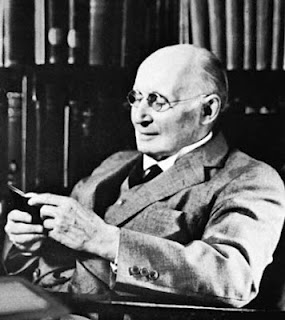
As always, when discussing the various takes on process and thought, it’s common to begin with Alfred North Whitehead. (This is not to deny the contributions of many other thinkers.) Whitehead was not religious but was sympathetic. He grew up in a religious household. His father was an Anglican priest in the Church of England. Although Whitehead lost interest in the Christian God of his parents early on, he remained sympathetic to religion and often had positive things to say about Christianity in particular. Despite this, he’s often been regarded as a kind of Western Buddhist because of similarities between aspects of his thought and Buddhist philosophy.[3]

For Whitehead, God is “dipolar,” meaning there are two aspects to God’s being. He begins his analysis by distinguishing between the primordial eternal (or transcendental) nature of God’s being and the “consequent” (or postmordial) nature of God as God is involved in the universe. In this essay, I will speak of the primordial and postmordial natures of God as the distinction between God’s eternal nature, considered without regard to his relationship with creation, and his postmordial nature, which includes his intimate involvement in his creation, allowing Christians to believe that we live and move and have our being in the ever-present God of wisdom and love revealed in Christ.[4]

Eternal Objects and Whitehead’s God

To better understand Whitehead’s perspective on God, let’s explore what he calls “Eternal Objects.” As we discussed earlier, Whitehead describes our everyday world—sometimes called the “Actual World”—as composed of many actual occasions, which I have called “momentary events” or “units of becoming.” The things we perceive as stable objects, which he calls “Enduring Objects,” are really just complex events that persist because of their underlying structure.

Whitehead points out that there are two types of objects that influence the emergence of the world of actual occasions but are not themselves actual occasions. These are:

  1. Eternal objects, that is, ideal entities, like “justice,” that represent pure potentials for becoming real in the actual world. They also serve as the foundational concepts underlying all actual occasions. As to notions such as justice, I have called these “Transcendental ideals.”
  2. God is the unique Eternal Object, who is both an Eternal Object and the primordial actual entity. (That is to say, God exists and has always existed as an actual entity that influences reality. While God is not an actual occasion (“momentary events” or “units of becoming”), God is present in all actual occasions.

Eternal Objects are the qualities and structures that shape actual occasions, such as instances of “justice” or “injustice.” Every individual entity is noetically composed of and defined by an endless hierarchy of these Eternal Objects, which can be a lot to take in. Basically, Eternal Objects are essentially the same as what philosophers call “universals,” which are repeatable qualities, characteristics, or types that can be shared by multiple distinct objects or individuals.

For example, consider me: I am a human being, a man, Caucasian, with blue eyes, a Christian, and a seeker of justice. I am also a citizen and a church member. Countless universals make up who I am. For Whitehead, Eternal Objects gain meaning and become “real” through their embodiment in individuals. In turn, individuals find their meaning through their participation in these eternal logics.[5] In this respect, they are somewhat similar to what Aristotle called “Potentials.” Eternal objects find their concrete existence as they become embodied in something that exists.

This feature allows each actual entity to be experienced in important ways by future entities.

  1. Eternal Objects participate in the causal connection among individual entities, functioning as private qualities and public structures that characterize the growth of actuality in its rhythmic advance from private, subjective immediacy to public, extensively structured fact.
  2. Eternal Objects are real potential elements (noetic ideals) that ensure that the process of nature is not deductive succession but organic growth and creative advance. This characteristic is important for understanding such political notions as Justice, for the search for justice is one of constant change and creative advance.

According to Whitehead, Eternal Objects are pure potentials that arise from the nature of the special actual entity humans call “God.” In God’s eternal life, Eternal Objects are ideal possibilities or potentialities, carefully ordered by logical and aesthetic principles, that become actual when embodied in Actual Occasions. Because God is both eternal and involved in his creation, God is both the originator and the recipient of every actual embodiment of these qualities. When these objects are realized in God, they transcend the specific actual entities in which they are found. For instance, consider the concept of blueness—it’s present in many actual entities, such as my blue eyes, but the essence of blueness itself transcends any single physical example.

Throughout Western philosophy, several fundamental ideas have been proposed about the ultimate nature of God. One is classic theism, which sees God as eternally above the universe. Those who reject classic theism often turn to pantheism, which views God as the inner spiritual essence of everything in the universe. The final idea, which aligns well with a process view of God, is called “panentheism.” This perspective sees God as both present within everything as the inner spiritual essence and existing transcendently beyond the universe. Therefore, God and his eternal qualities are both transcendent and potential, and present and real in concrete reality.

In summary, the God of process thinking is both eternal and unchanging, with the characteristics philosophers and theologians have historically attributed to God, and loving, personal, and social, maintaining constant contact with his creation and everything in it. The “postmordial” nature of God is not transcendent but present in creation and actively part of the world’s process. In a real sense, God can be seen as “becoming” as creation unfolds in both the natural and social worlds that human beings create.

In classical Christian terms, God the Father is not knowable in his essence, which transcends human existence, but the word of God (the logos) is present in the universe and became supremely present in the incarnation of Jesus Christ. The word of God, which is present in every actual occasion, is therefore knowable and can be known and experienced in human history. That specific quality of the logos that we call justice likewise becomes existent in a human society when people act justly in a specific situation. A court is considered just, or a decision is considered just, when it embodies that quality we call justice in a principle or decision.

A God of Persuasion Instead of Force

For Whitehead, God is “actual” (an actual entity) but nevertheless “non-temporal” (not a part of space/time as we know it), yet is the source of all creativity and innovation.[6] God transmits his creativity through what Whitehead refers to as “Persuasion.” God does not force the universe to do God’s bidding. Instead, God “persuades” or “lures” the universe through wisdom and love into becoming what God intends it to be. In this act of persuasion, God submits himself to the fact that the universe and human beings may freely ignore or violate that persuasion.

As mentioned earlier, Whitehead’s God has two poles of existence: a transcendent pole, which is primordial, and a consequential or physical pole that I have called “postmordial.” The transcendent pole is the “mental pole” of God, wherein the existence of Eternal Objects is found. As primordial, God is eternal, having no beginning or end, and is the ultimate reason for the universe, a factor that was important to Whitehead.

Despite the transcendent reality of God, God is present in the universe and in all actual occasions, which constitute the physical pole of God’s existence. In this physical pole, God experiences the world and the actualization of Eternal Objects within Actual Occasions. Because of God’s physical pole, God can be affected by and experience actuality. Thus, Whitehead’s God experiences and grows in a dynamic relationship with the created universe.

Subsequent interpreters of Whitehead have made significant changes to his theory, bringing it closer to Christian thought. In particular, Charles Hartshorne, the most important of his interpreters in the United States, thought that Whitehead’s definition of God did not sufficiently reflect God’s personhood. The consequential nature of God (God embedded in physical reality) is conscious and constantly moves creation toward an ideal end, wielding the power of wisdom and love. But God does not direct the course of the unfolding so much as “lure” or love creation (including human beings and human society) toward the accomplishment of the ideal ends for which God created them. In other words, God respects the freedom of his creation, including his human creation, and is affected by every decision the universe and everything in it makes.

Thus, process thinkers envision a God who is both eternal and capable of change, experiencing growth and actualization through an infinite variety of relationships with his creation, including the human race’s creations. This dynamic view of God emphasizes that God is not merely an abstract, timeless being but one who knows and includes the world within Himself—building a deep, loving connection with all within it. Only such a loving, active God can be truly complete and responsive, embodying love through real, personal relationships.[7]

Justice, God, and Transcendent Ideals

Whitehead uses the term Eternal Objects to refer to what other philosophers call universals. Regarding universals like “justice,” which is the primary purpose of these blogs, I think of them as what I have called “transcendent ideals.” These ideals exist as noetic potentialities that can be realized in human society through the diligent search for justice, embodied in institutions such as legislatures, courts, and the legal community as a whole, which seek a better, more harmonious society. These ideals exist in the eternal being of God yet are unfolded over time by the actions of human actors, some of whom are inspired by the ideals of the transcendental God and some of whom are not.

At this point, I will become both philosophical and theological at the same time. For example, take the Westminster Confession of Faith and its description of the attributes of God:

There is but one only, living, and true God who is infinite in being and perfection, a most pure spirit, invisible, without body, parts, or passions; immutable, immense, eternal, incomprehensible, almighty, most wise, most holy, most free, most absolute; working all things according to the counsel of His own immutable and most righteous will, for His own glory; most loving, gracious, merciful, long-suffering, abundant in goodness and truth, forgiving iniquity, transgression, and sin; the rewarder of them that diligently seek Him….[8]

Ultimately, what we call morality and justice is rooted in the eternal, simple being of God, who is the ultimate source of any justice humans can achieve throughout history. God has kindly revealed some of this to us, both in nature, which secular thinkers can accept, and in Christian revelation and tradition. God is slowly unfolding this fundamental embodiment of justice, inherent in God’s being, into the time-bound reality of human societies, including our own. Yet the full extent of God’s being—eternal, invisible, and beyond human understanding—remains a divine mystery.

The great Jewish physicist and philosopher David Bohm offers us a way of thinking about the unfolding of justice in a concrete human society that I find helpful. The eternal essence of justice is “enfolded” in the being of God (or, for secular people, in the transcendental ideal of justice and a just society) and “unfolded” into human reality by human actors as they are drawn into the search for that justice, which is continually revealed to those who search for it, however imperfectly.[9]

Bohm sees the universe as deeply meaningful, full of information at every level of reality—much of which we humans are only beginning to understand. This meaningful aspect is constantly being “unfolded” during the course of universal history and especially within human societies. In simpler terms, both the physical universe and human beings, along with society, are inherently meaningful. These physical and mental parts of reality are interconnected as one whole, gradually revealing themselves within the universe, human societies, and history—both in how they unfold physically and through human actions.

To share this insight, Bohm introduced the term “soma-significant” to highlight the meaningful and information-rich nature of the universe. The term also suggests that the mental and physical parts of reality are deeply connected: soma-significance indicates that the physical (soma) and its mental significance are not separate entities, but rather two sides of the same coin, forming one unified reality. [10]

The universe and all its parts, including human societies and justice systems, are naturally both physical and mental (what I call “noetic”). The core of the universe’s information-sharing is grounded in a somatic order — an arrangement or connection of distinguishable parts within a physical structure. According to Bohm, there’s essentially only one flow in the universe, a flow that is both material and meaningful. Though meaning shifts within that flow, there’s no final line dividing mind and matter. The universe is a single meaningful whole, and while we can analyze and distinguish mind from matter, they are part of the same process.

The flow of the universe, through its organic processes, is a movement of matter, energy, and information in which meaning flows between the physical aspect (“soma”) and the noetic or ideal aspect (significance), yet ultimately they are not separate. The beautiful interconnectedness of the universe means that soma-significance (physical reality) is paired with its opposite, a sign-somatic relationship that Bohm calls “signa-significance” (a noetic reality). This means that, at a basic level, the information and signs that form the universe influence the physical world, as they are closely interlinked. Soma-significance shows that matter affects the mind, while signa-significance highlights that changes in meaning or significance also have physical effects.

This insight illuminates how ideals like justice come to life through the actions of a community dedicated to law and fairness. The deep meaning of justice is woven into the fabric of reality itself—and into the essence of God, who continually reveals it (unfolds its reality) through those who earnestly pursue justice in their communities. This pursuit is not merely abstract; it’s meaningful and tangible, influencing the physical world and shaping the ongoing development of society and legal systems.

Conclusion

Readers, I hope you can see that I’m trying to express an idea I haven’t fully understood. The main principle is actually quite straightforward. Justice isn’t simply a matter that can be reduced to science, as modern thinkers often suggest, focusing on power, relationships, economic factors, or political ties. Instead, justice is unique, independent, and eminently real, though its actual existence in a given society is embedded in its institutions and their decisions. When we seek justice, we can’t ignore the influence of power, political realities, economic laws, or other social and cultural factors present in any society. Seeking justice is about creating a harmonious society where different groups can coexist peacefully and where those who disturb that peace are held accountable and receive what they deserve. Even more importantly, it helps establish cultural norms—such as protecting private property and the obligation to make amends when harm is caused negligently.

From this perspective, it should not surprise anyone that various societies have different legal codes and approaches to legal problems. The power dynamics, relationships, economic realities, political realities, and social and cultural factors differ among societies. For example, Muslim societies are very different from Western democracies, as are Confucian societies, such as China. Nevertheless, despite all of our differences, we are on a common search for justice and can live in a peaceful world order as we seek a just order of the societies of which we are a part.

Copyright, G. Christopher Scruggs, All Rights Reserved

[1] The Peace of Westphalia, signed in 1648, ended the Eighty Years’ War and the German phase of the Thirty Years’ War. The treaty, signed in Münster and Osnabrück, involved Spain, the Dutch, the Holy Roman Empire, France, and Sweden, marking a secular shift in European history.

[2] Constructive postmodernism refers to a movement that rejects the nihilistic attack on the foundations of knowledge and morality by what sometimes called the deconstructive postmodernists. Instead, constructive postmodernism proposes a view of the progress of human knowledge that respects tradition, communities of interpretation, and religious and other traditional components of morality and the search for justice. My own views track those of C. S. Peirce, Josiah Royce, Michael Polanyi, Alfred North Whitehead and others of the movement.

[3] A substantial portion of this post is based on an earlier post, see G. Christopher Scruggs, “Whitehead No. 2: God, Eternal Objects, and Persuasion” at  www.gchristopherscruggs.com August 1, 2022 and G. Christopher Scruggs, Illumined by Wisdom and Love: Essays on a Sophio-Agapic Constructive Postmodern Political Theory (Hunt, TX; Quansus Publishing, 2025).

[4] As an aside, I believe that there is nothing inherently contrary to classical Christian belief in the work of the major process thinkers, despite the antagonism of some process thinkers like Charles Hartshorne.

[5] In this argument, I think Whitehead would have benefited from adopting a distinction made famous by Charles Sanders Peirce, namely the distinction between what it means to be real and what it means to exist. Peirce uses the term “exist” to refer to material reality. He uses the term “real” to include things that are not part of material reality but influence it, such as universals like justice. I believe this is the better way to think about a process argument as it relates to the law. Justice exists in past situations (existing reality) where society has found a just solution to a problem, and it serves as a transcendental ideal or a noumenal reality that continually shapes future decision-making.

[6] In what I think was a mistake, Whitehead does not consider God the preeminent being as does traditional thought. Instead, “creativity” is the ultimate metaphysical principle that underlies all actual entities. The universe is characterized by the continual creative emergence of actual occasions and actual entities. Charles Hartshorne rejected this view, returning God to the position of metaphysical supremacy. For Christians, God’s eternal wisdom and outpouring love are the source of this creative advance. “Justice” is one of the results of God’s creative outpouring.

[7] Thomas Hopko, “God and the World: An Eastern Orthodox Response to Process Theology” A Dissertation submitted in Partial Fulfillment of the Requirements for the degree of Doctor of Philosophy in the Department of Theology of Fordham University (New York, 1982). 126-127. This dissertation remains worth reading for anyone interested in the potential for dialogue between Orthodox thinkers and process thinkers.

[8] Westminster Confession of Faith, Chapter 2, Section 1. The Second Helvetic Confession puts it this way: “We believe and teach that God is one in essence or nature, subsisting in himself, all sufficient in himself, invisible, incorporeal, immense, eternal, Creator of all things both visible and invisible, the greatest good, living, quickening and preserving all things, omnipotent and supremely wise, kind and merciful, just and true.” Second Helvetic Confession, Chapter 3 Of God, His Unity and Trinity, Section 1 (emphasis added).

[9] See, David Bohm, Wholeness and the Implicate Order (London ENG: Routledge, 1980). David Bohm, “the Enfolding Unfolding Universe and Consciousness” (1980) in Lee Nichol, ed, The Essential David Bohm (London, ENG: Routledge, 2003).

[10] “Soma- Significance and the Activity of Meaning” (1980) in The Essential David Bohm, 158.

Notes to a Process View of our Judicial System: Part 2

Society As a Dynamic Process System

Last week, I shared a perspective on our legal system, viewing it as part of a larger ‘world’ composed of various societies. For those who think in terms of processes, the fundamental building blocks—called actual occasions—combine to form enduring entities and communities. This suggests that what we often consider “reality” is, at its heart, social. This encompasses not only the physical universe but also our social and intellectual worlds. Simply put, everything—everything—is fundamentally social, including human beings, our culture, and the institutions we build.

Relativity theory and, at the quantum level, what is sometimes called “spooky action at a distance” or “entanglement” implies that everything in the universe is related to everything else. In other words, the universe itself is a society of sorts. Every subatomic particle, every actual entity, every actual occasion (“momentary event,” “unit of becoming,” or “relational experience”), every person—everything in the universe—is socially related to everything else. To put it bluntly, everything whatsoever, of whatever kind or character in the flow of universal history, has social relationships with everything else.

Our legal system is highly complex, built on a series of laws and principles, starting with the Constitution, which remain steady over time but can evolve. Last week, I shared the idea of “fixed principles” or “fixed decisions” as the legal equivalent of “actual occasions” within the law. For example, Marbury v. Madison, decided in 1803, was a groundbreaking case that set the precedent that the Supreme Court has the power of judicial review.[1] This means they can strike down laws passed by Congress that conflict with the Constitution. This principle has been a part of our legal system for over 200 years. While it could theoretically be changed, it’s highly unlikely that Congress, the Supreme Court, or the people through amendments would overturn Marbury v. Madison. It is a fixed decision that reflects a principle of American law and has endured for a long time.

Social Relationships and Law

In recent years, the relatively new discipline of ecology has made it clear that the world consists of interrelated parts not only at the universal and subatomic level but also at the material level of our day-to-day lives. When we consider the natural world as a whole, sustaining healthy relationships among its parts becomes an important goal. At the human level, the principle of ecology is even more important. Maintaining healthy human relationships within a healthy society is an important goal for any society. This is important when considering what kind of society we want to create, what kind of judicial system we intend to have within that society, and the nature of justice itself.

We often speak of the “social environment of a culture.” This implicitly recognizes that every facet of a culture is related to every other aspect and that we experience that social environment in numerous ways. This is not just true on a material level, that is, the level of human beings who run into each other through their social contacts. It’s true on a noetic level as well. Although we have to look at certain immaterial aspects of society as discrete social realities, they’re all related. For example, our judicial system is related to our political culture, which is related to our philosophical culture, which is related to our ideas about who human beings are, which is related to the arts as well as the sciences. For our society to be healthy, all the relationships human beings create must be healthy, not just in isolation but in relation to one another.

As a result, we can’t view a judicial system in isolation from the other aspects of the culture of which it is a part. This, I think, explains some of the problems we sometimes face when religion, morality, and law collide. Some people would like to keep morality and religion completely outside the boundaries of the law. Some people would like to see their moral views enacted into law in a rigid way. Neither of these is the best way to approach the problem of religion and morality. The fact is, our moral views are important and inform our legal views. This is apparent in public debates such as that over abortion; it’s less obvious in other areas.

Despite attempts by some to separate morality and law, it is clear that much of the law in every society, including our own, has a moral basis. Stealing is illegal in most societies, but it’s also widely regarded as immoral. Murder is illegal in most societies, but it’s also widely regarded as immoral. The moral element, to use a technical term, “inheres” in the law as part of its essential reality. Sometimes moral commitments offer clues about how the legal “real world” is or ought to be. Sometimes the legal element of society gives us a clue as to what morality it should adopt. Most importantly, as the widespread social decay evident in some societies illustrates, if the majority of people believe that the leadership or legal system of that society is unfair or immoral, the entire culture experiences dysfunction and decay.

Individuals and Societies

One persistent challenge in our modern world concerns the relationship between individuals and their society. This is true because individuals and the society they live in are not independent, unrelated entities. We develop our sense of self within the context of human society. Every human being is born into a family, community, and culture with unique (and sometimes destructive) norms and traditions. Our civilization is built upon the shared social attitudes that various communities embrace and internalize. Yet it’s important to remember that human beings are not mere automatons driven solely by society. At some point, the character of the mature individual emerges—an individual capable of independent judgment and creative involvement in all the societies of which he or she is a part.

In reality, human societies both constitute individuals and are constituted by them. Society and culture, including political institutions and conventions, shape individuals and are shaped and transformed by them. Thus, there is a constantly unfolding interplay between individuals and society, resulting in ongoing social change. Human society not only shapes individuals’ social behavior; it also gives them the potential to change society.

Over time, infants develop into conscious human actors who can influence the societies into which they were born. This creative human capacity allows people to modify the beliefs and attitudes that shape their sense of self and project those views into the broader communities to which they belong. Thanks to this capacity, individuals can shape and refine their personal growth—their developing self—by influencing and even changing the broader social patterns on which they were initially built. In this way, there’s a continuous, dynamic interaction between the individual and society, with each continually shaping the other. Once again, you cannot reduce societies to collections of independently existing individuals, nor can you reduce individuals to products of the societies that produced them.

Our habit of thinking of individuals as isolated monads, like Newtonian atoms bound together by forces, has fueled a kind of extreme social individualism on one side of political and social thought and an extreme corporatism on the other. It’s my view that both these extremes are wrong and that thinking in this way is no longer the best way to think. We human beings have a separate identity, but that identity is heavily influenced by the culture and society of which we are a part. It’s actually kind of hard to say where social influence ends and individual thought begins. I’ve known many people who considered themselves to be individualistic rebels who, in fact, were simply adopting the views and behaviors of a subset of our society of which they were a part.

Why Tolerance is Important

To use a religious term, it would seem that individuals and societies “coinhere” with one another. We are deeply embedded in a network of relationships, and our self-identity is tied to the identities of those around us, especially those in our families, communities, churches, social groups, political parties, cities, states, and nation. A problem, however, occurs when we over, identify with the social realities to the point where we cannot appreciate other people, their views, and their way of life. If we make our own social group, the absolute source of our identity, we end up, worshiping it and giving it a power over us that is unhealthy not just for us, but for the society of which we are apart.

In a complex, multifaceted social system, like the United States of America, one is daily, brought into contact with people from other places, other races, other moralities, other religions, and other ways of life. One does not have to agree with that way of life in order to respect the rights of those who have it. The basis of the First Amendment’s protection of religious freedom was for just exactly this purpose. The early United States was primarily Christian, but, there was a Jewish minority. In addition, there was a division between Protestants and Roman Catholics and among the various Protestant sects that made up the early nation. The founders had experienced in Europe, and primarily in the United Kingdom, the results of the government making decisions about what was and was not religiously acceptable. Many of the first generation of Americans left England because of their persecution for their religious beliefs.

Therefore, they felt it was necessary that Congress should not establish a religion. That is to say, Congress could not establish a religion that was binding upon all members of the society of the United States of America. When they said this, they intended in particular to protect Americans from an established church, like the Church of England had become in the country from which most of them left. However, many of the founders were aware of a Jewish minority in America and they expected these protections to be available to them as well.

This gives us a clue as to how we ought to behave today in a much more complex situation. Today America not only has innumerable Christian groups, but also every world religion and a number of what would have been called religious cults exist in the United States. They occupy the public arena, have access to the media, build religious establishments, and otherwise participate in the society of which we are all a part. There are also people who have no faith at all, and they also participate in the society of which we are a part. It is only if we can all recognize that we are on a common search within our various communities for a kind of religious truth and a way of life that is life enhancing that we can permit those who differ from us to express their views.

This aspect of American culture is different than the experience in Europe and other places in the world. We sometimes are appalled by the kind of religious control that governments in Europe feel empowered to create. We need to remember that there was not a time in Europe when people were religiously free. The government was always in charge of religion, and whatever religious freedoms exist because of a government decision.

This is not the view of religious freedom held in America. In America, we believe that the people are fundamentally sovereign, and the government is limited to the specific powers given to it. The people have the right to restrict those powers by amending the Constitution, which they have done. In fact, before the Constitution was fully put into effect, it was required that the first ten amendments be passed. These amendments prominently included the First Amendment, which guarantees freedom of speech and of religion. I hope to do a longer series of blogs on this very important point before the year is over, or early next year at the latest.

We see today in America a generation that has grown up without a full understanding of the unique freedoms we Americans possess and the unique wisdom of our founders in placing restrictions upon the power of the federal government. In addition, nearly every state Constitution has the same or similar restrictions. The notion of our founders was that sovereignty ultimately resides in the people, and that their rights cannot be limited except by the people themselves.

Conclusion

Initially, the blog for this week and next week was combined into one. However, as I tried to keep it to a typical week’s content, the word count doubled! So, I decided to split it into two parts. This week, we focus on the individual and society, while next week, we’ll explore traditions and their role in social stability and preserving our freedoms. I hope you find these discussions engaging!

Copyright 2026, G. Christopher Scruggs. All Rights Reserved

[1] Marbury v Madison, 5 US (I Cranch) 137 (1803).

Notes to a Process View of our Judicial System: Part 1

For some time, I’ve been trying to think about what a process-influenced judicial theory might look like. Over the next few weeks, I am publishing what is essentially a series of reflections on a process view of reality, as it might be understood to help our judicial system work better, promote the search for justice and social harmony in our society, and, hopefully, help make the world a better place for our children and grandchildren. Unlike most of my endeavors, this blog does not include a bunch of footnotes reflecting research. It is a reflection on research already completed, most of which has already been set out in one or more of my writings.[1] Those who follow me know that I rarely publish anything without research, and the next three or four blogs are no exception.

What is a Process Influenced Judicial Theory

The idea that reality is best viewed as a process is not new. In fact, it goes back to the Greek philosophers. The Biblical writers understood this important truth. They knew that:

Time, like an ever-rolling stream,
Bears all its sons away;
They fly forgotten, as a dream
Dies at the opening day.[2]

The Biblical writers were not unaware of the reality of change. The meditations of the prophets on the rise and fall of empires from Egypt to Assyria, Babylon, Persia, Greece, and Rome testify to their understanding of the reality of change in the political realm.

From a political point of view, Marcus Aurelius noted that the Roman Empire was subject to constant, and sometimes threatening, change. Thus, he says:

Observe constantly that all things come about by change; accustom yourself to reflect that nature of the universe loves nothing so much as changing things that are and making new things from them. [3]

Nevertheless, Western civilization has been influenced primarily by what might be called a static or atomistic, reductionist view of the world, which results in a reductionistic, power-oriented theory of justice. Plato, represents the classical view that notions such as “justice” were real things, what he called Forms, that existed in a world of Forms, and upon which all incarnations of the Form were based. Put in legal terms, any particular just decision was a physical incarnation of the ideal of Justice.

A Static Material Universe

Beginning with Newton, this earlier, ancient organic view of the universe began to shift toward a material vision of the universe. Part of what drove the rise of modern science was the search for universal, unchanging, and timeless principles that would govern the universe and everything in it. According to early Enlightenment thinkers, the universe was made by God, but the God who created it was more of an absent creator, participating in an overflowing stream of reality.

What might be called “historical Enlightenment optimism” held that moral values were built into the universe and, in a sense, baked into the human personality, which emerged from that material universe and was part of it. Initially, these thinkers believed that all right-thinking people would eventually agree on what was just or moral in any particular situation. The problem was human ignorance. Unfortunately, a consensus on moral, political, and legal issues was never achieved. In the end, this part of the Enlightenment project failed. This, in turn, led to a kind of moral nihilism common in contemporary society. Modern materialists tend to think they’re merely human choices enacted by a power-invested body.[4]

Contemporary materialist philosophers have generally held that there is no such thing as “Justice” per se, except as a label that those who seek a particular outcome place on things that advance their interests, or, for more communal thinkers, on the human community as a whole. The technical term for this view is “nominalism,” i.e., the notion that universal categories like “justice” are merely names we place on certain states of affairs or results that we, our group, or our society approve of.

This development is particularly important for the United States of America because we are the first Enlightenment nation. America was born out of the optimism early Enlightenment philosophers felt about the prospects for a human-oriented politics that would serve the best interests of citizens. It’s also a fact that the decline of that optimism has resulted in a kind of political realism and negative-oriented politics that characterizes contemporary political debate. One of the objectives of a constructive postmodernism is to overcome that realism and its destructive results in political life.

Process View of Reality

Unlike materialist thinkers, process thinkers believe that the fundamental reality lies not in matter and forces acting upon it, but in the unfolding process of the universe.  The quantum physicist and philosopher, David Bohm, describes the process of reality as a “flow.” Skipping the long history of process philosophy, it seems to me that the best way to understand reality is as a coherence among information, energy, and “concretions” of that intelligible energy flow, which we call “matter.” This is where we encounter the work of Alfred North Whitehead.[5] For Whitehead, the fundamental components of the flow of reality consist of what he called “actual occasions,” which, if they retain a stable existence, can become “actual entities.”

In this blog series, I may use the term “Fixed Principle” to describe the core realities within a judicial system. A fixed principle could be anything from a granted motion, a jury or court verdict, an appellate ruling, or an administrative decision—basically, any point at which a legal principle or its application to specific facts becomes settled for a certain period. Throughout American legal history, we’ve seen fixed decisions that have lasted for most of it, as well as some that are quite recent. What’s truly important isn’t how long they stay in control, but that, for a time, they become an accepted part of the objective reality of our judicial system.

I’ve always thought the division somewhat misleading because actual entities are actual occasions that remain stable over time. A mountain is a good example. It might last several million years because the fundamental quantum-physical actual occasions that make it up have a stable form capable of enduring that long. Human beings are the same. I am 75 years old, and my body has remained stable, capable of sustaining itself for that many years. However, because of my constitution, it is not possible that I will last as long as a mountain.

The same is true of social structures, such as a legal system. Every time a judge makes a decision, there is a small change in our judicial system, but the American legal system itself has maintained its identity over time. That does not mean it’s eternal. For example, the Roman Empire had a judicial system that no longer exists. Yet for hundreds of years, there was a distinctively Roman judicial system. Today, the United States and Europe are inheritors of the heritage of that ancient system of laws. Our legal system is, however, not eternally stable. Like all human creations, it must either evolve or die.

This brings us to a concept that is of great importance to Whitehead and to process thinkers. Although human beings can be described as actual entities, and although stable structures have that characteristic, human beings are also societies. In fact, human beings are a particular kind of society known as a “structured society.” Structured societies are composed of nexuses, or simple combinations, and more basic societies, or what he might call “subordinate societies,” which contribute to the definite relationship of the society in question. What makes a society important is that it has a kind of social order that allows it to change and adapt to its environment.

Although this can be hard to get our minds around, as to human societies, it’s fairly straightforward. Human societies are made up of human beings, who are themselves highly complex social structures. The nature of these social structures, particularly the presence of human consciousness and conscious thought, makes these societies especially complicated and especially capable of innovation, adaptation, and growth. It should be obvious that if a human being is a complex society capable of adaptation and growth, then social structures made up of multiple human beings are even more complex and adaptable to human innovation. This is important when thinking about a judicial system, which is itself a highly complex structure.

In the midst of the operation of any particular human justice system, “Justice” is what emerges from a justice-seeking community. Thinkers such as C. S. Peirce and Josiah Royce, along with their followers, view the search for justice as a communal enterprise in which a community seeks to order itself rightly. The term “justice” denotes the concrete achievement of that right order at a particular point in time.

It’s important to remember that for a community to truly achieve justice, it must genuinely be committed to seeking justice. If that community becomes corrupted and turns into a power-hungry group, it can no longer effectively create a fair society. I believe we’re currently facing this challenge. Moreover, there’s always the risk of mistakes along the way. Often, the bigger obstacle isn’t losing sight of justice, but our human tendencies—like self-interest, class consciousness, and other flaws—that can cloud our judgment. These imperfections mean errors are inevitable, even within the most earnest justice systems. Society’s progress isn’t always straightforward; we move forward at times and hit snags at others, but the journey continues.

This is an extremely important point for modern people to grasp. Progress is not inevitable. Not every new idea is progress. Not every social pressure from a particular interest group necessarily leads a society forward. In fact, given human nature, many of the pressures on any society and its justice system would lead to corruption and decay if followed. This means that the justice-seeking community has to be ever vigilant and always willing to admit mistakes.

Noetic Reality of Justice

When I say that a judicial system, as a community of justice seekers, is capable of making mistakes, I’ve reached an important point. Justice is not merely a label for whatever a group of people considers just at any particular point in time. It is something that exists outside of us, and its reality stands over our notions of justice, always critiquing the current state of justice in human society. Justice is what I call a “transcendental ideal.” Human actors can and do make mistakes along the way, but justice itself stands over the human search for justice like an invisible beacon guiding us towards a rational and harmonious solution to our concrete search for justice in our own society.

Understanding that not all real things are physical can be quite inspiring. For example, a judicial system isn’t just about physical buildings or officials—it’s about the relationships and ideas that shape it. This system involves many people—legislators, kings, rulers, judges, lawyers, court staff, police—everyone plays a vital role. While it has tangible parts like structures and personnel, it also has important intangible parts—what I call “noetic” or ideal components, which include the core ideas and values it stands for. These noetic parts are actually even more crucial than the physical ones. A legal system can withstand a corrupt official, but it’s much harder to endure if the fundamental idea of justice is lost.

These ideal or noetic components are just as real as the human actors and physical structures involved. To borrow from Plato, that which is real is that which has the capacity to influence the world. Ideas and concepts, such as justice, are not material, nor does justice exist in a Platonic world of ideal Forms. Yet justice and injustice are real aspects of any social reality. They exist as “noetic realities.” The legal system rests on an enormously complex set of noetic realities embodied in areas of the law we call contracts, torts, property law, tax law, statutory law, and administrative rulings—a host of ideal components that are in constant relationship with one another and with the physical reality they regulate.

Influence and Change

A process view of a judicial system holds that any system, any portion of the flow of reality, is constantly changing. To be real is to be both subject to and influenced by others, and this means being embedded in a constantly changing world system. This is true in the subatomic world, in the material world we inhabit, in the social worlds of which we are a part, and in any judicial system. Every participant in a judicial system, however insignificant, has some influence on the system as a whole. This influence is constant and results in an ever-evolving structure for a just society as it seeks just solutions to the infinite number of relationships of which we human beings are capable.

We sometimes focus on important entities, such as the United States Supreme Court, as shaping the legal system. And it’s true that the US Supreme Court has greater influence on our legal system than, for example, I do. Yet every Justice of the Peace, every attorney appearing in court, every plaintiff or defendant, every policeman making an arrest, every juror in a trial, and everyone else involved in the system has some degree of influence, and any change we make will be embedded in that system for as long as it exists. One conclusion to be drawn from this is that everything we do is important, whether it is highly socially significant or hardly significant at all. All participants in our society are important parts of the search for justice.

An American Application

I am at a stage in my study of American constitutional law and political philosophy where I am approaching a time to discuss the issue of freedom of religion. In our society, the First Amendment protects freedom of religion. Early on, Thomas Jefferson made some ill-advised comments about the separation of church and state, meaning that we should not have a theocratic state. Those words have been used to support the view that religion should have no impact on our legal or political systems whatsoever. This is not what Jefferson was trying to say, and it’s not true. Once again, since we understand that reality is relational and that all of society is interconnected, we also understand that religious views are fundamentally important to the legal system. They bear upon it in important ways. Conceptually, they must be kept separate, and the law in America should not establish a national religion, but that does not mean that there should be an “iron wall” between religion and politics.

From this perspective, attempts by secular people to remove the Ten Commandments from courthouses are somewhat misguided. They ignore the fact that our judicial system has been profoundly shaped by our Judeo-Christian heritage, of which the Ten Commandments are a fundamental part. This doesn’t mean other components aren’t important or that we mindlessly embody the Old Testament law in our legal system. Our legal system is also based on the works of great non-Christian thinkers, such as Cicero. I would have no problem with the courthouse displaying a few quotations from Confucius, the greatest Islamic thinkers, or anyone else who has seriously considered the nature of justice. The fact is, our legal system is profoundly shaped by this great religious heritage, which finds its way into our culture.

Some readers might worry that I believe morals or religion should control politics or law. Nothing could be further from the truth. Our moral systems and religious communities are part of the broader culture, even a world culture, of which we are a part. But they are not the only part of the culture, and they frequently disagree. Therefore, they can’t be the sole controlling factor in every decision. It’s not possible to have a legal system in which these two irreconcilable views are both enacted into law as their most ardent proponents hope. What we can hope for is a degree of social harmony and human respect for others amid our disagreements.

Consensus and Justice

This brings me to another concept, which I will call “consensus.” When it comes to making decisions, whether as individuals or as a society, there comes a time when we have to decide. Our society, and in particular our political systems, is dominated by a view of decision-making that relies on power. Courts, legislatures, administrators, business executives, and many others believe they get to make the decisions and that their decisions are justified by the power they have to make them. That is not the view I want to defend.

I believe it’s important that we all work together harmoniously to keep our society running smoothly. To do that, we need to find some common ground about what steps to take next. Implementing laws, holding elections, and making decisions are essential parts of this process. But when the pursuit of power and the desire to keep one’s own group in control become the main focus, it can gradually erode our ability to compromise and make fair, wise choices. If I believe that my own success is crucial to my life’s stability, I will be tempted to treat others unfairly.

We tend to think of these decisions as final. If we happen to be on the winning side, we hope they are, but they’re not. A person who has read enough history knows that laws, political structures, conventions, and other things change over time. In law, we seek a decision that can remain stable over an appropriate period of time, which requires a kind of consensus among those who believe it’s the best possible decision, an acceptable decision, or a completely unacceptable decision. Such decisions are always open to further critique and a new consensus. They are fixed decisions only for a period of time.

Pragmatic philosophers often say that truth is what a community accepts as a proper description of reality over time. When they say community, they don’t mean just any community. For example, I don’t get a vote on whether quantum physics is the best explanation of reality. Only highly qualified quantum physicists get to vote. In a legal system, it is primarily legislatures, courts, executives, and administrative agencies that make such decisions.

This place is a significant responsibility for those in a position to form a consensus. It means they need to listen to everyone and distinguish good advice from bad. It also means they have to be able to make decisions that may not align with their particular social group but that seem best for society. Above all, it means we must be willing to compromise. Without the ability to dialogue, share information, evaluate options, and compromise, it’s impossible to have a functional social system, particularly in a society as diverse as the United States of America.

Copyright 2026, G. Christopher Scruggs, All Rights Reserved

[1] I have written a number of blogs on aspects of process thinking at www.gchristopherscruggs.com. In addition, I published a book examining the major pragmatically inclined process thinkers, titled Illumined by Wisdom and Love: Essays on a Sophio-Agapic Constructive Postmodern Political Philosophy (Hunt, TX: Quansus Press, 2025). The title is pretentious because it was intended as the “senior essay I never wrote because it wasn’t required, but I should’ve been required to write it!” One of our children demanded that I do the research.

[2] Isaac Watts, “O God our Help in Ages Past” in Psalms of David (1719), which finds its inspiration in Psalm 90, with its recognition that human life is short and passes away more quickly than we realize when we are young.

[3] Marcus Aurelius, “Meditations” in Marcus Aurelius and his Times; The Transition from Paganism to Christianity, tr. George Long (New York, NY: Walther J. Black, 1945), pp 11-133), 40.

[4] The purposes of this essay, the modern world begins with the work of Descartes and John Locke, and the emergence of modern Democratic societies. By the middle of the 19th century, with the work of Darwin, Nietzsche, and others, the modern world begins to take on a postmodern form, which finally emerges, in my view, in the post-World War I era. As with all labels, there is a certain subjectivity to when one period of history ends and another begins. For example, if you read my other writings, you will see that I believe the state we are in is not truly postmodern but rather something like “hyper-modernism,” the frantic end of the modern world.

[5] For those who are interested, there are three books that are extremely important for understanding Whitehead. Science and the Modern World, Process and Reality, Adventures of Ideas, and Modes of Thought.

Our Unsustainable Budgetary Problem (and One Way to Begin to Solve It)

Anyone who reads the news understands that Great Britain is in an almost impossible budgetary situation. Years of uncontrolled domestic social spending and failure to invest in needed military maintenance have left it nearly bereft of its historic military capacity and deep in debt. Much of Europe is in the same or a similar situation. In Britain, successive Conservative and Labor governments have increased spending on domestic priorities while insufficiently funding defense. In the process, they created a set of social expectations that cannot be met over the long run and, at the same time, a situation in which the long-term viability of their country could be in danger. We often hear criticisms of Great Britain without considering whether the very same thing is happening in the United States. The sad truth is that it is.

The story of collapse of the British Empire and its impact on the UK’s finances is long and complex, but there are some lessons that resonate with what’s happening in the United States today. At the beginning of the 20th century, the British pound was the world’s primary reserve currency. Britain was the world’s preeminent military, and especially naval. power. The sun never set on the British Empire. Two World Wars and the end of colonialism changed everything. Britain lost its empire. It ivested heavily in social spending. It nationalized industries that rapidly became uncompetitive.  Britain’s enormous public debts, the shift of industrial and economic power to the United States, and increasing dependence on social programs and social spending marked the end of its economic dominance.

The United States isn’t immune to these challenges. The US emerged from World War II as the world’s dominant economic and military power. Since that time, we’ve been involved in several wars financed by debt, and, like others, we’ve seen our industrial strength come under pressure from China and other countries. We’ve also built a large public social welfare system that can be costly and difficult to sustain. Like Britain during the first half of the 20th century, the US faces ongoing concerns about maintaining the dollar’s dominance as the world’s reserve currency. Especially since the COVID-19 crisis, the standard of living in the US has declined, and the national debt has increased dramatically. In other words, the same policy threats that led to the collapse of the British way of life threaten our own economy and way of life.

Our Debt Situation

In this article, I want to set out a reasonably neutral account of the situation in the United States, along with a suggestion for how to get ourselves out of it through a constitutional amendment. I’m not going to talk about specific spending cuts. Frankly, without a mechanism that forces spending cuts on our government, and a trade-off between defense and domestic spending, we can’t escape our growing financial problems. Congress and successive presidents have proven themselves incapable of addressing the issue because of the political consequences of doing so. Therefore, the citizens themselves have to act. If they do not, the United States is doomed to decline.

Because of years of poor financial discipline, the United States has an enormous national debt, and increasing interest costs to finance this deficit will lead to future problems, lowering the standard of living and security for our children and grandchildren. It will also impact our national security. The day will come when we simply cannot afford a military of the size to which we have become accustomed.  If we do not want this to occur, today’s generation must take steps to ensure that America is put on a long-term, secure financial footing.

What is the deficit? Quite simply, the deficit is the difference between the funds that the Treasury Department receives in any given year and federal spending against those receipts. If the number is positive, then the United States government has a surplus. If the government spends more than it receives, it runs a deficit. It’s just as simple as that. When there is a deficit, the government has to borrow money in public markets and pay interest on that debt.

Tracking the Federal Deficit: May 2026 

 For much of American history, deficits were not a problem because our country ran a surplus. Unfortunately, since the Great Depression, the Second World War, and the emergence of the United States as a permanent military power with a significant welfare state apparatus, this has changed. Set out below is a chart showing decades of spending growth in the American economy and the impact on federal spending:[1]

As of today, the total gross national debt of the United States is somewhere around $39.2 trillion. If one assumes that the United States has about 150 million taxpayers, that would be about $290,000 per household. Since many households do not pay any taxes (and in any case could not fund a $290,000 debt repayment), the burden is going to fall somewhere else.

The impact of increased social welfare spending on the budget is recorded in the following chart:[2]

The chart debunks a common assumption: that defense spending is the culprit. This is untrue. Social spending is the largest contributor to federal spending, with rising interest costs an increasingly significant factor. It should be obvious that any sustained attack on the deficit involves straightening out social spending. (This does not mean that the defense budget should escape scrutiny or cost savings.) Finally, our financial situation indicates that taking advantage of uncontrolled federal spending for political or fraudulent purposes to enrich elected and other officials needs to end. We cannot afford it.

How Big is the Problem?

The Congressional Budget Office (CBO) predicts that the federal deficit will probably increase by nearly $25 trillion over the next decade. Health and retirement programs are expected to grow faster than the economy and population, which is a cause for concern because our costs are already high by world standards and these costs impact our competitiveness in the world economy. As the US borrows more, interest costs will rise sharply, potentially taking up half of the federal income-tax revenue. There is a risk that Social Security might become insolvent within six years, which would involve a federal subsidy of those costs. In almost any conceivable situation, spending on social and defense programs would be seriously constrained. More importantly, if we don’t find a solution soon, the savings and financial security of many Americans—both now and in future generations—could be deeply affected, which is something we should all be worried about.[3]

Here is what the future holds for America in terms of budget deficits if nothing is done:[4]

Average voters must understand uncontrolled deficits impact the value of our money, savings, retirement security, and other assets. In the end, deficits could lead to a dollar collapse similar to the pound collapse Britain experienced. This could result in a depression deeper than any our nation has experienced—and wipe out the savings of millions of Americans. Deficits impact the standard of living of the middle and lower middle class disproportionately because of their inability to “hedge” the decline of the value of their money.

What to Do

It should be clear to all Americans that Congress needs financial constraints in order to put our fiscal house in order. Tough choices are necessary, such as cutting spending, setting appropriate tax rates, deciding how Social Security, Medicare and Medicaid should be self-funded, and determining how to distribute costs fairly across groups and generations.

I won’t dive into all the specifics here, but my general idea is that each federal program should become more or less self-sustaining over time. We need to set fair tax rates, and everyone should contribute. Deductions, especially those that distort consumption or favor uneconomic business, need to be minimized. Above all, everyone needs to contribute to meeting our national financial obligations. If only the wealthy pay taxes, they end up controlling our country in the long run. This means that our democratic institutions would be threatened by the reality that most people are not contributing to social spending. Therefore, all Americans must come together, work as a team, and figure out how to row the boat together.

There have been a number of proposals from cutting spending to increasing taxes dramatically, and everything possible in between.[5] Most proposals would have a beneficial impact if enacted, but as a friend of mine says, “Congress does not intend to do a thing about the problem because they know any solution involves pain to some group of voters. They know we are on a pathway to disaster, but they do not have the courage or ability to act.”

Financial Responsibility Requirements

Public spirited citizens have attempted to create various incentives for Congress to balance (or at least reasonably control) the national budget. The last president to try to do so was George W. Bush, who quickly learned that it’s difficult to find a political consensus on this issue. (This is especially true when your Vice President is foolishly telling people that deficits don’t matter.) Without some kind of financial constraint on politicians accustomed to buying votes, it is nearly impossible see how our financial house can be put in order.

There have been many balanced budget amendments, some of which have come fairly close to being enacted. Some of these amendments would imply a very dramatic and quick change in public spending—a risky strategy. It seems to me that the better way forward is to gradually solve our financial problem over time, with the likelihood that both major parties would be in power during a portion of the phase in time. Therefore, here is one possible solution:

Financial Responsibility Amendment yo the Constitution of the United States of America

Section 1: The financial records of the Government of the United States of America shall be kept in accordance with Generally Accepted Accounting Principles.

Section 2: Except as provided for in Sections 2.4 and 2.5 of this amendment, financial outlays of the Government of the United States of America for any year shall not exceed receipts. In order to carry out the requirements of this amendment:

Section 2.1: Prior to each fiscal year, Congress shall adopt a budget for that fiscal year in which total anticipated outlays are no greater than total anticipated receipts, plus any spending to be funded from accumulated surpluses and reserves. Congress may amend such a budget during any fiscal year, provided that revised outlays do not exceed revised receipts. It shall be the duty of Congress and the President to ensure that actual outlays do not exceed the outlays set forth in such budget.

Section 2.2. Without limiting the generality of the foregoing, liabilities for Social Security, Medicare/Medicaid, or other recurring social entitlement payments, including federal pensions, must be accrued and funded year-by-year within the federal budget; provided that Social Security, Medicare/Medicaid, and other recurring social entitlement payments accrued or vested prior to the date this amendment is ratified shall not be required to be so funded, but the cost thereof is subject to the balanced budget provisions of this amendment. Each year, the budget shall show an accrual of, and contain adequate provision for, payment of these items, and the Government Accounting Office and the Office of the Budget shall certify to Congress that taxes levied for payment of these items are adequate to fund such benefits.

Section 2.3. In order to carry out the purposes of this amendment, the budget for each fiscal year shall contain a statement certified by the Congressional Budget Office certifying the reasonableness under Generally Accepted Accounting Principles (GAAP) of the estimated receipts and expenditures for the budgeted fiscal year.

Section 2.4. Congress may, by a two-thirds vote, waive the provisions of this article for any fiscal year in which a declaration of war is in effect and hostilities are ongoing. In addition, whenever three-quarters of the whole number of both Houses shall deem it necessary, Congress may provide for a specific excess of outlays over receipts for any fiscal year.

Section 2.5. This amendment shall take effect in the next fiscal year after the year of its ratification. In order for an orderly transition in the economy, during each of the following twelve fiscal years, the federal deficit calculated as set forth above shall be reduced by no less than one-twelfth of the average deficit for the three fiscal years ending immediately preceding adoption of this amendment. Thereafter, this amendment shall be fully implemented.

Section 3. Beginning on the date this amendment is ratified, Congress may no longer require the states to engage in activities without appropriating funds from the federal budget equal to the additional costs imposed by any such mandate.

Section 4: The President of the United States may veto any line item in any piece of legislation that, in his or her considered opinion, might result in the budget for any year becoming out of balance.

Section 5: Congress may pass no law creating benefits for, or responsibilities on, citizens of the United States of America that do not apply equally and uniformly to all citizens, including members of Congress.

Section 6: Members of Congress shall be liable to recall for any failure to adopt the budgets required by this amendment in any year in which it fails to do so. In addition, no Speaker of the House or Majority Leader of the Senate may continue in such office from and after any year in which there was a failure of Congress to meet the requirements of this amendment, and no member of Congress may be reelected to office who voted for an unbalanced budget in any year.

Conclusion

I’m not so naïve as to think I’ve got the solution to the problem our country faces, but I felt it necessary to at least suggest a possible solution. If anyone has a better, simpler, or more politically viable solution, or any other solution, I’d be happy to hear about it. In the meantime, I think that for the future of our democracy, some kind of balanced-budget and financial-responsibility amendment is the best approach.

As a matter of fundamental public philosophy, I think changes are better done slowly, carefully, and with attention to the potential that a particular strategy is not appropriate. More importantly, I believe that solving the budget problem cannot be done without a conversation and dialogue between our national leaders from both of the major political parties. The problem we face is not a republican problem or a democratic problem. It’s an American problem. Therefore, our leaders need to come together to solve the problem, even though both parties will find some of their priorities constrained by any reasonable solution.

Throughout my years in law, business, and leading churches, I’ve learned that no challenge can be overcome without energy, purpose, and a readiness to face discomfort. This is especially true for issues we’ve let slide for too long, which then cause financial and other difficulties that are tough to fix. In my experience, delaying action on problems right in front of us isn’t a wise choice. Problems won’t improve on their own—they tend to grow without deliberate action. Applying this perspective to our national debt is simple and straightforward: This problem has been increasing while we’ve been hesitant to act. It’s time we stop watching the problem get bigger and start addressing it.

Copyright 2026, G. Christopher Scruggs, All Rights Reserved

[1] US Government Spending.com at https://www.usgovernmentspending.com/debt_deficit_history (downloaded June 18, 2026).

[2] Bipartisan Policy Tracker, Deficit Tracker, https://bipartisanpolicy.org/report/deficit-tracker/ (downloaded June 18, 2026).

[3] See, The Cato Institute, “Here’s the Solution to the Deficit. Hint: It Isn’t Taxes” (March 13, 2026) https://www.cato.org/commentary/heres-solution-deficit-hint-it-isnt-taxes (Downloaded June 30, 2026).

[4] Committee for a Responsible Federal Budget, “CBO’s February 2026 Budget and Economic Outlook” February 11, 2026) https://www.crfb.org/papers/cbos-february-2026-budget-and-economic-outlook (Downloaded June 30, 2026).

[5] See Congressional Budget Office “Options for Reducing the Deficit 2025 to 2034” (December 12, 2024), https://www.cbo.gov/publication/60557 (downloaded June 30, 2026).