
 Over the past six weeks, I’ve taken a deep look at the issue of “moral inversion,” which refers to how moral reasoning and judgment seem to be deteriorating in our late modern/early postmodern world. This week, I shift gears from discussing this problem to exploring solutions. I started this series with a quote from a physicist and philosopher warning us that the modern worldview has now been replaced by a very different one, especially after Newton, which we often refer to as “the Enlightenment.” For three centuries, this worldview shaped Western civilization, but by the early 20thcentury, it was challenged first among physicists and then more broadly among writers, artists, philosophers, lawyers, and others. Sadly, its full (and potentially positive) effects haven’t yet been fully explored in fields like politics and law.
What is a World View?
A worldview is an all-encompassing way of looking at reality and understanding the world.[1] We all need a way to organize reality and make decisions. What we believe about the fundamental nature of the world profoundly shapes how we think and act. For example, if I think the world is inherently unknowable and governed by invisible, angry, and irrational little green men, I will think and act differently than if I believe the world is an orderly creation that operates by regular laws embedded in nature.
From Newton’s time until the modern quantum revolution in physics, people organized their lives and conducted their thinking within a common worldview we call “mechanistic materialism.” As the term indicates, such a worldview holds that what exists is material and that the world operates something like a machine. What exists are physical objects (fundamental particles at the most basic level) and the forces that act upon them. The world is something like a gigantic four-dimensional billiard table with the balls “hitting” each other in subtle ways as they are acted on by forces.
With the advent of quantum physics, this worldview became outdated. At its most basic level, reality is not material. It is built up of disturbances or waves in a fundamental field, or what is called a quantum field. The world is not so much a machine as it is a gigantic, organic process of becoming. One way to look at reality is as a great river flowing out of a sea. The sea is a vast (infinite) field of multidimensional potential. Out of that sea flows (or unfolds as David Bohm puts it) the reality as we know it. Fundamentally, this reality is not material but rather disturbances in a quantum field. Our universe with its characteristics of space and time, of matter and energy, arises out of this quantum field.[2]
If the world is not solely or fundamentally made up of forces and matter, the way is open for a new and different kind of ontology, one that is not fundamentally materialistic. From a physical perspective, quantum physics indicates that the ultimate reality (the “ultimate being” from a scientific point of view) is that particles are not material bodies but disturbances in a universal field. There are even physicists who believe that the ultimate reality is information. In the famous words of John Wheeler, “The ‘it’ is a’ bit’.” [3] This means that ultimately the universe might be composed of information. However ultimate reality is to be visualized, science no longer supports a purely materialistic approach to solving problems, because reality is not fundamentally material.
Einstein’s Relativity Theory describes a deeply relational universe, in which time and space, ultimate attributes of reality in Newtonian physics, are known to be related to one another, and in fact cannot be separated. There is one “Space/Time Continuum.” At a quantum level of reality, there is a deep interconnectedness that is revealed and symbolized by so-called, “spooky action at a distance,” or what physicists call, “entanglement.” Reality is deeply connected at a subatomic level. Even at the level of everyday reality, there is a deep interconnectedness that is evident in so-called open systems and their tendency toward self-organizing activity—the so-called “butterfly effect.” [4]
Overcoming Moral Inversion
As mentioned, one implication of what some call “postmodern physics” is that the days of naïve materialism are over. We must not think of the world as fundamentally material or of non-material things as unreal. We must instead see a world made up of immaterial realities. Though not a political philosopher, the logician and philosopher, Charles Sanders Peirce set out to reconstruct a sound understanding of the world in post-Darwinian America—an account relevant to political thought. A distinction between “physical existence” and “reality” is fundamental to Peirce’s view of universal ideas. Things that lack physical existence, such as the equations of science or the theories of philosophers, are nevertheless real. They are noetic (ideal) realities, constantly refined and extended in meaning by human endeavor. As such, the ideal of justice and the feeling that the justice of a particular society is imperfect are part of a never-ending process of development that continues throughout human history.
The status of abstract notions, like justice, as real is essential in constructing a political philosophy that can respond to the issues of our society. As mentioned earlier, modern thought has been fundamentally nominalist. Concepts such as truth, beauty, goodness, and the like are considered mere names or labels humans put on their subjective preferences. This results in the inability of modern societies to reason about moral issues, for they involve matters to be resolved by power and confrontation, not by reason.[5]
Peirce believed that disbelief in the reality of universals was a defining weakness of modern thought, leading to the dysfunction we experience in our culture. The nominalism of contemporary thinkers undermines, among other things, the search for scientific truth, which Peirce was primarily interested in. Science depends on the critical analysis of a reality that scientists seek to understand, a reality existing outside the scientist’s mind. This understanding is expressed in the laws of science, which practicing scientists discover through research and analysis. In the same way, the search for Truth, Beauty, Goodness, and Justice requires that humans believe these exist, in some way, beyond the personal preferences of individual minds and the manipulative potential of human actors. In the words of Peirce, certain truths exist whether we want them to or not.[6]
Steps to Renewal of our Culture
Recover the Reality of Beauty, Truth, and Goodness. Michael Paul was known to say that all that was necessary for the recovery and maintenance of a free society was belief in the truth. Here is how he puts it in Science, Faith and Society:
A community which effectively practices free discussion is therefore dedicated to the four propositions (1) that there is such a thing as truth; (2) that all members love it; (3) that they feel obligated, and (4) they are, in fact, capable of pursuing it.[7]
While I believe recognizing the truth is central to keeping a free society alive, I feel it’s just as important for us to rediscover our belief in Beauty, Truth, and Goodness as real and meaningful parts of human life, essential to human floursinng. It’s fascinating how modern physics often treats beauty as a sign of truth—physicists often say the elegance of an equation is part of what convinces them a discovery is true. Albert Einstein once remarked that “the only physical theories that we are willing to accept are the beautiful ones.”[8] Additionally, Polanyi points out that goodness also plays a role; if we feel compelled to pursue the truth, it’s because seeking it is inherently good. In other words, our desire for truth is rooted in a moral obligation to pursue what is right and true.[9]
Tolerance for Opposing Views. Faith that there is such a thing as truth, even in an area as abstract as morality and politics, allows a person to tolerate opposing views. One of the reasons that I am writing these blogs on political philosophy, has to do with my concern about the growing intolerance of our culture. This growing intolerance allows, politicians and others who wish to influence the public to use what we sometimes call “negative politics” to gain power. It turns out that it’s much easier to get people to vote you for you or support you because they don’t like your opponent then because they agree with what you stand for. This is particularly true when you don’t really stand for anything.
Fundamentally, tolerance is the ability to put up with people you don’t agree with. It’s the capacity to listen to what may be an unfair or even hostile statement by an opponent in order to discover any sound points that may be being made, as well as the reason behind any errors. [10] This does not come naturally to people because we are irritated by views that we regard is frankly hostile or ridiculous. Our modern negative politics makes this almost impossible. Here’s the way Polanyi puts the importance of tolerance in a free society:
Fairness and tolerance can hardly be maintained in a public contest unless it’s audience, appreciates the candor and moderation and can resist false oratory. A judicious public with a quick ear for insincerity of argument is therefore an essential partner in the practice of free controversy. It will insist upon being presented with moderate claims, admitting frankly their element of personal conviction. It will demand this both in order to defend the balance of its own mind and as a token of clear and conscientious thinking on the part of those canvassing its support.[11]
Commitment to a Tradition
From the beginning, both the Enlightenment and the modern world were hostile to tradition. In the West, this hostility was initially directed against the Roman Catholic Church and its dogmas. It wasn’t long, however, before that hostility turned to any source of authority, including family, traditional governments, legal systems, and the historic systems of morality that made possible the growth of democracy in Western civilization. Nothing more clearly illustrated the dangers of Enlightenment anti-traditional views than the French Revolution and the murders committed by its participants. Wherever a revolutionary ideology has gained power, similar tragic programs have followed. This was true in Soviet Russia, Communist China, and Cambodia, and all around the world. It was also true in Nazi Germany and in other, so-called revolutions of the people.
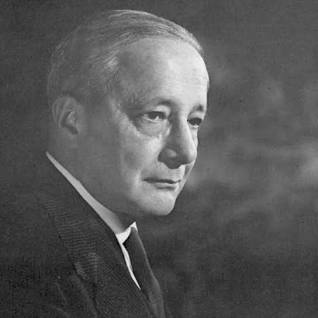 Polanyi points out that all thinking takes place within some kind of tradition. He holds up science as a paradigm, but he also uses law as a paradigm for how people are trained to think within a particular tradition. For example, while practicing law involves specialized knowledge that can be passed down intellectually, it also involves skills, habits of work, relational skills in managing clients, and a host of habits and character traits that cannot be intellectually specified but must be learned under the tutelage of an experienced practitioner. Moreover, such life skills and habits can only be earned through an apprenticeship, where one generation trains the next in a personal relationship in which a mentor or guide teaches a subsequent generation.[12]
One of the great problems with the legal profession and government generally in the United States is the loss of confidence in the constitutional tradition of which we are apart. Under the pressure of radical thinking, and the inverted desire for a perfect society created by mechanical means, a legal profession is constantly under assault, and both judges and lawyers are forgetting the important task they have in creating adjust society.
Conclusion
I realized that this week’s blog is too long. Therefore, I will conclude this log in another week. What I hope people will remember from this particular week’s discussion is (i) the need for a new World View that incorporates the reality of goodness, truth, justice, beauty and other intangible realities necessary for human life, (ii) the fundamental necessity of tolerance in a free society, and (iii) the importance of working within a tradition an incremental in incremental steps to improve the level of justice for all.
Although I can’t continue this week, it’s important to remember that a central aspect of postmodern science is how the world evolves through tiny, meaningful changes by everyone involved — from the tiniest quantum events to the largest social movements. We all play a small but important part in shaping the future, and we’re all connected on this incredible journey.
Copyright 2026, G. Christopher Scruggs, All Rights Reserved
[1] See, Stephen Toulmin, The Structure of Scientific Revolutions 2nd ed. (Chicago, IL: University of Chicago Press, 1970); Norwood Russell Hanson, Perception and Discovery: An Introduction to Scientific Inquiry (San Francisco, CA: Freeman, Cooper, & Company, 1969); Stephen C. Pepper, World Hypotheses: Prolegomena to Systematic Philosophy and Complete Survey of Metaphysics (Los Angeles, CA: University of California Press, 1970).
[2] There are many ways of describing the emerging description of reality. I have used the paradoxical metaphor of a river emerging from a vast sea of potential, a metaphor that occurred to me as one way of visualizing the notion of “implicate” and “explicate” order advanced by David Bohm. See, David Bohm, Wholeness and Implicate Order (London & New York: Routledge, 1980).
[3] Wheeler, Archibald, “Information, Physics, Quantum: The Search for Links” in Proc. 3rd Int. Symp. Foundations of Quantum Mechanics, (Tokyo, Japan: 1989)
[4] This is not the place to discuss these phenomena. For those who would like a deeper discussion, see John Polkinghorne, ed, “The Trinity and an Entangled World: Relationality in Physical Science and Theology (Grand Rapids, MI: William B. Eerdmans, 2010).
[5] Alisdair MacIntyre, After Virtue 2nd ed. (Notre Dame, IN: University of Notre Dame Press, 1984), 17.
[6] Charles S. Peirce, The Essential Writings Edward C. Moore, ed. (New York, NY: Harper & Row, 1972), hereinafter ECSP. For Peirce, the real is that which exists independently of our ideas of it, that is, independently of our perceptions, theories, or capacities. Id, at 57. These are noetic realities that exist not in material form but in the human mind. Such general ideas are not infinitely manipulable but subject to the rules of logic and thought appropriate to the subject matter. Id, at 60.
[7] Michael Polanyi, Science, Faith and Society: A Searching Examination of the Meaning and Nature of Scientific Inquiry (Chicago, Ill: University of Chicago Press, 1946), 68-69.
[8] I was not able to find an exact source for this quotation, but it is repeated in the literature. For a vast number of such remarks by scientists, see Joshua M. Moritz, “Beauty, Goodness, Truth, Science, and God” Feed Your Head (September 16, 2024) https://www.feedyourhead.blog/p/beauty-goodness-truth-science-and#footnote-anchor-9-148928409 (downloaded February 9, 2026).
[9] Paul Dirac, “Pretty Mathematics,” in International Journal of Theoretical Physics, v. 21, 8/9, pp. 603-605. 1982; Clara Mokowitz, Equations Are Art inside of a Mathematician’s Brain (Scientific American (March 4, 2014), https://www.scientificamerican.com/article/equations-are-art-inside-a-mathematicians-brain/ (downloaded February 9, 2026).
[10] Science, Faith and Society, 68.
[11] Id.
[12] Id, 56.