
 A contributor on X, Brivael Le Pogam, wrote a posting that I want to share with you with my comments. Those who are not on X can find him on his website.[1] I do not normally simply re-print another’s work, and I am not doing so today. However, I felt that what he is saying is so important that it needed to be sent along to my friends. He takes a subject of immense complexity and gives an introduction to what is deeply wrong with our elites in a few sentences. The bold type shows my reflections on what Le Pogam wrote. Here it is in its entirety.
“I want to offer my apologies, on behalf of the French, for giving birth to French Theory (which in turn gave birth to the worst of all ideological monstrosities: wokism).”
It’s helpful to refer to this as “Deconstructionism,” “Continental Postmodernism,” or even intellectual nihilism, which can go to extremes. Calling it “French,” a term a French person might use, adds a layer of race to the conversation. The term “Woke” has an interesting history. I think it is linked to the Enlightenment and Kant’s idea of “waking up” from his intellectual slumber to develop his idealistic theories. The term now often suggests becoming aware of racial, sexual, intellectual, and other injustices, as well as how society can be organized to benefit some groups over others.
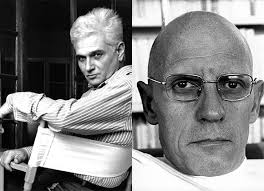 “We gave the world Descartes, Pascal, and Tocqueville. And then, in the intellectual ruins of post-1968, we gave Foucault, Derrida, Deleuze. Three brilliant men who forged, in the elegance of our language, the ideological weapon that today paralyzes the West.”
Descartes was an early Enlightenment figure, and Pogam is tracing the French Enlightenment from its beginning through its decay as French intellectuals turned against it, yet could not return to the innocence of the Age of Faith—that is, the Age of Roman Catholicism in Western Europe and the intellectual faith of the Reformation. Pascal was a French Catholic and a devout Christian. Tocqueville, who has been a subject of these blogs, was a French political theorist who visited the United States and wrote Democracy in America. [2]
“We must understand what they did. Foucault taught that truth does not exist, that there are only power relations disguised as knowledge. That science, reason, justice, the medical institution, the school, the prison, sexuality—everything is merely a staging of domination. “
The “postmodern age” is strongly Nietzschean. The reduction of all claims to Truth, Goodness, and Beauty to power relations enters Western thought through him. In such a world, there can be no real community, truth, reason, justice, or any other “noetic value.” Foucault focused his critique on the exercise of power within social systems to construct and maintain institutions of power. He saw history as consisting of thought systems that determine social activity and are constructed to serve the ends of those in power.
“Derrida taught that texts have no stable meaning, that every signifier slips away, that every reading is a betrayal, that the author is dead, and the reader reigns supreme. Deleuze taught that we should prefer the rhizome to the tree, the nomad to the sedentary, desire to the law, becoming to being, difference to identity.”
Deconstruction is a philosophical approach introduced by French thinker Jacques Derrida. His technique examines texts, binaries, and cultural institutions to reveal hidden assumptions, internal contradictions, and reliance on arbitrary structures. This approach ultimately shows us that texts have no fixed “meaning” and are unstable, and that meaning cannot be fully captured. If words are simply signs that create or sustain power relationships, then texts can have no absolute meaning. There is no definitive “truth,” “goodness,” or “beauty” that words can reliably point to. This idea influences modern debates and discussions widely and is present in movies, the media, and even politics. It is widely popular in academia. It suggests that texts have no specific meaning, and the author’s intent isn’t always the main point. Some see this as a challenging perspective within “reader-response” theory. While it offers valuable insights, it can also be viewed as a revolutionary ideology in an extreme sense. It emphasizes change over stability, which can sometimes be harmful to people, families, communities, and society as a whole.
“Taken individually, these are debatable theses. Combined, exported, and popularized, they form a system. And that system is a poison.”
Like all heresies, each of these movements contains a small element of truth that has been elevated into a theory of knowledge and existence. Words are used to create power relationships, but they are also used for many other purposes, such as expressing love, discovery, awe, friendship, appreciation, and the like. In a way, deconstructive postmodernism reflects the nihilistic end of reductive critical thinking. It is reason turned in on itself in science, morals, law, politics, and other areas of inquiry. It can also give rise to twisted moral positions and the justification of violence.
“For here’s what happened. These texts, unreadable in France, crossed the Atlantic. The departments of Yale, Berkeley, and Columbia absorbed them in the 1980s. They found there a soil that did not exist among us: American Puritanism, its racial guilt, its obsession with identity. French Theory married this substratum, and the child of that union is called wokism.”
Having studied philosophy and worked in theology earlier in life, I can honestly say that the specialized language can sometimes be quite difficult to understand. Unfortunately, some academics use this jargon as a mask for superficial ideas or a lack of real understanding. The ideas of American individualism, materialism, and the relentless pursuit of prosperity, peace, and personal happiness created ideal conditions for this theory, especially during the 1960s when a whole generation moved away from traditional values. At the same time, critical theory, with its Marxist leaning and skepticism of capitalism, traditional faith, and Western societal structures, started gaining ground in academic circles. Sadly, this led to a harmful influence on academia, the intellectual community, the media, the arts, and almost everything it touched.
In American English, “woke’ originally meant people who became aware of the injustices of racism. These days, however, the term has often been co-opted by political activists, many of whom lean far-left or socialist, and whose broader goals extend beyond just fighting racism.
“Judith Butler reads Foucault and invents performative gender. Edward Said reads Foucault and invents academic postcolonialism. Kimberlé Crenshaw inherits the framework and invents intersectionality. At every step, the matrix is French: there is no truth, there is only power, so every hierarchy is suspect, every institution is oppressive, every norm is violence, every identity is constructed and thus negotiable, every majority is guilty.”
The French had one of the most oppressive colonial policies, perhaps only surpassed by the Belgians. In the end, feelings of guilt over past racism and colonial history fueled modern frustrations against current institutions. Once again, there’s a reasonable sense of guilt, but some postmodern thinkers turn it into a harsh rejection of Western culture. Apart from Theodore Roosevelt’s efforts, the United States has generally been more supportive of anti-colonial perspectives. In the hands of critical theorists, it is often combined with revolutionary Marxism and a hatred of all Western cultural institutions.
“That’s how three Parisian philosophers, who probably never imagined their practical consequences, provided the operating software to an entire generation of activists, university bureaucrats, HR managers, journalists, and legislators. That’s how we ended up with a civilization that no longer knows how to say whether a woman is a woman, whether its own history is worth defending, whether merit exists, or whether truth can be distinguished from opinion.
It’s shit for one simple reason, and it must be stated calmly. A civilization stands on three pillars: the belief that there exists a truth accessible to reason, the belief that there exists a good distinct from evil, the belief that there exists a heritage to be transmitted. French Theory set out to dynamite all three. Not out of malice. Out of intellectual play, fascination with suspicion, hatred of the bourgeoisie that had nurtured them. But the result is there. An entire generation learned to deconstruct and never learned to build. An entire generation knows how to suspect and no longer knows how to admire. An entire generation sees power everywhere and beauty nowhere.”
I apologize because we French bear a particular responsibility. It’s our language, our universities, our publishers, our prestige that gave this nihilism its chic packaging. Without the legitimacy of the Sorbonne and Vincennes, these ideas would never have crossed the ocean. We exported doubt the way others export weapons.
What is being built now, in Silicon Valley, in AI labs, in startups, in workshops, in all the places where people still make things instead of deconstructing them—that is the response. A civilization is rebuilt by builders, not by commentators. By those who believe that truth exists and is worth devoting oneself to. By those who embrace a hierarchy of the beautiful, the true, the good, and are not ashamed to transmit it.
So, forgive us. And back to work.”
 Having traveled extensively in both capitalist and Marxist countries, I’ve noticed a certain spiritless starkness in much of Western society, as well as in the communist world. Sometimes, an intense focus on Right Philosophy and Right Theology can lead leaders to overlook the importance of building a wholesome society where everyone can truly flourish. This is particularly evident in the frankly nihilistic tendencies of postmodernism. Our culture often emphasizes science, materialism, and technology. In other words, we often worship power and technique, whether we admit it or not. What we need is a cultural return to the values that created our civilization and way of life, including the spiritual values that undergird the search for truth, goodness, justice, beauty, and the like.
The spirit of the Enlightenment has waned, leading to some challenging outcomes in both academic and political spheres. One significant change is the diminished belief that abstract ideals like justice are real and should guide our political and governmental decisions. This shift has resulted in a political landscape that could be described as “Nietzschean”—focused solely on a relentless pursuit of power, exercised without regard for values like truth, justice, prudence, or equity. It resembles a Hobbesian view of society, where self-interested individuals are caught in a “war of all against all.” You can see the effects in everyday life, from the breakdown of family structures to broader issues like the “economy of wars,” which threaten the well-being and growth of communities everywhere.
Just as science cannot exist without a commitment to investigating a reality independent of the observer, political and social life is debilitated when no underlying notion of justice and fairness guides policymakers’ thinking. What remains is the will to power, without effective intellectual and moral constraints beyond those imposed by the political realities of a given society. In some societies, that means little or no restraint.[3]
For those who would like to know more about postmodernism, I recommend Stanley J. Grenz, A Primer on Postmodernism (1996). It is quite readable and avoids technical jargon. Another excellent source is Postmodern Times(1994) by Gene Edward Veith. Postmodern Times is written from a Christian perspective. Finally, once again from a specifically Christian perspective, I can recommend Roger Luden’s The Culture of Interpretation: Christian Faith and the Postmodern World (1993). This book is slightly more academic. Naturally, no introduction, whether an article or even a book of a couple hundred pages, can fully replace struggling with the reality of the texts of experts. Personally, I find most postmodern oriented authors, especially the French originators, extremely difficult to digest.
Copyright 2026, G. Christopher Scruggs, All Rights Reserved
[1] He can be found on X, on Linkedin, and at https://briva.medium.com/
[2] Alexis De Tocqueville, Democracy in America tr. Henry Reeve, abridged by Patrick Renshaw (Herefordshire, UK: Wordsworth Classics of World Literature, 1998), hereinafter “Democracy in America.” This is a one volume abridgement of the original two volume set published in 1835 (vol. 1) and 1840 (vol. 2).
[2] De Tocqueville did make a report on the American prisons of the early 19th Century.
[3] See, G. Christopher Scruggs, Illumined by Wisdom and Love: Essays on a Sophio-Agapic Constructive Postmodern Political Philosophy (Hunt, TX: Quansus Press, 2024).