
Woe to those who call evil good and good evil, who put darkness for light and light for darkness, who put bitter for sweet and sweet for bitter! (Isaiah 5:20)
This week, I revisit a subject that is crucial for the moral and spiritual renewal of our civilization: overcoming its widespread moral decline. One of the most unfortunate legacies of Rousseau’s Romanticism, combined with Marx’s dialectical materialism, is the widespread immorality present in modern societies, along with the common belief among many, including numerous elites, that immoral actions are justified in the pursuit of political victory which they identify with their vision of the common good. Frequently, this masquerades as support for “democracy” and the need to accomplish the “will of the people.” [1]
As I write this week, a report has been issued indicating that a former Attorney General, who presents himself as a Christian well-versed in the works of certain Christian writers on moral and political philosophy, engaged in deliberate deception to harm the election chances of a candidate he disapproved of. To achieve this, he was joined by several high-ranking law enforcement and intelligence officials. Behind this activity was their moral conviction that they were entitled to lie because it was in the public interest.
To understand what is wrong in the actions of certain (often political) actors in our society, it is crucial to clarify in one’s mind what is meant by moral inversion and moral posturing.
- Moral Inversion: Moral inversion means exactly what it says. It is a distorted morality where committing an immoral act is justified by a morally impoverished actor influenced by the pervasive ideologies of our society.
- Moral Posturing. Moral Posturing involves claiming support for widely accepted ethical positions that cost the speaker nothing, which suggests they are not genuinely moral agents. It often includes expressing opinions or stances aligned with popular views to appear ethical. Moral posturing is typically aimed at gaining power or social approval without taking meaningful action.
Taken together, these two moral perversions characterize much of the moral discourse of our time.
Moral Inversion
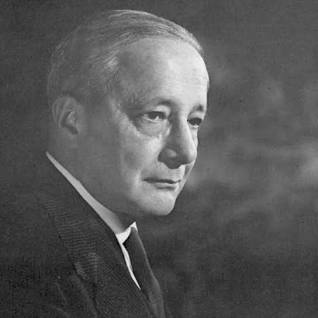 In his writings, the philosopher of science Michael Polanyi describes a process he calls “moral inversion,” which he believes is a common trait of totalitarian regimes on both the right and the left. Soviet Russia, Nazi Germany, and Communist China were all driven by an extreme moral energy disconnected from any form of traditional morality. Moral inversion, Polanyi argues, is the demonic force behind dehumanizing and violent social movements and the oppressive governments they establish. Despite the destruction they cause, the leaders and their followers in these movements see themselves as working toward utopian visions of the common good, shaped by their narrow worldviews. Moral inversion, unfortunately, is not limited to totalitarian regimes.
In his book, Logic of Liberty, Polanyi describes the phenomenon (speaking of Russian Marxists and German Nazi’s) as follows:
“In such men, the traditional forms for holding moral ideals had been shattered and their moral passions diverted into the only channels which a strictly mechanistic conception of man and society left open to them. We may refer to this as the process of moral inversion. The morally inverted person has not merely performed a philosophic substitution of moral aims by material purposes, but is acting with the whole force of his homeless moral passions within a purely materialistic framework of purposes.” [2]
Human beings are, by nature, motivated by moral passions. When by education or training they are denied an intellectual ground for their moral passions, these passions, like a river that has run out of its banks, flow in an uncontrolled flood into whatever channel lies conveniently at hand. In modern, materialistic societies, that channel has been revolutionary action designed to create a new society along strictly materialistic notions. Communism or some form of national socialism has been the preferred channel. The disasters of the 20th and 21st centuries have been fueled by a moral energy resulting from the misdirected channeling of human moral passions.
The materialistic impulse of moral inversion does not necessarily have to be connected to radical movements like Nazism or communism. For example, I might simply be a capitalist who believes that any action I take to make money is justified. I might feel it was perfectly right to stretch accounting principles or engage in dubious tax avoidance schemes. In each case, I have decided to make something that is fundamentally immoral, moral on materialistic grounds. This is why I sometimes call “moral inversion” “moral reductionism.” Not only does moral inversion result in immoral acts being held good (“Violence is justified to bring in a more perfect state”) but it also can involve taking one value (working hard) and turning it into a supreme value the pursuit of which allows one to ignore other values as or more important.
Moral Posturing
With the Enlightenment and its celebration of critical reason, Christian faith and morals—as well as the beliefs of other world religions and philosophical systems—were subjected to the dissolving power of reductionist, critical thinking. The materialism of the modern world reduces all reality to material particles and forces acting upon them. Ultimately, this way of thinking led to Nietzsche’s critique that God (spirit) is an illusion, Christianity is a slave religion, and the Will to Power is the ultimate trait of sound moral reasoning. The widespread acceptance of this view among elites has led to the terrible, irrational immorality evident in contemporary politics, where winning is everything, and any action—no matter how immoral—is justified if it advances a particular group’s moral ideal.
Many people in modern society who identify as Christians or followers of other major moral systems sometimes use their moral statements to gain a sense of power and boost their social standing within their group. They aren’t genuinely trying to uphold morals but are more focused on gaining others’ approval. This is the essence of moral posturing. We’re not truly acting morally. We’re not making difficult moral sacrifices. We’re simply putting on a show to seek approval.
Politics and Moral Inversion and Moral Posturing
Nowhere is moral inversion and moral posturing more prevalent than in politics and on social media. Politicians constantly make moral statements not because they genuinely believe in them or even think they are true, but because they aim to gain power from voters who may agree with these statements. Even more troubling, they often encourage others to commit immoral acts, such as destroying the lives, reputation, or property of others. This occurs on both the right and the left. In any given political debate, there is usually an intentional effort by one or both parties to label the other as immoral due to their political beliefs, with the aim of creating hostility that they believe will give them a political advantage.
In response, people often make moral statements on social media that cost them nothing. They are frequently the reverse of ethical statements. A good example exists whenever we say that the government ought to do something that we wouldn’t do if we had to pay for it. (To give current examples, I would have to enter into current debates, which I try not to do in these blogs.) Suppose, for instance, that I was a slaveholder before the American Civil War, publicly declaring that I agree with the abolition of slavery from my home in New York City, but continuing to own slaves on my plantation in South Carolina. That would be a perfect example of moral posturing. I don’t intend to take any moral action. I just intend to gain the approval of others and avoid their moral judgment of my behavior.
Politicians often act in ways designed to influence us into voting for them, even when they have no real intention of keeping their promises. For instance, a politician might say they will cut defense spending but then fail to follow through because they receive large donations from defense contractors. This pattern can apply to any government program, regardless of political affiliation, where powerful financial interests support politicians with the expectation that they will push their special projects. Whenever anyone makes moral statements that contradict or don’t involve moral actual behavior, they are engaged in a form of moral posturing.
Absolutizing Relative Values
 The Christian writer, C. S. Lewis, insightfully discusses the danger of relative values that are removed from their context in a larger moral framework. Christianity, Judaism, Hinduism, Islam, and Taoism are all complex and comprehensive systems of morality. In any such system, my moral actions in specific situations involve applying various moral principles within a complex context. Too often, modern moral systems involve the ideological adoption of certain principles while ignoring others. The result can be a kind of moral confusion or even madness.
In his short book, The Abolition of Man, Lewis discusses the harmful consequences of Ignoring or downplaying the importance of the great moral systems throughout history. After introducing the central moral ideas of Christianity, Judaism, Hinduism, Buddhism, and Taoism, Lewis suggests that the results are the creation of people without the kind of heart understanding of morality and wise action upon which civilization depends. We have, he says, created “men without chests,” that is, humans lacking the character needed for a civilization to thrive. [3]
Throughout most of human history, people have recognized that although not everyone agrees on all the values of a particular group, there is a moral basis for human action. When we remove the complex foundations of moral reasoning within a tradition of moral thinking and acting, we inevitably leave people relying on their own prejudices, upbringing, and the social and immediate pressures they face. This inevitably leads to moral failure.
A civilization in which the moral leaders of society, from individual family leaders, to neighborhood and community leaders, to church leaders, to state and federal leaders, have forsaken the “Tao,” as Lewis puts it, has taken a road that cannot help but lead to moral and social decay and human suffering.
Dialogue and Moral Discourse
 One of the most serious effects of moral inversion and moral posturing is that it prevents true dialogue about important issues. For dialogue to occur, both parties must respect each other, understand their own position and its potential weaknesses, and be open to considering the political or moral issue from another perspective. Even more importantly, as the theologian Martin Buber emphasized, we must be willing to see others as a “Thou” and not as an object or an “It.” In other words, we can’t reduce human beings to objects; we must see them as persons with inherent value.[4]
To overcome the dysfunction and fragmentation of modern society, a different approach needs to be adopted. To overcome the fragmentation of our society, its fundamental paradigm for understanding reality (atomistic materialism and individualism) and its fundamental view of how to change that reality (material power) need to be changed. The process of change involves communication in the form of dialogue. Creative transformation in which fragmentation is overcome can be achieved through dialogue.
In the philosopher and physicist David Bohm’s view, the Greek roots of this term shed light on its meaning. “Dia,” meaning “through,” and “logos,” meaning “reason.” Dialogue occurs when two or more people share meaning by exchanging views. Of course, there can be honest and dishonest attempts at dialogue. In honest dialogue, new understanding arises as meaning is conveyed and differing perspectives illuminate reality. For two individuals to engage in real dialogue, they must commit to a mutual exchange of ideas and information to better understand reality. Authentic dialogue involves a continuous flow of meaning. Those participating in the dialogue are immersed in a moving flow of information and thought that constitutes the dialogue itself. A dialogue implicitly seeks a truth that the parties are humble enough to recognize and requires sharing ideas, thoughts, and perspectives.
Dialogue is more than just discussion. “Discussion” shares the same root as percussion or concussion. In a debate, conflicting views are expressed to undermine or challenge the other’s argument. People try to win, score points, and prevail in a discussion. Discussion and debate can create more fragmentation. In genuine dialogue, however, participants aim to discover new meanings and reach mutual understanding. Through this process, fragmentation and its negative effects can be overcome.
Participatory Thinking and Transcendental Ideals
Bohm views the search for knowledge as a scientist does. In practice, science involves a continuous dialogue or exchange of reasoning as investigations are conducted, results and theories are published, criticisms are made, and adjustments are implemented. This scientific way of reasoning should continue to be used in practical activities, but in delicate areas like religion and politics, it is often difficult due to blockages—emotional, ideological, and other types. These blockages hinder communication and the flow of understanding, blocking new discoveries and change. As a result, modern society is marked by widespread fragmentation and conflict. This fragmentation can be addressed through a kind of participatory dialogue where people share meanings and attempt to understand one another.
The significance of transcendental ideals (or potentials) for political thought is that such potentials reveal themselves to a community under concrete circumstances in a provisional but appropriate way. Each determination is provisionally valid in a specific context. There can be no permanent and unchanging specification of justice as an abstract concept but there can be contextually valid approximations. [5] Because of the inner relationships among people and institutional structures, every determination of justice in a specific context, is relative to, and may be modified by a new emerging context and future understandings. Thus, no determination of justice can be final or fixed but is part of the movement of society, toward a more comprehensive understanding of justice and social peace. [6]
These insights have profound implications not only for our understanding of physical reality but also for our understanding of the social reality in which we live. As Bohm states in , the fragmentation and conflict in society arise from an outdated worldview. promotes, is leading to a loss of social coherence and meaning, as well as the decay of Western democratic institutions. To reverse these trends, a new perspective and approach to social reality are necessary.
Copyright 2025, G. Christopher Scruggs, All Rights Reserved
1 This blog is partially based on prior blogs and a book I have written on the subject of a postmodern political theory. G. Christopher Scruggs, Illumined by Wisdom and Love (College Station, TX: Virtual Bookworm, 2024). Our current situation is the continuation of a long line of moral reductionism. In recent years, the aging of what has been called the “Enlightenment Project” has given rise to a form of cultural and political nihilism. The power orientation of our culture is a part of its plausibility structure. Lesslie Newbigin, Truth to Tell: The Gospel as Public Truth(Grand Rapids, MI: William B. Eerdmans, 1991).
[2] Michael Polanyi, The Logic of Liberty (Indianapolis Indiana, Liberty Fund, 1998), 131.
[3] Id, 35.
[4] Martin Buber, I and Thou 2nd ed. New York, NY: Charles Scribner’s Sons, 1958)
[5] David Bohm, Wholeness and the Implicate Order (London ENG: Routledge, 1980), at 151.
[6] Id, at 157