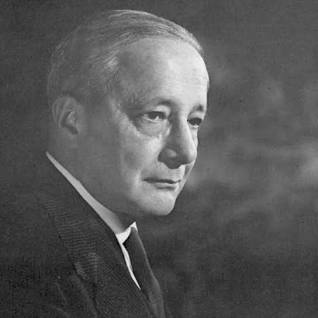
Perils of Judicial Overreach and the Constitutional Remedy: Chisholm v. Georgia

The Eleventh Amendment is the first Amendment to the Constitution after the Bill of Rights. Congress passed the Eleventh Amendment, and the states ratified it on February 7, 1795, though it did not take effect until 1798. The amendment states that “The Judicial power of the United States shall not be construed to extend to any suit in law or equity, commenced or prosecuted against one of the United States by Citizens of another State, or by Citizens or Subjects of any Foreign State.” It was enacted to overturn the Supreme Court’s 1793 decision in Chisholm v. Georgia. I think it is worth studying because, although it was later overturned by amendment and clearly stepped beyond the intentions of those ratifying the Constitution, those involved were attempting to delineate a proper relationship between the Federal and State governments and to ensure the payment of war debts. It illustrates three important realities: (i) well-meaning people can misunderstand the public’s willingness to accept innovations, (ii) a tradition (in this case American and English law) does not speak with one voice, (iii) the amendment process is part of judicial correction when errors are made.

The Issue

One of the most significant issues arising from the Constitution’s adoption concerned the proper balance of power between the national government and the states. Federalists desired a strong central government that would unify the states into a single nation. Anti-Federalists feared and opposed a federal government that could threaten their status as independent, sovereign political entities. We continue to struggle to find a workable and effective solution to the delicate problem of implementing our system of divided sovereignty between the states and the federal government.

This concern as regards judicial power was reflected in Article III of the Constitution. Article III covers lawsuits between states, between a state and citizens of another state, and between a state and foreign states, citizens, or subjects. During ratification debates, three states suggested placing explicit limits on suits against states, but these proposals were unsuccessful. As was often the case when agreement could not be reached, the document was vague regarding the full scope of the federal judiciary’s powers.

Those who opposed allowing states to be sued in federal court had several concerns. Most importantly, the states had accumulated substantial debt during the Revolutionary War. Although many of these debts had been assumed by the federal government under Alexander Hamilton’s economic plan of 1790, state officials still had to cope with the possibility of being overwhelmed with financial claims by citizens of other states. They also feared being taken into federal court by frequent challenges to state land grants. A less concrete but equally important worry was based on the idea of state sovereignty. If states could be sued in federal court, many believed they would lose their sovereignty and independence as political units and become entirely subject to the federal government. These concerns all came to a head when the Supreme Court decided Chisholm v. Georgia. 

Legal Debates Before Chisholm

Generally speaking, what we call “sovereign immunity” prevents lawsuits against a government without its permission. As early as Blackstone’s Commentaries on the Laws of England, it was the law in England that “no suit or action can be brought against the king, even in civil matters, because no court can have jurisdiction over him.”

The delegates to the Constitutional Convention did not debate or address the issue of state sovereign immunity. However, Article III described the judicial power in language suggesting that states would be subject to suits by individuals in federal courts under certain conditions. This issue became a point of contention during the ratification debates. Anti-Federalist George Mason of Virginia asked, “Is the sovereignty of the State to be arraigned like a culprit, or private offender? Will the States undergo this mortification?” Patrick Henry argued that if states could be sued for debts, holders of the “immense quantity of depreciated Continental paper money in circulation at the conclusion of the war” would be able to demand repayment of the face value of these notes “shilling for shilling.”

Federalists, such as Alexander Hamilton, John Marshall, and James Madison, tried to ease concerns by claiming that states would not be forced to act as defendants in federal courts, regardless of what Article III states. Hamilton wrote in Federalist No. 81, “It is inherent in the nature of sovereignty not to be amenable to the suit of an individual without its consent.” During Virginia’s ratification debates, Madison argued that states would need to sue in federal court to bring a claim against a citizen of another state but that they would have immunity unless “a state shall condescend to be a party.” Marshall agreed, saying, “It is not rational to suppose that the sovereign power shall be dragged before a Court. The intent is to enable States to recover claims of individuals resident in other States.” Patrick Henry ridiculed these claims, once again pointing to Article III’s language about suits involving states “without discriminating between plaintiff and defendant.”

This brings us to Chishom v. Georgia and an early example of judicial overreach that failed.

The Facts and Runup to Chisholm

Chisholm v. Georgia originated from actions taken during the early years of the Revolutionary War. [1] In 1777, American troops stationed in Georgia needed supplies. Commissioners, authorized to act on behalf of the Georgia government, purchased the necessary items from Robert Farquhar, a South Carolina merchant. Although the commissioners had funds from the state treasury to pay Farquhar, they did not do so. Farquhar died in 1784 with the debt remaining unpaid. His executor, Alexander Chisholm, petitioned the Georgia legislature for payment, but the petition was denied in 1789.

Following this denial, Chisholm filed a lawsuit against the state in the U.S. Circuit Court for the District of Georgia. Georgia argued that the state had sovereign immunity and could not be compelled to appear as a defendant. The case was heard by Supreme Court Justice James Iredell, riding circuit, and U.S. District Judge Nathaniel Pendleton, both of whom agreed that the court lacked jurisdiction. In 1792, Chisholm brought a suit in the Supreme Court of the United States, where Georgia again claimed sovereign immunity.

The Supreme Court’s Ruling

After the case was heard, the Supreme Court held that Georgia did not have sovereign immunity and could be sued by individual plaintiffs in federal court. Each justice wrote a separate opinion, with Chief Justice John Jay and Justices John Blair, Jr., James Wilson, and William Cushing in the majority, and Justice James Iredell dissenting. Chief Justice Jay noted that Georgia could not justify its objection simply because it was named as a defendant in federal court, since the Constitution allows suits between states, in which states will inevitably be defendants. The objection, therefore, was based on the fact that the plaintiffs were individual citizens of another state. “That rule is said to be a bad one,” wrote Jay, “which does not work both ways.” In other words, if Georgia had the right to sue citizens of different states in federal court, it would be unjust for those citizens to be unable to sue Georgia.

Jay then examined the language of the Constitution, which extended the judicial power “to controversies between a state and citizens of another state.” He argued that these words were “express, positive, free from ambiguity, and without room” for implied exceptions. To accept such an exception, Jay wrote, would “contradict and do violence to the principles of a free and equal national government, one of the great objects of which is, to ensure justice to all: To the few against the many, as well as the many against the few.”

James Wilson’s Significant Contribution

While other justices based their decisions on the text of the Constitution, James Wilson believed the case depended on the question, “Do the people of the United States form a Nation?” Thus, Wilson begins his analysis with these words:

The fundamental nature of the issue presented by the case was aptly characterized by Justice Wilson: This is a case of uncommon magnitude. One of the parties to it is a State; certainly respectable, claiming to be sovereign. The question to be determined is, whether this State, so respectable, and whose claim soars so high, is amenable to the jurisdiction of the Supreme Court of the United States? This question, important in itself, will depend on others, more important still; and, may, perhaps, be ultimately resolved into one, no less radical than this— “do the people of the United States form a Nation?”[2]

The portion of his decision that is most important is his argument that sovereignty belonged to the people, who, by ratifying the Constitution, had committed themselves to the nation’s laws. States, like the individuals within them, must not be exempt from enforcing those laws.[3]

Justice Wilson began his analysis of Georgia’s claim of sovereign immunity by contesting the appropriateness of the very term “sovereignty” with regard to the new Constitution:

To the Constitution of the United States the term Sovereign, is totally unknown. There is but one place where it could have been used with propriety. But, even in that place it would not, perhaps, have comported with the delicacy of those, who ordained and established that Constitution. They might have announced themselves “Sovereign” people of the United States, But serenely conscious of the fact, they avoided the ostentatious declaration.[4]

In Chisholm v. Georgia, Wilson observes that “the term sovereign has for its correlative, ‘subject,’” and in this context, it cannot be applied because it is not found in the U.S. Constitution. The Constitution mentions “citizens,” but never “subjects.” In other words, Americans are citizens of the United States of America, but not subjects of its government. This is an important difference between the situation in the United States and Europe. Americans were never subjects at any time during their post-revolutionary history.

Justice Wilson rejected the idea of “subject” regarding the case because he understood the Government of Georgia to be republican, meaning it is based on the principle that sovereignty resides in the body of the people. Wilson also argued that Georgia’s citizens, when ratifying the Constitution, did not surrender their supreme or sovereign power to the state; instead, they kept it for themselves. Therefore, in terms of the Union’s purposes, Georgia should not be considered a “sovereign state” by the European definition.

In summary, Wilson states that if the word “sovereignty” is used at all, it refers to the people, not to any government formed by the people. I wonder if it might be a better course of action to consider the United States as consisting of three distinct sovereignties:

  1. The Ultimate Sovereign (the people of the United States);
  2. The Local Sovereign (the several states, sovereign in every area not specified in the Constitution); and
  3. The National Sovereign (the government created by ratification of the Constitution, sovereign only within its Constitutionally prescribed areas of responsibility).

The analysis of Justice Wilson in Chisholm v. Georgia best leads one to conclude that the sovereignties of the states and the national government are, under our system of government, derivative sovereignties. The states are Local Sovereigns with the powers that were designated for them in their constitutions, and the federal government is the National Sovereign with the powers that were given to it by the Constitution. The people, however, retain ultimate sovereignty over both.

Chief Justice Jay’s opinion supports the view that the United States is characterized by multiple sovereignties, as he uses the term “joint and equal sovereigns.” In his opinion. [5]  Jay affirmed the latter went on to affirm the “great and glorious principle, that the people are the sovereign of  this country, and consequently that fellow citizens and joint sovereigns cannot be degraded by appearing with each other in their own Courts to have their controversies determined.”[6]

This kind of language supports the view that, in the United States there is one ultimate sovereign (the people) and two subordinate sovereigns, each sovereign only within the limits granted by the constitutions that formed them.

Aftermath and Legacy

In his dissent, Justice Iredell asserted that every state was “completely sovereign” other than where its powers had been delegated to the federal government. On the nature of sovereignty, Justice Iredell had the following view:

Every State in the Union in every instance where its sovereignty has not been delegated to the United States, I consider to be as compleatly sovereign, as the United States are in respect to the powers surrendered. The United States are sovereign as to all the powers of Government actually surrendered: Each State in the Union is sovereign as to all the powers reserved. It must necessarily be so, because the United States have no claim to any authority but such as the States have surrendered. [7]

According to Iredell, no suit by private citizens against a state could proceed without the state’s consent unless there was English common-law precedent to support such an action. Finding an English case allowing a claim against the Crown to proceed inapplicable to the present case, Iredell believed that the Supreme Court lacked jurisdiction over the plaintiffs’ claim against Georgia. After a Constitutional Amendment, Iredell’s view prevailed.

Interestingly, although the justices did not agree on the merits of the case, they did agree that the Ultimate Sovereign in the United States is the people themselves, and each of the national and state governments are local and national sovereigns, with only such powers as the Ultimate Sovereignty of the people has given them. This is consistent with the language of the Constitution that “The powers not delegated to the United States by the Constitution, nor prohibited by it to the States, are reserved to the States respectively, or to the people.”[8]

Conclusion

I wouldn’t spend an entire blog on just one Supreme Court case if I didn’t truly believe it was so important. It’s not only crucial for understanding the history of the Constitution and the 11th Amendment, but also for shaping how we view our government today. Sadly, many Americans have come to see the national government as the ultimate authority. After the Civil War, the balance of power between state and federal governments shifted, with the federal government becoming the more powerful of the two. But, it’s important to remember that nothing in the Civil War amendments takes away the ultimate sovereignty of the people of the United States over their government.

As our national, state, and local governments develop increasingly detailed rules that influence almost every aspect of our daily lives, it’s important to remember that this can sometimes feel like overreach that infringes on the rights of the people. While the federal government has expanded its regulatory scope and built a large bureaucracy, it’s also vital to remember that the Constitution limits the areas the federal government can regulate. When definitions of federal powers broaden too much, they can unintentionally encroach upon the sovereignty that rightfully belongs to the people.

In an increasingly urban and socially and economically interdependent society, it is easy to forget the people’s ultimate sovereignty as governments struggle to solve social problems. Nevertheless, both state and federal governments need to remember that they serve the people, not rule over them.

Copyright 2026, G. Christopher Scruggs, All Rights Reserved

[1] 2 U.S. (2 Dall.) 419 (1793).

[2] Chisholm v Georgia, 2 U.S. (2 Dall.) at 453 (Wilson, J.)

[3] Randy Barnett,” The People or the State?: Chisholm v. Georgia and Popular Sovereignty” 93 Va. L. Rev. 1729-1758 (2007).

[4] Chisholm v. Georgia, 454. See also, Barnet above, at 1731.

[5] Id, 477 (Jay, C.J.).

[6] Id, 479

[7] Id, 435,

[8] U.S. Const. amend. X.
Lent 4: Prayer as a Spiritual Discipline

Lent is a time for focused prayer. Don’t get me wrong, prayer is always essential to Christian discipleship, growth, community, and life. But, Lent is intended to be a time of deepening prayer, especially that prayer which leads to a change of life.

On my bookshelf, I have several books on prayer, and I’ve read many of them. However, prayer is like playing an instrument or any sport. The real question isn’t, “How many books have you read?” but rather, “How much have you practiced?” Prayer isn’t mainly about knowledge; it’s about practice. The best way to learn to pray is simply to pray.

Throughout my ministry, I treasured the weekly practice of including a prayer list in our bulletin, which we prepared together as a staff to support and uplift our congregation. Every Tuesday at 9:30, a dedicated group of staff members gathered in prayer, creating a special sense of community. Years ago, during a denomination transition, we started holding heartfelt prayer vigils on the first Friday of each month, providing a prayer guide outside the chapel and hosting services at 7:00, 12:00 noon, and 6:00 in the evening. Although attendance varied, these prayer days were meaningful moments for us to pray for our church, community, and the world all day long. The Session also regularly set aside time to pray for our church’s needs during each meeting, often for an extended period, which we found deeply encouraging. Additionally, our Men’s Saturday reunion group spent the first Saturday of each month in prayer, meditation, and seeking to strengthen their connection with God, fostering a wonderful sense of fellowship and spiritual growth.

Paul’s Good Advice.

In this blog, I want to begin with a verse from Philippians. The Philippian church was a lively and supportive community, standing firmly with Paul during tough times. They were genuinely generous, giving freely to help the church in Jerusalem when it needed it most. Like any church, they weren’t perfect—after Paul’s departure, they faced challenges such as false teachers and other struggles. As we examine today’s passage, it’s clear that two members, Euodia and Syntyche, are in disagreement. Paul’s advice to rejoice, pray, and focus on what is true and good stems from his response to this situation.[1]

Therefore, my brothers and sisters, you whom I love and long for, my joy and crown, stand firm in the Lord in this way, dear friends! I plead with Euodia and I plead with Syntyche to be of the same mind in the Lord. Yes, and I ask you, my true companion, help these women since they have contended at my side in the cause of the gospel, along with Clement and the rest of my co-workers, whose names are in the book of life. Rejoice in the Lord always. I will say it again: Rejoice! Let your gentleness be evident to all. The Lord is near. Do not be anxious about anything, but in every situation, by prayer and petition, with thanksgiving, present your requests to God. And the peace of God, which transcends all understanding, will guard your hearts and your minds in Christ Jesus. Finally, brothers and sisters, whatever is true, whatever is noble, whatever is right, whatever is pure, whatever is lovely, whatever is admirable—if anything is excellent or praiseworthy—think about such things. Whatever you have learned or received or heard from me, or seen in me—put it into practice. And the God of peace will be with you (Philippians 4:1-9).

The Problem: Our Human Condition.

Prayer begins with understanding the human condition. The conflicts between the two people in Philippi remind us that, at times, we are not in God’s will. We are naturally self-centered, self-interested, short-sighted, seeking temporary pleasures and trivial pursuits, prone to worry and anxiety, sometimes jealous of those who have more, and inclined to form factions. Not everyone has all of these tendencies, but we all have some. These issues exist because none of us, by nature, possesses the spiritual connection with God that helps us avoid them. The story of Genesis and the fall illustrates our human condition and its real-life consequences. Since the fall, humans have struggled to stay connected with God.

I’m confident you will believe me when I say that Kathy and I would never, ever quarrel. I’m sure that none of you who are married ever argue. However, I have noticed that couples do argue, and when human beings argue, we often stop communicating. When communication breaks down, our problems rarely improve. In fact, I’ve observed over the years that many quarrels originate from a failure of loving communication from the start!

Our relationship with God is similar. Our tendency is to push God to the edges of our lives, maybe only on Sunday morning or a few moments each day if we remember. The result is that we lack the ongoing relationship and communication with God needed to experience the joy and peace He wants for us. When we do reach out to God, it’s often because of an immediate problem. We communicate urgently, but without the depth of a well-developed relationship.

The Solution.

The first step in shifting our focus from ourselves and our desires to God and His desires for us is to rejoice and be thankful for the gift of life and what God has done. It’s interesting that immediately after Paul comments on the quarrel in the Philippian church, he says, “Rejoice in the Lord always, and again I say, Rejoice!” (v. 4). A life of prayer starts with rejoicing in faith. Our rejoicing may not always be free from pain, fatigue, or anxiety. Still, we know there is a God who cares, so we pray to Him.

Second, Paul tells the Philippians to be gentle and not to worry, but to do everything with prayers and petitions, letting God know what we need. It is as if Paul is saying, “Once you have your attitude right about God and have begun to praise God and rejoice in your salvation by faith, then start talking. Let God know what you need and how much you need it. Just let God know what is on your heart—everything that is on your heart.” Once again, the point is not that we will never be anxious. The point is to constantly turn our anxiety over to God.

Third, Paul encourages us to be thoughtful and focus on things that are true, noble, right, pure, lovely, and admirable. By doing so, we open ourselves to be filled with the Spirit of God—the True, the Good, and the Beautiful. Thinking about these virtues keeps our hearts centered on the One who embodies them all—True, Good, and Beautiful. When we fill our minds with these good and lovely things, our prayers naturally become more focused on Godly desires.

Finally, Paul encourages the Philippians to reflect on what they have seen him do, how he has lived, the results the Gospel has brought in his life, and to put the Gospel into practice. It is only when we rejoice, pray, grow wise, and actively apply the grace we’ve received that God’s peace will fill our hearts. Just as study should lead to action, prayer should lead to action as well. We need to practice what we pray for.

When I was in active ministry, our congregation supported The Presbyterian Outreach Foundation, which funds missions in the Presbyterian Church (USA), the Evangelical Presbyterian Church, and other denominations. One member of the Outreach Foundation’s Board of Trustees, who lives in the Southeast, is a true prayer warrior. Occasionally, I would go into my office and find a prayer message on my phone. Sometimes he called and prayed. I also received emails with words of wisdom and prayers.

I have watched my friend for some time now. He is not a pastor; he is in business. He served on a financial-related committee of the Outreach Foundation. He is almost always cheerful and gentle. He is clearly prayerful. His prayers are powerful and very touching. His comments are almost always wise and thoughtful. In his personal and professional life, he practices what he believes and prays for. He does not just pray; he lives a prayerful life.

An Approach.

In the past, I have written about and preached the ACTS method of Adoration: Confession, Thanksgiving, and Supplication, as well as other prayer methods. Today, I want to discuss a way of prayer that can help each of us grow in our personal prayer life.  In writing this, I found a meditation in one of my prior sermons:

In prayer, three things happen: We come in touch with God and God’s will, we come in touch with how our will and God’s will can become one, and we come into unity with our brothers and sisters in Christ. When our will and God’s will become one, the power of God’s wisdom and love becomes unleashed in our personal lives. When God’s will and the will of a community of believers become one, the power of God’s wisdom and love is unleashed in the world.

The first step in building a prayer life is alignment. If we only ask for things, our prayer life will eventually burn out. None of us receives all of our prayers answered, and we all have times when we ask God for things we cannot or should not have. As we listen to God and align our prayers with His will, we gradually begin to pray within His will. When that happens, our prayer life becomes more powerful.

Second, one reason we gather and pray together on Sunday mornings—whether in worship, small groups, or classes—is that when our church, classes, and small groups pray collectively, our wills and prayers begin to align with God’s will. This is why Jesus wanted his church to be a “house of prayer.”

Think of alignment like a laser. Lasers are essentially light beams that have become ‘coherent”—meaning all the beams of light are traveling in the same direction. As we pray and listen to God, our wills and God’s will become aligned. We stop asking for things that are not in God’s will. When a group prays and listens to God, its prayers become aligned—meaning we all pray within God’s will. When that happens, God’s power is unleashed in our families and communities. This is one reason spouses should pray together.

Second, we should pray constantly. We all need quiet time. We all need to have special times of prayers at home and church. At the same time, we should try to develop the habit of constant prayer—a kind of prayer without ceasing. Paul says we should pray in everything, and that means about everything and all the time. When we are worried, tired, stressed, short, jealous, angry, etc. we need to pray. When life is not going our way, we need to pray.

Kathy and I have been exploring Orthodoxy lately. One of their spiritual disciplines, which I’ve been trying to include in my daily walk, is reciting the Jesus Prayer: “Lord Jesus Christ, son of God, have mercy upon me, a sinner.” The idea is to repeat that prayer so often that we pray it in our spirit even when we’re doing something else. I’m not quite there yet, but I can say it makes a big difference when I remember to dedicate my daily walk to prayer.[2]

Another habit Kathy and I have tried to develop is what I will call “Listening Prayer” or a “Prayer of Silence.” Twice a day, we sit for between ten or twenty minutes in silence, listening for God. In some groups, this is called a “Centering Prayer.”

If we want to align ourselves with God and His will, we need to develop the habit of listening. It’s hard for those of us who are active and used to being busy. It’s not easy for me either. But alignment and consistency in prayer are not natural; they are gifts that God gives to those who wait and long to be united with Him in important spiritual matters.

Conclusion.

Most of us know that on the night before he was crucified, Jesus went to pray in the garden. He prayed to be relieved of the duty God had placed upon him. He ended the prayer with “Not my will, but your will be done” (Matthew 26:39). In other words, Jesus’ human will had aligned with God’s will, and now he had the strength to endure what was about to happen. Not all of our prayers will be in easy times. Not all will have pleasant results. Our prayer, in the end, is for our human will to embrace God’s will so we may be filled with his power, whatever the circumstances.

Copyright 2026, G. Christopher Scruggs, All Rights Reserved 

[1] The scholarly sources for this blog include William Barclay, “The Letters to the Philippians, Colossians, and Thessalonians” in The Daily Bible Study Series Rev. Ed. (Philadelphia, PA: Westminster 1975) and Richard R. Melick, Jr., Philippians, Colossians, and Philemon” in The New American Commentary vol. 32, (Nashville, TN: Broadman Press, 1991).

[2] The actual words of our short prayers can vary. We might say the classic version of the Jesus Prayer, or we might say, “Lord Jesus Christ, have mercy on me.” We may say, “Lord Jesus, have mercy.” Ancient monks used another version, “Lord, make haste to help me. Lord, make speed to save me,” all day long. There is nothing sacred about the words themselves. Sometimes I use another Orthodox prayer, “Holy God, Holy Mighty, Holy Immortal, have mercy on us.” For Protestants,  a verse from the Bible or another prayer might do just as well. The point is to come closer to God.

Lent 3: Almsgiving or Becoming a Generous Christian

Whenever I talk or write about stewardship, I honestly admit that being naturally generous doesn’t come easily to me. Deep in my Scottish roots, there’s a bit of a miser lurking. While I was working full-time, I automatically set aside 10% of my salary, which made it easier to remember to give. In retirement, my income comes from many different sources, some of which are irregular. It’s been a challenge to stay generous under these new circumstances. But I am grateful that this Lenten season gives me a special opportunity to work on becoming more generous.

The Catholic and Greek Orthodox traditions highlight three main Lenten spiritual disciplines for both laity and religious: prayer, fasting, and almsgiving. These practices have deep roots in Christian history and faith. The main purpose of the Lenten disciplines is to cultivate the virtues of faith, hope, and love in believers. The virtue of almsgiving is connected to the virtue of love. The roots of the words for alms in both Greek and Latin are linked to the words for love or charity. [1]  Traditionally, Lent has been a time when people are encouraged to give money to those in need.

The Biblical Basis for Almsgiving

Almsgiving, which means giving to the poor and needy, is a meaningful theme throughout the Bible. It shows God’s love for justice, mercy, and compassion. This act of kindness is a heartfelt part of the Judeo-Christian tradition, highlighting how important it is to care for those who need it most.[2]

Old Testament Context. In the Old Testament, almsgiving was associated with righteous living and the provision of justice to the widow, poor, and oppressed. The Torah includes numerous provisions for the care of the poor, widows, orphans, and foreigners. For example:

When you reap the harvest of your land, you are not to reap to the very edges of your field or gather the gleanings of your harvest. You must not strip your vineyard bare or gather its fallen grapes. Leave them for the poor and the foreigner. I am the LORD your God” (Leviticus 19:9-10).

The theme of generosity for the poor appears in Psalms:

It is well with the man who deals generously and lends, who conducts his affairs with justice. For the righteous will never be moved; he will be remembered forever. He is not afraid of evil tidings; his heart is steady, and he will not be afraid until he sees his desire on his adversaries. He has distributed freely, given to the poor; his righteousness endures forever; his horn is exalted in honor (Psalms 112:5-9).

Wisdom literature also highlights generosity, teaching, “Kindness to the poor is a loan to the LORD, and He will repay the lender” (Proverbs 19:17). The prophets continue this theme, “Learn to do right; seek justice. Defend the oppressed. Take up the cause of the fatherless; plead the case of the widow” (Isaiah 1:17). Thus, the theme of justice for the poor and needy is a constant in Jewish literature both before and after the exile to Babylon and became increasingly important during the intertestamental period.

New Testament Teachings. Jesus and His followers extended beyond the Old Testament teachings in emphasizing the importance of generosity in the Christian life. By the time of the New Testament, it was increasingly influenced by the Pharisaical belief that almsgiving earned merit from God. In the New Testament, almsgiving is viewed as a spiritual discipline. Jesus emphasizes the importance of giving with the right heart. In the Sermon on the Mount, he is recorded to have said:

So when you give to the needy, do not sound a trumpet before you, as the hypocrites do in the synagogues and on the streets, to be honored by others. Truly I tell you, they have already received their reward. But when you give to the needy, do not let your left hand know what your right hand is doing, so that your giving remains secret. And your Father, who sees what is done in secret, will reward you (Matthew 6:2-4).

The New Testament church embraced almsgiving as a central part of their communal life. Acts describes the generous spirit of the early Christians: “All the believers were together and had everything in common. Selling their possessions and goods, they shared with anyone in need” (Acts 2:44-46). The significance of almsgiving is emphasized in Acts, where the first dispute involved collecting for the poor (Acts 6). Additionally, the story of Ananias and Sapphira highlights the dangers of pretending to be more generous than we truly are (Acts 5).

This call to charity appears often in the New Testament, emphasizing its significance. Paul took up a collection for those suffering in Jerusalem (2 Corinthians 8). The writer of Hebrews describes acts of charity as sacrifices that are genuinely pleasing to God (Heb 13:16). Both James and John remind us that a generous attitude toward those in need reflects a profound spiritual connection. Such actions demonstrate that a person truly has a living faith (James 2:14-17) and serve as an important test of authentic Christian commitment (1 John 3:16-18). [3]

The Church Fathers on Almsgiving

The Catholic emphasis on almsgiving is deeply influenced by the experience of the early church, as reflected in the teachings of the early post-apostolic Church Fathers Here are just a few quotations from the Church Fathers on almsgiving:[4]

Do not be ready to extend your hands and receive, only to pull them back when it’s time to give. You should not hesitate to give, nor complain when you do. “Give to everyone who asks you.” Barnabas (c. 70-13)

If someone in need receives alms, they are guiltless. However, if someone receives alms without need, they will face punishment. They will be scrutinized for their actions and will not escape until they repay the last coin. Regarding this, it has been said, “Let your alms stay in your hands, until you know to whom you should give them.” Didache (c. 80-140)

Do not be someone who extends his hand to receive but pulls it back when it comes to giving. If you have anything, you shall give with your hands as a ransom for your sins. Do not hesitate to give, nor murmur when you give. Didache (c. 80-140)

Alms should be given to those who deserve it, using good judgment. This way, we can gain a ‘reward from the Most High. But woe to those who have enough but accept alms dishonestly. Woe to those who try to help themselves but want to take from others. For he who takes… out of laziness will be condemned. Clement of Alexandria (c. 195).

Although we have a treasure chest, it is not made up of money spent on purchases, like a religion that has a cost. Instead, on the designated day each month, if he wishes, every person can contribute a small donation—but only if it is his choice and he is able. There is no pressure; everyone participates voluntarily. These gifts are meant to support and care for poor people, to provide for boys and girls who lack resources and parents, and for elderly individuals confined to their homes. They also help those who have faced shipwreck. And if any of us happen to be in the mines, banished to the islands, or imprisoned—for no reason other than their faithfulness to the cause of God’s church—they become the recipients of their confession. Tertullian (c. 197).

If we give alms to others with the intention of appearing charitable before people, and if we seek to be honored because of our generosity, we only earn the praise of humans. In truth, everywhere, anything done by someone who is aware that they will be glorified by men has no reward from Him who sees in secret. For He gives the reward in secret to those who are pure. Origen (c. 245).

By giving alms to the poor, we lend to God. When it is given to the least, it is given to Christ. Therefore, there are no reasons for anyone to prefer worldly things over heavenly ones, nor for considering human matters before divine ones. Cyprian (c. 250).

Our particular duty to care for the poor

The purpose of almsgiving is to care for the poor and those in need. Thus, Lactinius, who could be quoted many times on the need for generosity, says:

Why do you discriminate between persons? Why do you look at bodily forms? Be generous to the blind, the feeble, the lame, and the ‘destitute. For they will die unless you bestow | your gifts upon them. They may be useless to men, but they are serviceable to God. For He preserves life in them and endows them with I breath. Lactantius (c. 304-313, W), 7.175.

The early Apostolic Constitutions of the church contain the same teaching:

What if some persons are neither widows nor widowers, but stand in need of assistance— either because of poverty, disease, or the responsibility of a great number of children? It is your duty to oversee all people and to take care of them all. Apostolic Constitutions (compiled c. 390, E), 7.427.

From the righteous labor of the faithful, provide for and clothe those in need. The sums of money collected in the manner mentioned above should be designated for the redemption of saints, the liberation of slaves, captives, and prisoners. They should also be used for those who have been abused or condemned by tyrants to single combat and death because of the name of Christ. Apostolic Constitutions (compiled around 390, E), 7.435; extended discussion: 5.476-5.484, 5.530-5.533.

It should be clear that the early church was focused on almsgiving and caring for the poor and needy. This concern involved not only Jesus but also the apostles and those who later became witnesses to the Christian faith and practice.

 Conclusion

Almsgiving beautifully reflects God’s loving character and the core values of the Christian Church worldwide. It is a heartfelt way to show love and obey God’s call to care for the “least of these” (Matthew 25:40). Giving becomes a meaningful expression of faith and a way to gather treasures in heaven (Matthew 6:19-21). Additionally, by sharing what we have, we participate in God’s amazing work of redemption on earth. When we help meet others’ physical needs, it opens doors to share the gospel and demonstrate Christ’s love through our actions.

Almsgiving is a heartfelt aspect of Christian life that inspires us to show compassion and be willing to make sacrifices for others. We are encouraged to give with joy, just as Paul reminds us, “Each one should give what he has decided in his heart to give, not out of regret or compulsion. For God loves a cheerful giver.” (2 Corinthians 9:7) At its core, almsgiving is a genuine expression of Christian love and faith, deeply connected to biblical teachings and our cherished traditions.

Copyright 2026, G. Christopher Scruggs, All Rights Reserved

[1] The English word “alms” is an abridged form of the Greek word, eleemosune and the Latin elemoynam. (from which our word “eleemosynary” derives. The word appears in gradually reduced forms in German Almosen, Wyclif’s Almesse, Scotch Aw’mons, and finally the English Alms.

[2] I am indebted to several sources for this blog, including Bible Hub https://biblehub.com/topical/a/almsgiving.htm (downloaded March 7, 2026).

[3] See, Biblical Training. Org  https://www.biblicaltraining.org/library/alms-almsgiving (downloaded March 7, 2026).

[4] See, Puritan Publications, “The Early Church and Ideals about Alms-giving: Articles on Christian Stewardship” https://www.apuritansmind.com/stewardship/earlychurchalmsgiving/ (downloaded March 7, 2026). I have included only a few of the many quotations this site provides. I have also made more contemporary some of the quotes. The source for most of them is the Ante-Nicene Fathers series or the Apostolic Fathers Greek-English editions.

Lent 2: Denying Myself to Become a Radical New Me!

One of the benefits of fasting, and Kathy and I are observing a fast this Lenten season, is that it reminds you that you need God’s mercy. Every morning around 6:30 am, I get up and make a pot of coffee. Usually, I go to the refrigerator, pour half-and-half into my cup, and go back to bed while it brews. During this Lenten season, I get up, make the coffee, and remember I can’t have my half-and-half. It’s an immediate reminder that I need to pray for God’s mercy (as well as the quick arrival of Easter morning!). Until this year, Kathy and I have observed what might be called a “Protestant Lenten fast.” In other words, we fasted from something, usually wine (Kathy) and crackers (Chris). This year, we decided to experiment with the Orthodox Church’s “Great Lent” fasting rules. It has been an experience, made more difficult by the fact that we have traveled with people who are not subject to similar fasting guidelines.

The Great Lenten Fast

All Christians understand that fasting should be practiced in secret, without the need to show off or criticize others (Mt 6.16; Rom 14). It serves to purify our lives, free our souls and bodies from sin, and strengthen our natural ability to love God and others. Additionally, it helps illuminate our entire being, fostering a deeper connection with Christ. The Orthodox rules for Lenten fasting are monastic in nature. No meat is allowed after “Meatfare Sunday” (two weeks before Lent begins), and no eggs or dairy products after “Cheesefare Sunday” (one week before Lent begins). [1] The basic diet is sort of Vegan, with the addition that there is to be no olive oil or wine during the fast.[2]

This Lenten fast is not supposed to be some kind of work that earns one some special relationship with God, but as an ideal to be striven for; not as an end in itself, but as a means to spiritual perfection crowned in love. In fact, an American Orthodox priest that I heard speak about the fast reminded his parishioners that, if we make fasting a work or if we meticulously follow the rules, it is simply a bad diet.

The Great Lent is observed from Meatfare Sunday through Easter Sunday, ending after the Paschal Divine Liturgy on that day. Recognizing the dedication required, Christians are encouraged to keep their fasting practices private, trusting that God will see their sincere efforts and bless them openly with a holy life. Everyone is invited to sincerely do their best, guided by their own faith and conviction.

Although in Orthodoxy Saturdays and Sundays are never days of fasting, this  refers only to the weekly fasts. During Great Lent, , the ascetical fast continues through the weekends. However, the weekend rules are slightly different.

Three Pillars of Lent

Fasting is one of the Three Pillars of Lent, which are also central to the faith of those who practice it. These Three Pillars are:

  1. Prayer. Prayer is such a meaningful part of the Lenten season. It’s a special time when we’re invited to reflect on our relationship with God and nurture our spiritual connection with the divine. Whether it’s through daily prayers, joining in church services, or engaging in devotional activities like the Stations of the Cross, these moments can truly deepen our faith and bring us closer to God.
  2. Fasting. Fasting is an important part of Lent. It involves giving up certain luxuries or desires for a period to focus on spiritual growth. This can include various practices, such as skipping meals for a day, avoiding specific foods for a time, or giving up other items like television or social media. The goal of fasting is to help individuals get closer to God by recognizing their dependence on Him and stepping away from worldly distractions.
  3. Generosity. Giving generously (or almsgiving) is a special practice during Lent. As we reflect on our own shortcomings, Lent reminds us to assist those in need. Whether it’s donating to charities, volunteering at a local soup kitchen, or helping a neighbor in need, these acts of kindness are genuine expressions of compassion and love. Embracing almsgiving throughout the season encourages us to focus on our responsibilities to others, fostering a spirit of selflessness and service.

The “Three Pillars of Lent”—prayer, fasting, and almsgiving—highlight how important spiritual growth and reflection are. By practicing these, we can strengthen our faith, build our relationship with God, and live a more meaningful and intentional life.

Pastoral Flexibility

There is a lot of pastoral flexibility in the way the Lenten fast is administered in any given parish. Those who have health issues that might be exacerbated by the fast are always given a dispensation to dispense with it. In addition, those with health issues that makes certain aspects of the fast difficult are easily given permission to not fulfill all of the obligations. For example, a member of my family has hypoglycemia and really needs a diet with a bit more protein every day. This person is also in an occupation requiring physical labor, and the priest has given him permission to eat certain foods that otherwise would not be permissible.

Neither Inquirers nor Catechumens are required to observe the fast. They may do so if they wish. Additionally, many people, myself included, observed certain parts of the fast as they get used to fasting for long periods. Finally, and this year has been a good example, our priest advises that, when traveling and in it would inconvenience those around you, the rules can be loosened to prevent bad feelings. In other words, the Lenten Fast is not a law, it’s a spiritual practice intended to draw people closer to God and one another.

Purpose of Fasting

Fasting has many important purposes. One website I visited had a very helpful summary of the reasons for fasting.[3]

1 To express repentance and a return to God

2. To humble oneself before God

3. To strengthen one’s prayer life

4. To seek God’s guidance

5. To express sorrow or grief

6. To seek deliverance or protection

7. To express concern for the work of God

8. To minister to the needs of others

9. To overcome temptation and dedicate yourself to God

10. To express love and worship for God

All these reasons are present in the Great Lenten Fast and the long Advent Fast practiced among Orthodox Christians.

Biblical Practice

Protestants sometimes feel that fasting might not be completely biblical. However, the Old Testament is full of examples of people observing fasting. Devout Jews fasted during specific times and seasons designated for such practices. For example, on the Day of Atonement, everyone was required to fast from sundown to sundown (Lev. 23:32). During special holy days, people also fasted until evening (Judg. 20:26). When King Saul died, the armies fasted for seven days (1 Sam. 31:13). Nehemiah and the people fasted together as an act of repentance and mourning (Neh. 1:4; 9:1). Fasting was a meaningful way for people to humbly depend on God and seek His mercy and grace.

For Christians, it is important to consider New Testament teachings. I believe it is crucial to note that the New Testament describes Jesus fasting for forty days and forty nights before he was tempted (Matt. 4:2). The passage reads like this:

Then Jesus was led by the Spirit into the wilderness to be tempted by the devil. After fasting for forty days and forty nights, he became hungry. The tempter approached him and said, “If you are the Son of God, tell these stones to become bread.” Jesus replied, “It is written: ‘Man shall not live on bread alone, but on every word that comes from the mouth of God.’” Then the devil took him to the holy city and had him stand on the highest point of the temple. “If you are the Son of God,” he said, “throw yourself down. For it is written: ‘He will command his angels concerning you, and they will lift you up in their hands, so that you will not strike your foot against a stone.’” Jesus answered him, “It is also written: ‘Do not put the Lord your God to the test.’” Again, the devil took him to a high mountain and showed him all the kingdoms of the world and their splendor. “All this I will give you,” he said, “if you will bow down and worship me.” Jesus told him, “Away from me, Satan! For it is written: ‘Worship the Lord your God, and serve him only.’” Then the devil left him, and angels came and attended him (Matthew 4:1-11).

This passage was important enough that other gospel writers included this teaching in their writings.[4] We see no other instances of Jesus fasting, and we are told that his disciples did not fast during his earthly ministry. Jesus explained this by saying that wedding guests don’t fast while the bridegroom is present (Mark 2:18-19). However, he added, “The time will come when the bridegroom will be taken from them, and on that day they will fast” (v. 20). The disciples’ choice not to fast was not due to laziness, lack of piety, or rejection of fasting; rather, it symbolized the Lord’s presence and the joyful arrival of God’s kingdom. Jesus himself predicted a time when they would fast (see Acts 13:2-3). Another key teaching about fasting is found in the Sermon on the Mount (Matt. 6:16—18), where he criticized the public fasting of the Pharisees, done to be “seen by men,” and instructed his disciples to fast in secret, so that only the heavenly Father would see and reward it. Clearly, the Lord criticized the motives and manner of fasting among the Pharisees, but not the practice itself. It is a misinterpretation of Scripture to believe that Jesus did not intend for his church to practice fasting.

The Practice of the Early Church

The early church adopted the popular Jewish custom of fasting twice a week, with a small but meaningful change: instead of Monday and Thursday, Wednesday and Friday became the usual days for fasting. This demonstrates how fasting was a valued part of the earliest Christian communities and how Orthodoxy simply incorporated this ancient practice into its liturgical traditions. The church fathers practiced and encouraged fasting. For example, Basil the Great taught:

There is both a physical and a spiritual fast. In the physical fast the body abstains from food and drink. In the spiritual fast, the faster abstains from evil intentions, words and deeds. One who truly fasts abstains from anger, rage, malice, and vengeance. One who truly fasts abstains from idle and foul talk, empty rhetoric, slander, condemnation, flattery, lying and all manner of spiteful talk. In a word, a real faster is one who withdraws from all evil. As much as you subtract from the body, so much will you add to the strength of the soul. [5]

Both Origen and Augustine supported fasting, prayer, and giving to those in need. It appears that the early church followed the Jewish tradition, which saw piety as a balanced trio of prayer, fasting, and almsgiving. However, reflecting Jesus’ teaching in Matthew 6, the early church highlighted that fasting’s true purpose isn’t to seek applause or showcase piety. Instead, fasting, like prayer and giving, should be done sincerely for the heavenly Father alone.

Conclusion

When I advise people on budgeting, I often warn them that the first year is both the hardest and least successful, but if they stick to the discipline by year three, they will have a workable budget and be able to live within it. I have been telling myself that fasting is probably similar. The first year or attempt at fasting is sketchy at best (ours has been), but it will improve with time. Our hardest time was during an extended trip visiting friends and family who were not fasting. Everyone was understanding, but we did not feel comfortable insisting on a diet no one else was following. I suspect we are not alone in this feeling. Otherwise, when we are at home, it seems to work just fine. Finally, it is not enough to fast. Fasting is a way of deepening prayer and repentance. Without prayer, as a priest told me this month, the Lenten Fast is just a bad diet. Therefore, we will discuss Lenten prayer in a future post.

Copyright 2026, G> Christopher Scruggs, All Rights Reserved

[1] I have taken this introduction from the American Orthodox website and its See, “Lenten Fasting” at https://www.oca.org/orthodoxy/the-orthodox-faith/worship/the-church-year/lenten-fasting (downloaded March 6, 2026).

[2] The rules are actually a bit complex in some cases, and I don’t want to mess up this blog with a lot of detaisl that interested people can find out on their own if they become interested.

[3] See the NIV Bible Website, at https://www.thenivbible.com/blog/10-biblical-purposes-fasting/ (downloaded March 6, 2026)

[4] See Luke 4:1-13. See also Hebrews 4:15, Philippians 2:5-8, which provide support for Jesus’ identification with the human race, including temptation.

[5] Orthodox teaching on fasting, found at https://www.crkvenikalendar.com/post/post-fathers.php (downloaded March 6, 2026). The number of possible quotations is enormous—too many to include in this document.

Lent 1: Repenting to Become a Radical New Me!

Having spent a few weeks on a philosophical topic, I want to celebrate what remains of Lent from now until Easter. Historically, Lent is a time to focus on our need for a savior. As I was preparing for this particular Lent, I came across a post by a young evangelical asking why repentance is necessary since Jesus forgives all of our sins. I believe this young person felt that because he had accepted Christ and believed, he no longer needed to worry about sin. This is a serious mistake, and one that many Christians share. The first time we confess our sins and ask for God’s mercy is just the beginning. There will be many other moments when we need to repent and receive new life.

Deep within every human heart is a longing to become something we’re not. This desire reflects the image of God imprinted on each of us. God is constantly creating new things, and we naturally long to become new as well. An essential part of the Gospel is that God can do what we cannot: He can transform us into a new creation! At our core, we yearn to be new people, and we also want to help others become new. This process isn’t a one-time event but occurs repeatedly as we confront our brokenness and realize how far we fall short of God’s perfect plan for us.

Almost everyone goes through times when they wish they were someone else. During our teenage years, we sometimes wish we were taller, shorter, heavier, skinnier, had a different nose, or different ears. We become obsessed with being someone other than who we are. In middle age, we sometimes doubt the wisdom of the choices we made when we were young. We wish we had chosen a different career, attended a different college or even gone to college at all, studied harder, and so on. We wish we had chosen to live in a different city. At my age and beyond, people often wish they had taken more risks, saved more money, or lived differently. At every stage of life, we long to be different and better. The old saying is true: We are either growing or dying!

Just as God is always active in creating a New Heaven and a New Earth, guiding history into an unknown future, God is constantly working to create a new creation within His children. We human beings understand deeply that we are capable of becoming more than we are today. It is part of God’s image in each of us to recognize when we have sinned, fallen short of God’s plan for our lives, taken long paths, and need to change.

If Anyone Is in Christ…..

My favorite scripture is Second Corinthians 5:16. When I was a new Christian in the 1970s, this was the first verse I memorized. It goes like this:

From now on, we no longer view anyone from a worldly perspective. Although we once viewed Christ this way, we do so no more. Therefore, if anyone is in Christ, the new creation has arrived: The old has gone, the new is here! Everything is from God, who reconciled us to himself through Christ and entrusted us with the ministry of reconciliation—namely, that God was reconciling the world to himself through Christ, not counting people’s sins against them. He has also given us the message of reconciliation. As a result, we are Christ’s ambassadors, as if God were making his appeal through us. We urge you on Christ’s behalf: Be reconciled to God. God made the one who had no sin to be sin for us, so that in him we might become the righteousness of God (2 Corinthians 5:16-21, NIV).

If you go back and read Second Corinthians, you’ll see that a central theme of the first few chapters is “life and death” (see, 2 Cor. 5:5-9; 2:13; 3:9; 4:10, 15, 16; 5:1, 7). Paul understood that his life before Christ involved a kind of spiritual death. He had been a persecutor of the church. He was a self-righteous, self-centered Pharisee who obeyed the outward requirements of the law but never, before his salvation, experienced God’s life. As a missionary, he faced threats of physical death many times, yet he knew he already possessed eternal life in Christ. Even if his earthly body was dying, he understood that eternal life was growing within him (4:16). Paul realized that in Christ he had a kind of life more important than his physical life. In Christ, he experienced a new life that changed everything. Moreover, he knew this new life wasn’t just for him alone but potentially for everyone.

Nevertheless, Paul does not view this in a simplistic way. He knows that he is not, even at the end of his life, all that God intended for him to be. He still has to press on to become all that God intended. In Philippians, Paul puts it this way:

Whatever I have gained, I now consider loss for the sake of Christ. More than that, I consider everything a loss because of the surpassing worth of knowing Christ Jesus my Lord, for whose sake I have lost all things. I regard them as garbage, so that I may gain Christ and be found in him, not having a righteousness of my own based on the law, but that which is through faith in Christ—the righteousness that comes from God on the basis of faith. I want to know Christ—yes, to know the power of his resurrection and participation in his sufferings, becoming like him in his death, and somehow to attain the resurrection from the dead.

Not that I have already obtained all this or have already arrived at my goal, but I press on to take hold of that for which Christ Jesus took hold of me. Brothers and sisters, I do not consider myself yet to have taken hold of it. But one thing I do: forgetting what is behind and straining toward what is ahead, I press on toward the goal to win the prize for which God has called me heavenward in Christ Jesus (Philippians 3:7-14).

Paul does not believe that the Christian life of fighting against sin ends when we accept Jesus as the Messiah. He understood differently. When we start the Christian life, our effort to become the person God designed us to be has only just begun. This is why, near the end of his life, he could tell his child in the faith, Timothy, “Here is a trustworthy saying that deserves full acceptance: Christ Jesus came into the world to save sinners—of whom I am the worst” (I Tim I:15).

Dying Among the Living.

This may seem strange, but I believe most of us, most of the time, think we are living among the dying. We know that someday we will die, and we recognize that we are surrounded by many people who will also die someday. But today, we are alive, and others are dying. I belong to a Facebook group of my high school graduating class. Many posts are about one of our classmates who has passed away. This has caused me to realize I will be one of those posts someday. What if today we are actually dying? What if what we call our daily life isn’t truly life at all? What if we’re dying among the living instead of truly living among the dying? If this is true, then we need to die to a lot of sinful patterns that prevent us from being the people God calls us to be.

One of my favorite parables is the parable of the rich fool with many barns (Luke 12:13-21). It goes like this: There was a rich man who owned a lot of good farmland. He had such a large crop that he didn’t know where to store it all! So, he came up with a retirement plan:

He said to himself, ‘This is what I’ll do. I will tear down my barns and build larger ones, and there I will store all my grain and possessions.’ Then I will say to myself, ‘You have plenty of good things stored up for many years. Take life easy; eat, drink, and be merry.’’ But God said to him, “You fool! This very night, your life will be demanded of you.” (Luke 12:18-20).

The rich fool thought he was living among the dying, but he was wrong: He was dying among the living. There are a lot of people, Christians and non-Christians, who are dying among the living,  fail to realize it, and act foolishly.

Most of us spend a lot of our time building many barns. We are constructing bigger houses, trying to afford more expensive cars, learning new hobbies, acquiring more possessions, searching for better jobs, growing our IRAs, and the like. We do this under the mistaken belief that if only we had more money, more muscles, more leisure, more rest, more square footage, and the like, we would finally experience the good life. But whether we live five more minutes or five more decades, none of those things are truly living: they are just ways of dying among the living.

Living Among the Dying.

As the apostle Paul reflected on his own conversion and spiritual growth, he concluded that instead of dying among the living, Christians should be living among the dying. We are called to live out a new life and eternal life in the midst of a dying world. Paul clearly understood that the meaning of the Gospel is that the life, death, and resurrection of Jesus empower us to live a new, eternal kind of life today, right now, in this world, even in circumstances that are less than ideal.

All of us can be judgmental. All of us find it easier to see the sin, sickness, and death in others than we do in ourselves. Paul, who I think was a pretty shrewd person, was familiar with this human propensity. That’s why he begins today’s text with the words, “So from now on we regard no one from a worldly point of view” (2 Cor. 5:16). Paul recognized that, so far as his physical body was concerned, the earthly tent in which he lived was in the process of being destroyed (5:1). Paul understood that a lot of the things we think give our lives meaning and purpose do not do so. Success, money, power, health, beauty, good looks, good social skills, good intelligence, and all the rest are passing away just like our physical bodies.

Into this dying world, Christ came not only to preach the gospel but also to live it. Jesus, who had no sin, allowed himself to be treated as a sinner so that we, who are sinners, might experience new life (2 Cor. 5:21). In 2 Corinthians 5:14-15, Paul puts it this way: “For Christ’s love compels us, because we are convinced that one died for all, and therefore all died. And he died for all that those who should not no longer live for themselves but for him who died for them and was raised again” (5:14-15). Paul understands that sin, human shortcomings, human limitations, and human laziness do not have the last word. The last word is this: “If anyone is in Christ, they are a new creation: the old is gone and the new has come” (5:17). Death does not have the last word for those who are living among the dying. By the power and mercy of God, those who are dying among the living can become the living among the dying.

Repentance and New Life.

In the same sentence where Paul talks about the new life he has in Christ and how he is reconciled to God because of what Jesus did on the cross, Paul continues to say that, because of Jesus’ sacrifice, God gave him (and us) the same ministry Jesus had (5:18). A part of our new life is to share with others the reconciling, forgiving, life-giving, restoring, and renewing life of God as we have already experienced it in Jesus Christ. But first, we must deal with ourselves.

Some members of our family has become Orthodox. Each year at the start of Lent, they confess their sins to one another. Additionally, they practice confessing their sins to their priest. Family members says it’s the most freeing part of the spiritual practices of Orthodoxy. This idea that we have not been the people God calls us to be, that we are truly sorry, and that we are ready to change, is important. Lent is a time when we acknowledge that we need a savior. All Christians need to experience the reality of our need for confession, repentance, and new life, not once but continually during our lives on this earth.

Copyright 2026, G. Christopher Scruggs, All Rights Reserved

Moral Inversion 8: Renewal of Moral Judgement(Part B)

Creating and maintaining a free society is complex. Whether it’s a profession, a religion, a legal system, or any other kind of society, it relies on a foundation of self-policing discipline that helps its members keep it running properly and smoothly. These polices and discipline also permit innovations that enable the society to adapt to changing circumstances. Both elements are essential for a society to thrive and grow.[1] Where this does not occur, there is an inevitable decay. Nothing is more damaging to such a society than a deterioration of its fundamental values and the emergence of either moral inversion (upside-down morality).

Diverse Expertise in a Free Society

In his book, Meaning, Polanyi begins his discussion of the requirements of free society with an analogy from the administration of law and the search for justice. The book imagines a lawyer sitting in his office, pondering a specific case. Consciously, the judge is thinking about many aspects of the case, including the law’s precedents, the specific facts of the case, and his instincts about the justice of the parties’ causes, etc. Subconsciously, or tacitly, the judge is also bringing to bear all of his years of experience in the practice of law.

In his deliberations, the judge is generally an experienced member of the legal community, that group of experts responsible for administering the law in his society. Although this judge may be alone in his chambers, he or she is engaged in a kind of conversation with the parties in the case, their attorneys, relevant case law, and the entire tradition of law. The process of the judge’s thinking is a kind of internal dialogue in which he must weigh various views, precedents, the unique features of the case at hand, and other factors as he seeks to reach a decision.

In order to reach a fair decision, it is essential that the judge be free to exercise his own personal judgment. This freedom is not unlimited because it is also bounded by the law itself, the various cannons of ethics that govern lawyers and judges, and the political realities, the judge faces in deciding the case. It is an active judgment that involves the entire person.[2]

This process is not fundamentally different from those occurring in his society across a variety of professions. Scientists, seeking the truth, are part of a community bound by rules, procedures, and tradition. Business, although very different from an ethical point of view, is conducted according to its own traditions, rules, procedures, and laws. Medicine has its own professional standards.[3] Taking matters away from the widely-recognized professions, the same thing is true of electricians, plumbers, and others in the trades. They were first apprenticed as members of a trade; they learned certain techniques and processes; they came to understand the laws, codes, and rules that govern the free exercise of their professions, all until they had reached the requisite level of proficiency.

The Collectivist Error

In our society, there is a rich diversity of individuals, professions, trades, guilds, artistic communities, and educational institutions. They all carry out their activities according to their own rules, helping society to thrive and adapt to the constantly changing environment. One area where totalitarian societies fail is in their attempts to eliminate the freedom that allows professionals, tradespeople, and others to conduct their daily lives without centralized control. However, there is a price for this freedom: those who have it must uphold their standards of conduct, or external controls will inevitably be imposed.

During the most bizarre years of Soviet communism, nearly everything was managed by a central authority in Moscow. The result was a complete economic and social failure. Agriculture collapsed. There was industrial inefficiency. (There were either too many nails or not enough nails. There were either too many housing units or not enough housing units.) Time and time again, the bureaucrats in charge misjudged society’s needs. This was even worse in the area of the professions. As the Soviet Union began to direct scientific research, it often favored ideas that, from a scientific point of view, were nonsense. It was this particular defect in the Soviet system that led Polanyi to begin his own thinking about a free society.[4]

The Freedom that Supports a Free Society

If freedom is necessary for the functioning of society’s most important components, it is crucial to ask what kind of freedom is needed. In Western society, we often think of freedom as the ability to do whatever we want. In other words, we think of freedom as freedom for self-assertion. Freedom for self-assertion not the kind of freedom a scientist, lawyer, doctor, or other professional has when performing their duties. In this context, freedom means the absence of external restraints that allow an individual to exercise their judgment in their tasks, as long as they adhere to the professional and moral standards of their field.[5]

Polanyi is careful to distinguish freedom in a free society from mere self-assertion:

By a simple and obvious analogy, a free society must exist within the context of a tradition that provides a framework within which members of the society may make free contributions to the tasks involved in the society. The freedom of mere self-assertion can lead only to disintegration of our standards and institutions.[6]

Thinking of a free society as a carefully tended family garden is helpful: it thrives within a nurturing framework of shared traditions that guide and support everyone’s contributions. Without cooperation from those who tend the garden, simple acts of self-assertion can sometimes threaten the carefully maintained standards of our institutions. If many family members neglect their responsibilities, the entire project can collapse. Not long ago, I tried to save some azaleas dying in our front yard. It took years of effort and care, and one azalea was particularly weak. I went on vacation, and a family member who was supposed to water that azalea daily failed to do so. The azalea died. This illustrates what happens when members of a free society neglect their tasks diligently, morally, and effectively. Eventually, the culture or some part of it withers and dies.

Spiritual Foundation of a Free Society

When it comes to the needs of a free society as a whole, it is clear that such a society requires a spiritual foundation: a common belief in truth, justice, and beauty, which are the ethical standards by which people pursue their personal objectives within a community. This is true of every kind of community, whether it be scientists, scholars, lawyers, doctors, judges, artists, or even religious professionals. Without a general devotion to spiritual objectives, free communities cannot continue to exist.[7]

The path to a totalitarian society begins with the loss of these spiritual or, what I would call, noetic, transcendental values. Eventually, in the absence of the free and disciplined exercise of judgment, some central authority must begin to legislate and enforce standards for this society in order to maintain some kind of order. This results in an empty and meaningless society run by a set of rules that no one follows because they want to, but because they have to, enforced by a police state.[8]

Enclaves of Self-Policing Freedom

As indicated, a free society is made up of many sub-communities, each managing its own affairs according to its own rules, ideally in harmony with the broader needs of society. Polanyi helpfully describes this as a “bottom-up emergent order.” By this, he means that the overall order of society is shaped by the decisions of countless subgroups and individuals within it. This emergent order is something that no one could fully predict or plan.

Polanyi makes his point as follows:

It is our contention that a system that develops from the bottom up, through free interaction of its parts upon one another (subject only to a free, common dedication of its participants to the value of certain standard standards, principles, and ideal ends), is the only social system that can meaningfully be called free. The alternative is to control social affairs essentially from the top down, and so established a corporate order which is the essence of totalitarianism.[9]

This is one aspect of constructive postmodern thinking that is at odds with a mechanical view of the universe. A mechanical view of the universe treats it as something that has been built and is being built by conscious choice. It’s like a machine. An organic or postmodern view of the universe holds that the universe is unfolding from a quantum level throughout each of its levels as a process by which fundamentally independent parts emerge or evolve from prior states. This is true at the subatomic level, and Polanyi is asserting that the same phenomenon needs to occur at the level of society as a whole.[10] Societies develop and continue due to countless decisions of its members.

This highlights the issue of antisocial behavior and the tendency of groups to seek dominance over each other; in its most obvious form, it is the problem of oligarchy. The problem with oligarchy involves a small group of people, driven by their own self-interest—usually wealth—who take control of society. At this point, Polanyi’s use of the word “oligarchy” for all such cases differs from Plato’s understanding of the nature of oligarchy. Oligarchy is a degenerate form of aristocracy where social status is not based on achievement but on wealth and power. A danger of any kind of aristocracy, especially one of wealth, is the risk of degeneration into oligarchy.

A free society must avoid oligarchy, which is the rule of society’s affairs by a small group of powerful or wealthy individuals. However, it should encourage aristocracy, meaning leadership within its various sectors and over the whole that has earned such a position through merit and ability. I believe discussing Christian virtues like servanthood and love is helpful here. Without wise and moral educational institutions and moral training provided by churches and other religious groups, it seems inevitable that society will be governed by some elite oligarchic group—whether political, economic, military, or bureaucratic. Polanyi, who is generally cautious about expressing religious views, does not address the issue of love because it falls outside of his epistemological framework. However, from a practical standpoint, I think it’s unavoidable. Ultimately, without the self-giving servanthood that social love can encourage, maintaining a free society becomes very difficult if not impossible.

Dialogue and Mutual Adjustment

For a free society to last, it must achieve social harmony and progress through a gradual process of mutual adjustment. This system of mutual adjustment involves continual change as society reaches higher levels of harmony, flourishing, and meaning for its members.[11] Unlike reliance on raw power, this adjustment process uses dialogue, compromise, conversation, and the steady development of positive change for society. From this viewpoint, the modern approach of power-based social engineering is likely to fail and lead to some form of totalitarian regime.

The progress of this system of continual reflective adjustments cannot, of course, be known before it is known and therefore cannot (logically cannot) be planned for. But this does indeed seem to be the ontological situation of man in the world; if it is not so for all time, as it certainly seems to be, then at least it is his situation as of now.[12]

Here we see the practical implications of a rejection of the kind of millenarian perfectionism that characterizes every type of totalitarian regime: The attempt to create a perfect world in one fell swoop, as for example, Soviet communism tried to do, is doomed to failure. It flies in the face of human historical experience and our limited capacities. The result of any attempt to preemptively achieve a perfect or substantially better world will always be human suffering. Therefore, a wise society puts up with a certain amount of disorder and failure to achieve its deepest goals in order to protect its ability to freely adjust and create a better future.[13]

Conclusion

This is where I must pause for now. It would surprise me if I did not return to the issue of moral inversion. Not a day goes by without witnessing this remarkable phenomenon in academia, business, media, and government. It exists wherever people have abandoned traditional morality and started to create their own to justify the self-interest of their particular group. I am not convinced that our society will avoid the consequences; however, it can if good people work hard to uphold a kind of moral order and resist those who seek to undermine it.

Copyright 2026, G. Christopher Scruggs, All Rights Reserved 

[1] This entire blog is inspired by and largely drawn from Michael Polanyi and Harry Prosch, Meaning (Chicago, Ill: University of Chicago Press, 1975), 198. This book was written shortly before Polanyi’s death in 1076 and brought to its final form by Harry Prosch. Meaning was the culmination of Michael Polanyi’s philosophic endeavors. In the book, Polanyi investigates the meaning of this work as grounded in the imaginative and creative faculties of the human person. There is some controversy surrounding the book and Prosch’s interpretation of Polanyi’s thought. This dispute, which centers on Polanyi’s religious convictions, does not affect this analysis. The relevant chapter is Chapter 13, “A Free Society.”

[2] Id, 198-199.

[3] Id, 199.

[4] Michael Polanyi, Science, Faith and Society: A Searching Examination of the Meaning and Nature of Scientific Inquiry (Chicago, Ill: University of Chicago Press, 1946).

[5] Meaning, 202. Unfortunately, the legal profession increasingly sees the emergence of decadent judges and others who have embraced a kind of nihilism and do in fact believe that their positions are a license for unlimited self-assertion.

[6] Id.

[7] Id, 203. I have written of the noetic, gradually emerging realities of truth, beauty, justice, goodness, etc., in G. Christopher Scruggs, Illumined by Wisdom and Love (College Station, TX: Virtual Bookworm, 2025). It is not necessary to think of these as pre-existing qualities, but as gradually emergent qualities brought into existence by a community of inquiries, dedicated to the pursuit of truth, beauty, justice, or other values.

[8] Id.

[9] Id, 204.

[10] Id, 204.

[11] Id, 207.

[12] Id.

[13] Id.

Moral Inversion 7: Renewal of Moral Judgement (Part A)

Over the past six weeks, I’ve taken a deep look at the issue of “moral inversion,” which refers to how moral reasoning and judgment seem to be deteriorating in our late modern/early postmodern world. This week, I shift gears from discussing this problem to exploring solutions. I started this series with a quote from a physicist and philosopher warning us that the modern worldview has now been replaced by a very different one, especially after Newton, which we often refer to as “the Enlightenment.” For three centuries, this worldview shaped Western civilization, but by the early 20thcentury, it was challenged first among physicists and then more broadly among writers, artists, philosophers, lawyers, and others. Sadly, its full (and potentially positive) effects haven’t yet been fully explored in fields like politics and law.

What is a World View?

A worldview is an all-encompassing way of looking at reality and understanding the world.[1] We all need a way to organize reality and make decisions. What we believe about the fundamental nature of the world profoundly shapes how we think and act. For example, if I think the world is inherently unknowable and governed by invisible, angry, and irrational little green men, I will think and act differently than if I believe the world is an orderly creation that operates by regular laws embedded in nature.

From Newton’s time until the modern quantum revolution in physics, people organized their lives and conducted their thinking within a common worldview we call “mechanistic materialism.” As the term indicates, such a worldview holds that what exists is material and that the world operates something like a machine. What exists are physical objects (fundamental particles at the most basic level) and the forces that act upon them. The world is something like a gigantic four-dimensional billiard table with the balls “hitting” each other in subtle ways as they are acted on by forces.

With the advent of quantum physics, this worldview became outdated. At its most basic level, reality is not material. It is built up of disturbances or waves in a fundamental field, or what is called a quantum field. The world is not so much a machine as it is a gigantic, organic process of becoming. One way to look at reality is as a great river flowing out of a sea. The sea is a vast (infinite) field of multidimensional potential. Out of that sea flows (or unfolds as David Bohm puts it) the reality as we know it. Fundamentally, this reality is not material but rather disturbances in a quantum field. Our universe with its characteristics of space and time, of matter and energy, arises out of this quantum field.[2]

If the world is not solely or fundamentally made up of forces and matter, the way is open for a new and different kind of ontology, one that is not fundamentally materialistic. From a physical perspective, quantum physics indicates that the ultimate reality (the “ultimate being” from a scientific point of view) is that particles are not material bodies but disturbances in a universal field. There are even physicists who believe that the ultimate reality is information. In the famous words of John Wheeler, “The ‘it’ is a’ bit’.” [3] This means that ultimately the universe might be composed of information. However ultimate reality is to be visualized, science no longer supports a purely materialistic approach to solving problems, because reality is not fundamentally material.

Einstein’s Relativity Theory describes a deeply relational universe, in which time and space, ultimate attributes of reality in Newtonian physics, are known to be related to one another, and in fact cannot be separated. There is one “Space/Time Continuum.” At a quantum level of reality, there is a deep interconnectedness that is revealed and symbolized by so-called, “spooky action at a distance,” or what physicists call, “entanglement.” Reality is deeply connected at a subatomic level. Even at the level of everyday reality, there is a deep interconnectedness that is evident in so-called open systems and their tendency toward self-organizing activity—the so-called “butterfly effect.” [4]

Overcoming Moral Inversion

As mentioned, one implication of what some call “postmodern physics” is that the days of naïve materialism are over. We must not think of the world as fundamentally material or of non-material things as unreal. We must instead see a world made up of immaterial realities. Though not a political philosopher, the logician and philosopher, Charles Sanders Peirce set out to reconstruct a sound understanding of the world in post-Darwinian America—an account relevant to political thought. A distinction between “physical existence” and “reality” is fundamental to Peirce’s view of universal ideas. Things that lack physical existence, such as the equations of science or the theories of philosophers, are nevertheless real. They are noetic (ideal) realities, constantly refined and extended in meaning by human endeavor. As such, the ideal of justice and the feeling that the justice of a particular society is imperfect are part of a never-ending process of development that continues throughout human history.

The status of abstract notions, like justice, as real is essential in constructing a political philosophy that can respond to the issues of our society. As mentioned earlier, modern thought has been fundamentally nominalist. Concepts such as truth, beauty, goodness, and the like are considered mere names or labels humans put on their subjective preferences. This results in the inability of modern societies to reason about moral issues, for they involve matters to be resolved by power and confrontation, not by reason.[5]

Peirce believed that disbelief in the reality of universals was a defining weakness of modern thought, leading to the dysfunction we experience in our culture. The nominalism of contemporary thinkers undermines, among other things, the search for scientific truth, which Peirce was primarily interested in. Science depends on the critical analysis of a reality that scientists seek to understand, a reality existing outside the scientist’s mind. This understanding is expressed in the laws of science, which practicing scientists discover through research and analysis. In the same way, the search for Truth, Beauty, Goodness, and Justice requires that humans believe these exist, in some way, beyond the personal preferences of individual minds and the manipulative potential of human actors. In the words of Peirce, certain truths exist whether we want them to or not.[6]

Steps to Renewal of our Culture

Recover the Reality of Beauty, Truth, and Goodness. Michael Paul was known to say that all that was necessary for the recovery and maintenance of a free society was belief in the truth. Here is how he puts it in Science, Faith and Society:

A community which effectively practices free discussion is therefore dedicated to the four propositions (1) that there is such a thing as truth; (2) that all members love it; (3) that they feel obligated, and (4) they are, in fact, capable of pursuing it.[7]

While I believe recognizing the truth is central to keeping a free society alive, I feel it’s just as important for us to rediscover our belief in Beauty, Truth, and Goodness as real and meaningful parts of human life, essential to human floursinng. It’s fascinating how modern physics often treats beauty as a sign of truth—physicists often say the elegance of an equation is part of what convinces them a discovery is true. Albert Einstein once remarked that “the only physical theories that we are willing to accept are the beautiful ones.”[8] Additionally, Polanyi points out that goodness also plays a role; if we feel compelled to pursue the truth, it’s because seeking it is inherently good. In other words, our desire for truth is rooted in a moral obligation to pursue what is right and true.[9]

Tolerance for Opposing Views. Faith that there is such a thing as truth, even in an area as abstract as morality and politics, allows a person to tolerate opposing views. One of the reasons that I am writing these blogs on political philosophy, has to do with my concern about the growing intolerance of our culture. This growing intolerance allows, politicians and others who wish to influence the public to use what we sometimes call “negative politics” to gain power. It turns out that it’s much easier to get people to vote you for you or support you because they don’t like your opponent then because they agree with what you stand for. This is particularly true when you don’t really stand for anything.

Fundamentally, tolerance is the ability to put up with people you don’t agree with. It’s the capacity to listen to what may be an unfair or even hostile statement by an opponent in order to discover any sound points that may be being made, as well as the reason behind any errors. [10] This does not come naturally to people because we are irritated by views that we regard is frankly hostile or ridiculous. Our modern negative politics makes this almost impossible. Here’s the way Polanyi puts the importance of tolerance in a free society:

Fairness and tolerance can hardly be maintained in a public contest unless it’s audience, appreciates the candor and moderation and can resist false oratory. A judicious public with a quick ear for insincerity of argument is therefore an essential partner in the practice of free controversy. It will insist upon being presented with moderate claims, admitting frankly their element of personal conviction. It will demand this both in order to defend the balance of its own mind and as a token of clear and conscientious thinking on the part of those canvassing its support.[11]

Commitment to a Tradition

From the beginning, both the Enlightenment and the modern world were hostile to tradition. In the West, this hostility was initially directed against the Roman Catholic Church and its dogmas. It wasn’t long, however, before that hostility turned to any source of authority, including family, traditional governments, legal systems, and the historic systems of morality that made possible the growth of democracy in Western civilization. Nothing more clearly illustrated the dangers of Enlightenment anti-traditional views than the French Revolution and the murders committed by its participants. Wherever a revolutionary ideology has gained power, similar tragic programs have followed. This was true in Soviet Russia, Communist China, and Cambodia, and all around the world. It was also true in Nazi Germany and in other, so-called revolutions of the people.

Polanyi points out that all thinking takes place within some kind of tradition. He holds up science as a paradigm, but he also uses law as a paradigm for how people are trained to think within a particular tradition. For example, while practicing law involves specialized knowledge that can be passed down intellectually, it also involves skills, habits of work, relational skills in managing clients, and a host of habits and character traits that cannot be intellectually specified but must be learned under the tutelage of an experienced practitioner. Moreover, such life skills and habits can only be earned through an apprenticeship, where one generation trains the next in a personal relationship in which a mentor or guide teaches a subsequent generation.[12]

One of the great problems with the legal profession and government generally in the United States is the loss of confidence in the constitutional tradition of which we are apart. Under the pressure of radical thinking, and the inverted desire for a perfect society created by mechanical means, a legal profession is constantly under assault, and both judges and lawyers are forgetting the important task they have in creating adjust society.

Conclusion

I realized that this week’s blog is  too long. Therefore, I will conclude this log in another week. What I hope people will remember from this particular week’s discussion is (i) the need for a new World View that incorporates the reality of goodness, truth, justice, beauty and other intangible realities necessary for human life, (ii) the fundamental necessity of tolerance in a free society, and (iii) the importance of working within a tradition an incremental in incremental steps to improve the level of justice for all.

Although I can’t continue this week, it’s important to remember that a central aspect of postmodern science is how the world evolves through tiny, meaningful changes by everyone involved — from the tiniest quantum events to the largest social movements. We all play a small but important part in shaping the future, and we’re all connected on this incredible journey.

Copyright 2026, G. Christopher Scruggs, All Rights Reserved 

[1] See, Stephen Toulmin, The Structure of Scientific Revolutions 2nd ed. (Chicago, IL: University of Chicago Press, 1970); Norwood Russell Hanson, Perception and Discovery: An Introduction to Scientific Inquiry (San Francisco, CA: Freeman, Cooper, & Company, 1969); Stephen C. Pepper, World Hypotheses: Prolegomena to Systematic Philosophy and Complete Survey of Metaphysics (Los Angeles, CA: University of California Press, 1970).

[2] There are many ways of describing the emerging description of reality. I have used the paradoxical metaphor of a river emerging from a vast sea of potential, a metaphor that occurred to me as one way of visualizing the notion of “implicate” and “explicate” order advanced by David Bohm. See, David Bohm, Wholeness and Implicate Order (London & New York: Routledge, 1980).

[3] Wheeler, Archibald, “Information, Physics, Quantum: The Search for Links” in Proc. 3rd Int. Symp. Foundations of Quantum Mechanics, (Tokyo, Japan: 1989)

[4] This is not the place to discuss these phenomena. For those who would like a deeper discussion, see John Polkinghorne, ed, “The Trinity and an Entangled World: Relationality in Physical Science and Theology (Grand Rapids, MI: William B. Eerdmans, 2010).

[5] Alisdair MacIntyre, After Virtue 2nd ed. (Notre Dame, IN: University of Notre Dame Press, 1984), 17.

[6] Charles S. Peirce, The Essential Writings Edward C. Moore, ed. (New York, NY: Harper & Row, 1972), hereinafter ECSP. For Peirce, the real is that which exists independently of our ideas of it, that is, independently of our perceptions, theories, or capacities. Id, at 57. These are noetic realities that exist not in material form but in the human mind. Such general ideas are not infinitely manipulable but subject to the rules of logic and thought appropriate to the subject matter. Id, at 60.

[7] Michael Polanyi, Science, Faith and Society: A Searching Examination of the Meaning and Nature of Scientific Inquiry (Chicago, Ill: University of Chicago Press, 1946), 68-69.

[8] I was not able to find an exact source for this quotation, but it is repeated in the literature. For a vast number of such remarks by scientists, see Joshua M. Moritz, “Beauty, Goodness, Truth, Science, and God” Feed Your Head (September 16, 2024) https://www.feedyourhead.blog/p/beauty-goodness-truth-science-and#footnote-anchor-9-148928409 (downloaded February 9, 2026).

[9] Paul Dirac, “Pretty Mathematics,” in International Journal of Theoretical Physics, v. 21, 8/9, pp. 603-605. 1982; Clara Mokowitz, Equations Are Art inside of a Mathematician’s Brain (Scientific American (March 4, 2014), https://www.scientificamerican.com/article/equations-are-art-inside-a-mathematicians-brain/ (downloaded February 9, 2026).

[10] Science, Faith and Society, 68.

[11] Id.

[12] Id, 56.

Moral Inversion 6: When Wholistic Reason Gollapses

One of the most important books in my seminary education was The Transforming Moment by James E. Loder, formerly a professor at Princeton Theological Seminary. In The Transforming Moment, Loder sets out a theory of transformational logic, based in part on the work of Michael Polanyi and his view of how science progresses. Along the way, Loder draws on theology (he was a professor at Princeton Theological Seminary), psychology (he was a highly accomplished counselor), and philosophy (he was conversant with many philosophers, especially Søren Kierkegaard). Polanyi describes personal transformation as a process involving the whole concrete human person, not merely the human mind. What is at stake in such a transformational event is the full and imaginative participation of the whole being. A true “convictional experience,” as he puts it, is the act of a whole person, not a disembodied spirit.

The Logic of Transformation

The process of true transformation of any kind, religious, moral, scientific or otherwise, involves a process. Loder describes the “logic of transformation,” or the five-fold process behind any transformational event, as follows:

  1. Conflict-in-context, or a sense of the need for deeper understanding because of a realized problem in human life or understanding;
  2. Interlude for scanning, or investigation of the situation or problem;
  3. Insight felt with intuitive force, the “eureka moment” where new understanding is gained;
  4. Release and repatterning, or working out the implications of the insight intellectually and otherwise; and
  5. Interpretation of the event in a wider context, or the application by a human person of the insight and its development in a broader context.

In this particular blog, I don’t intend not to explicate the fivefold knowing process, which I would like to do in the future, which I’ve touched upon in discussing both Charles S. Peirce Michael Polanyi, but rather to talk about the moral implications to a society when the process goes astray as Loder sets out in his book.

The Problem of Eiconic Eclipse

I’ve written several blogs exploring the issue of “moral inversion.” This occurs when morality gets separated from its roots in a tradition of moral inquiry, making it hard to tell right from wrong or justice from injustice. This separation takes place whenever we seek to reduce moral thinking to something else. For example, in some versions of Marxism and materialism, economic factors are seen as the only considerations, and morality and justice lose their deeper, transcendental foundation in the pursuit of goodness and fairness.

In The Transforming Moment, Loder introduces the concept of the “eiconic eclipse.” The iconic eclipse is the error that arises when reason is severed from a deeper source in personal knowledge and accountability, and from the human capacity for imagination. It involves a kind of rationalistic reduction in which the living knower in all his or her complexity, mind, body, soul, and spirit, is excluded from the process of knowing. [1]

Many people see that a key mistake in Newtonian physics, unlike quantum physics, is leaving out the role of the person doing the investigation. Quantum theory reveals that it’s impossible to exclude the knower from what is being known. Loader takes this insight further, applying it to religious, theological, moral, and psychological issues, offering a powerful critique of modern ideas.

Loder describes his insight as follows:

A new theory of error would be: any assertion of truth that does not recognize and accept its primary dependency on some leap of the imagination, some insight, intuition, or vision is guilty of intellectual dissimulation. Reason thinks it secures an objective, airtight case, when, in fact, its processes are open textured, its sources rooted in “personal knowledge,” and its conclusions are laced with human interest. Knowing as an event, unequivocally depends on the image and its cognates to draw together an integrated picture, to put things in a new perspective, or to construct a new worldview. I have yet to show that all knowing is eventful, but my claim is that a rationalistic eclipse of the image eventually cuts off reason from its substance—indeed from the truth it seeks to order and communicate. For convenience, I will refer to this error as an “eiconic eclipse” and will attempt to show that it is not merely an error of omission, but is an error of commission because eclipsing rationalist thereby lose their perspective on themselves and whatever they know. [2]

Loder emphasizes that claims to truth must acknowledge their roots in human imagination, insight, intuition, or vision to be complete. Although reason may seem objective, it is actually shaped by individual personality, perspective, and life experiences. This means that all human understanding relies on imaginative insight to make new discoveries or develop worldviews. When reason becomes detached from its source in a human person who takes personal responsibility for their actions, it can lead to an intellectual collapse of the knower, distorting and obscuring the truth it aims to uncover.

In the area of science, when the intellectual parameters of science are grounded solely in reductionism and in the absence of the full scope of human, limited imagination (science under “eikonic eclipse”), science loses its grounding in the human person, and the relationship between the knower and the known is distorted. I believe it is fair to call this an iconic collapse, because human knowledge has collapsed into a false objectivity that actually distorts reality.

Although I like Loder’s terminology, I want to suggest the term “noetic collapse.” In my view, things like Justice, Goodness, Truth, and Beauty are real, though ideal, not material realities. When human beings cease believing in these realities and try to reduce them to some material cause (such as love being nothing but hormones), they cut themselves off from the deeper moral and aesthetic aspects of their human personhood, which inevitably leads to distortion, ultimately to unhappiness, and sometimes to violence.

This distortion is found in Marxism, particularly in its reduction of all morality and politics to economic determinism. By reducing the human search for truth and for a humane, life-flourishing social system, those under the influence of materialistic Marxism lose contact with the human reality of seeking a holistic form of truth, goodness, and justice. This, in turn, opens the door to what Michael Polanyi calls “moral inversion,” that is, the twisting of morality by which that which is clearly immoral becomes moral and moral actors are capable of and encouraged to commit acts that are clearly destructive.

Polanyi spent much of his career showing how this phenomenon led to the tremendous injustice of Soviet communism and German National Socialism. He outlines a process he terms “moral inversion,” which he believes is a common characteristic of totalitarian régimes on the right and the left. Soviet Russia, Nazi Germany, and Communist China were all powered by an extreme moral energy unconnected with any form of traditional morality. Moral inversion, Polanyi believes, is the demonic power behind dehumanizing and violent social movements and the oppressive governments they create. Despite the destruction they cause, the leaders of these movements understood themselves to have utopian visions of the common good. Moral inversion is not limited to totalitarian regimes. It can exist in capitalist régimes where everything is reduced to the search for economic success. It can exist in bureaucratic régimes where everything is reduced to rules and rule-following. It can exist anywhere where the fullness of the human person is reduced to something less than fully human.

Moral Inversion

Michal Polanyi argued that the strong demand for moral perfection characteristic of Christianity, when combined with the materialist reductionism of modern thought, results in a form of moral nihilism in which reason and morality work destructively. Human beings have an innate desire to act morally and achieve moral ends, but when education or training fails to provide a clear rationale for their moral passions, those passions can become uncontrollable, flowing in whatever direction their society takes them. In the modern world, revolutionary violence is one of the most common ways this displaced moral energy finds expression. It is not possible to understand notions like justice, goodness, truth, or beauty on reductive, materialistic terms. These are “noetic” or mentally created spiritual and moral ideals. When cut off from a holistic community of tradition dedicated to the study and illumination of such ideals, the human mind turns on itself or “inverts,” losing contact with moral foundations.

The problem is not that such people have given up having a moral sense. Instead, that moral sense has become unsupported and irrational—even contemptuous of morality. When that happens, a kind of contempt for moral values, such as truth, beauty, compassion, or justice, can emerge.

Divided against himself, he seeks an identity safe against self-doubt. Having condemned the distinction between good and evil as dishonest, he can still find pride in the honesty of such condemnation. Since ordinary decent behaviour can never be safe against the suspicion of sheer conformity or downright hypocrisy, only an absolutely a-moral, meaningless act can assure nun of his com· plete authenticity. All the moral fervour which scientific scepticism has released from religious control and then rendered homeless by discrediting its ideals, returns then to imbue an a-moral authenticity with intense moral approval. This is how absolute self-assertion, fantasies of gratuitous crime and perversity, self-hatred and despair arc aroused as defences against a nagging suspicion of one’s own honesty.[3]

In today’s materialistic societies, that direction has often taken the form of revolutionary movements aimed at building a new society based solely on materialist ideas. Ideologies such as Communism (currently masquerading as various forms of critical theories) or National Socialism have frequently been chosen as pathways. Unfortunately, many of the tragedies of the 21st century have stemmed from this shift of moral energy into destructive outlets. When individual moral inversion is translated into social action, the result is totalitarian harshness, whether communist, national socialist, capitalist or bureaucratic.

Conclusion

The issue of human thought collapsing into a materialist framework isn’t merely hypothetical. We can see its effects in our national politics, city riots, and in the way leaders in the media and academia often use revolutionary language. The breakdown of our social order is rooted in a human moral drive that’s disconnected from the imagination, spiritual grounding, and moral traditions that can foster progress without endless nihilistic and political conflicts. As one author put it:

Dostoevsky grasped what is painfully obvious today: as authority collapses, institutions implode, and intellectual and moral anarchy predominates, the liberal elite is apt to combine with revolutionary ideologues to unleash destructive forces that neither group can control.[4]

If the notion of an iconic eclipse or collapse that I’ve been discussing is correct, then the problems we face with institutional corruption, a lack of faith in our democratic and republican ideals, and a failure to uphold the fundamental tradition of our constitutional form of government are deeper than the notion that we simply elected the wrong leaders or have been led by the wrong political party. The corruption of our society and the emergence of deep injustices are rooted in a deeper problem.

Did this problem is in order to recover in order for our society to recover social and institutional health, we must develop a new way of thinking and reintroduce the nonreusable reality of such concepts as goodness, truth, and beauty. In particular, with respect to politics, we must reintegrate into our thinking the notion that justice cannot be reduced to either a kind of procedural adequacy or material equality. Justice is its own thing and cannot be reduced to anything else.

To achieve this, we must reconnect with the ancient traditions that emphasize the organic bond between the knower and the known, the individual and the community, human beings and their environment, as well as leaders and those they guide. It’s also important to move away from the radical notion that we can create a perfect society, and instead focus on making small, thoughtful, and loving improvements that promote human well-being. Whether this can be done without returning to a fundamentally religious view of reality and to some notion of the unattainable yet actual reality of ideals, such as the possibility of an increasingly just society in which human beings can flourish, is an open question.

Copyright 2026, G. Christopher Scruggs, All Rights Reserved

[1] Id, 223.

[2] Id, 26-27. In The Transforming Moment, Loder notes his dependence upon both Jurgen Habermas and his work Knowledge and Human Reason (Boston, MA: Beacon Press, 1971); and Michael Polanyi, Personal Knowledge: Towards a Post-Critical Philosophy (Chicago, IL: University of Chicago Press, 1962, 1974). Parenthetically, the problem of “eiconic eclipse” is not the only kind of iconic event one can imagine. One can also imagine a kind of “eiconic inflation” in which human imagination loses contact with reality, as ideals ungrounded in reality dominate. Counting the number of angels on the head of a pin might qualify as an example.

[3] Michael Polanyi, “On the Modern Mind” Encounter Volume 24 https://www.polanyisociety.org/MP-On–the-Modern-Mind-1965-ocr.pdfdownloaded January 23, 2026, 19.

[4] Jacob Howland, “Demons at 150” The New Criterion (March 2021) https://newcriterion.com/article/demons-at-150/ (Downloaded January 20, 206).

Moral Inversion 5: Anti-Semitism, Racism, and Moral Inversion

A few weeks after the events of 9/11, I found myself at the airport in Springfield, Missouri, on my way home after seeing my mother. The airport in Springfield is pretty small and up to that date I had never had to go through much security on my way home. This trip was different. There was a lot of security. In the waiting room before we boarded, I noticed a Middle Eastern couple. I also noticed that everyone sitting at the gate around me was staring at the couple. I was uncomfortable, and I think everyone in the terminal, including the couple, was uncomfortable. When we boarded, lo and behold, I was seated next to one of them. We had a very nice conversation and by the time we landed, my discomfort was gone.

The second story reflects on the events of the past few years and the troubling rise of antisemitism. A particularly distressing development has been the resurgence of antisemitism on American college campuses following the recent war in Gaza. It’s heartbreaking to see this hatred unfold even at some of the most historic and respected universities in our country. I was discussing this situation with someone, and we both agreed that if someone had told us in 1973 that we would witness antisemitism at major universities in America, we wouldn’t have believed it. That’s exactly what is happening now.

It is part of human nature to notice differences. We automatically notice differences in races, religions, social, standings, and alike. It’s also human nature to be somewhat fearful of the unknown other. That day in Springfield, as I boarded the airplane, I was fearful because I was seated next to an unknown other in a situation where it was quite possible that his former country and mine were engaged in a kind of conflict. Now just occasionally, these kinds of fears are justified. But, good bit of the time they are not.

When people are stereotyped because of their race (and it’s important to remember that there’s even an anti-white bias in our country these days) or religion or any other characteristic and prejudice is allowed to take place, there’s been a kind of moral inversion. That is to say something that really should not be thought to be justified is justified. Antisemitism is an extreme variant of an ancient human problem.

Moral Inversion and Anti-Semitism

These blogs examine moral inversion, a phenomenon in which what is traditionally considered immoral is reinterpreted as moral through distorted reasoning. Michael Polanyi observed that modern people often have intense moral aspirations. However, because they are disconnected from the profound moral goals of the Judeo-Christian tradition, they tend to make moral choices without the full guidance of traditional morality. Additionally, the basic worldview of modern people leads them to deny the reality of moral aspirations. Finally, Marxist-influenced postmodernism, which reduces all moral claims to bids for power over others, allows people to pursue material goals (like power) with the passionate fervor of Western moral traditions, resulting in terrible acts of violence seen in Nazi and Communist regimes.

Those who subscribe to a materialistic, Marxist-inspired worldview hold the view that moral claims are not real or binding, yet they remain motivated by the moral fervor of traditional moral systems. In the end, things that were traditionally known to be immoral (such as killing 6,000,000 Jews or terrorizing them on college campuses) become morally acceptable and even required by their misguided search for a better and more just world. This process is what scholars call moral inversion. It is an upside-down morality made possible by an impoverished moral imagination. Those adopting this mindset frequently come to see raw force as morally acceptable, and some go so far as to support power without hesitation.

Contemporary Anti-Semitism

The ongoing conflict in Gaza has, unfortunately, led to a noticeable rise in antisemitism in Western societies. It also sometimes exposes biases that were quietly present beneath the surface all along. When people compare Israel’s response to the October 7, 2023 attack with Nazi aggression, it can feel like they’re overlooking important differences, creating a kind of moral reversal. For instance, during World War II, Germany was clearly the aggressor, initiating the war through a campaign of conquest. Saying otherwise would distort the moral reality of those events. In the case of Gaza, the conflict was not started by Jewish aggression but by Hamas’s attack. Claiming that Israelis are the “new Nazis” and that Gazans are simply an oppressed group flies in the face of the obvious facts. Engaging in antisemitic activities is a serious moral distortion.

An Article in the Times of Israel interviewing an American commentator, Victor Davis Hansen put it this way:

On elite campuses, opposition to Israel has become a moral credential. Yet, Hanson observes, much of this rhetoric bleeds easily into classic anti-Jewish tropes: charges of global influence, financial manipulation, and dual loyalty. The movement couches itself in humanitarian terms, but the fury it unleashes is rarely matched against any other state—not even regimes engaged in ongoing genocide or mass repression.

For Hanson, who has spent his career studying the moral inversions of late civilizations, this is not surprising. “The Israeli-Gaza thing,” he notes, “gives people a legitimate platform” to express a deeper, latent anti-Semitism. In other words, Israel becomes the proxy through which old prejudices regain social respectability.[1]

The rise of antisemitism in the West is a complex issue that reveals the dangers of moral reversal. Many of those involved in recent demonstrations are young people, energized by youthful idealism. They often learn in institutions where traditional positive views of the Jewish people and the Jewish state have been challenged, especially on American and European college campuses. They’ve been told that Jews are the aggressors. Additionally, these institutions often receive significant funding from Middle Eastern governments, which can influence faculty perspectives to be sympathetic to the causes supported by these countries. Sadly, this has led to terrorists, who attack and kill innocent people, being described as freedom fighters. Moreover, due to Marxist influences in American campuses, groups like Hamas are sometimes seen as heroes simply following the inevitable course of history, and this perspective can extend to Western protesters as well.

I want to be sure to clarify what I am saying. I’ve traveled in Israel and the West Bank. I’ve never been to Gaza, but I know a little about its history. There’s no question that Israel could treat the citizens of the West Bank and Gaza differently. The United Nations’ intent in establishing the State of Israel has not been fully realized. There’s no question that concerned people should be able to speak to the situation and suggest reasonable solutions that would grant the Palestinian people non-violent self-rule and independence. My argument is not against thoughtful critique and dialogue about the best course of action in the West Bank and Gaza. My argument is against the inverted morality of those who foment violence and intolerance of the Jewish people.

The example of the protests against the War on Gaza and the anti-Semitic behavior of some of the protesters gives us a window into a world in which the nuances of situations are ignored in a simplistic reaction, in which media players exacerbate the situation by offering sound-bite analysis, and in which educational institutions, with their own morally inverted prejudices, fail in their duty to ensure that students are able to see the complexities of difficult problems. The result is not better decision-making by governments, better education of the young, or better understanding by citizens at large. The result is moral thinking and behavior turned upside down.

Racism and Moral Inversion

In this article, it was difficult to decide whether to discuss racism generally and then antisemitism, or to discuss antisemitism first and then racism generally. In my view, antisemitism is a particularly virulent form of the broader problem of human beings’ inclination toward prejudice against people who are different, and one obvious category of difference is race. The history of racism in America makes this an even more difficult problem.

It’s unfortunate that a long-standing human challenge has become even more complex due to the influence of Neo-Marxist ideas, especially in the form of critical theory that many American elites engage with. This way of thinking often simplifies the world into two groups: the oppressed and the oppressors. Politicians often see an advantage in this straightforward division. The current climate of negative politics makes officials eager to find reasons why certain groups might not support others, and unfortunately, prejudice often plays a role in this. The result is not greater social cohesion but greater social tension.

In our society, it’s often easy to see how the tendency to assign blame by creating scapegoats persists. Our educational institutions, media, social platforms, and many conversation outlets sometimes unintentionally foster stereotypes. This challenge is compounded by critical theory, which often views issues through the lens that racism, sexism, or similar ‘isms’ are the root causes. Such perspectives can lead to dividing people—men against women, whites against Blacks, Asians against Hispanics, Christians against Muslims, Jews, Buddhists, or others, and heterosexuals against gays—each cycle aiming to build a political base that maintains some group’s power. Sadly, this approach reflects a distorted sense of morality, rooted in hatred and bias, regardless of which side is involved. Ultimately, it erodes social harmony and understanding.

Moral Inversion Feeds on Prejudice and Social Disharmony

Michael Polanyi’s concern with moral inversion came as a result of his experiences, both with respect the Nazi Germany regime, and especially with the antisemitism present there, and with the Soviet communist regime, in which class hatreds and other factors were used to divide people and created a totalitarian state. Marx’s entire program was founded upon creating and exploiting resentment between what he called the bourgeoisie, that is the ownership and professional class of a society, and the proletariat, or the working class.

In the Middle East, we see the tragic consequences of societies which demonize other societies while governments do not serve the best interest or flourishing of their own people. We’ve also seen this in the leadership of various totalitarian regime in the 20th century. Sadly enough, it even appears that Western culture is beginning to degenerate into this kind of moral decay. As I’ve mentioned previously, critical theory, with its fundamentally mechanical view of human nature and view of human society, based upon a conflict between various groups, feeds this dysfunction.

Fortunately, constructive postmodernism, of which Polanyi is one example, provides a way forward beyond racial, class, education, educational status, professional, or other forms of social conflict. This does not mean that the inevitable conflict between groups can be completely eliminated in any society. As we shall see at the end of this series, Polanyi held no such illusions. From a Christian perspective, if we are all falling creatures, then we are not going to be able to eliminate all forms of oppression or all forms of envy from a society. We simply have to do the best we can to build social cohesion while allowing conflicts to exist.

The problem is not with differences of opinion or differences between people. The problem is when people fail to engage in respectful relationships with those with whom they disagree and even fear. Polanyi believed that social dialogue and the creation of meaningful social interaction was an important part of overcoming moral inversion. It would seem that America today is in precisely this kind of a situation. We need to back away from all forms of negative politics and stereotyping, all forms of scapegoating, and focus on creating that basis of social cohesion and mutual respect upon which a freeze society must rest.

Conclusion

For a free society to thrive over time, what I call a “politics of love’ is essential. [2]This isn’t about romantic or superficial love, but rather a love that understands the importance of a shared commitment to the core values of a free society—truth, goodness, justice, and beauty. The main goal here is to foster social harmony and create an environment where each individual can truly flourish. In such a society, you’ll always encounter what postmodernists often refer to as “the other.” This “other” could be someone of a different gender, race, religion, socioeconomic background, or political belief, and the list goes on. In this kind of society, strategies that divide or dominate—sometimes called “negative politics’—would be mostly out of place, replaced instead by a spirit of unity and mutual respect.

Copyright 2026, G. Christopher Scruggs, All Rights Reserved

[1] Tim Orr, “Anti-Semitism and the Collapse of Moral Clarity in Higher Education” Times of Israel at https://blogs.timesofisrael.com/anti-semitism-and-the-collapse-of-moral-clarity-in-higher-education/ Anti-Semitism and the Collapse of Moral Clarity in Higher Education (Oct 23, 2025), downloaded February 5, 2026/,

[2] G. Christopher Scruggs, Illumined Public Square: Essays on a Sophio-Agapic Constructive Postmodern Political Philosophy (Hunt, TX Quansus Press & College Station, TX, Virtual Bookworm, 2025). The entire work is a long argument for a communal approach to political life characterized by a commitment to wisdom (truth) and deep relationality (love) in which political life is transformed by a deeper understanding of reality than our contemporary power-oriented politics provides.

Moral Inversion 4: The Role of Media

Across different types of media—Mainline, Print, Network, Television, Internet, and Alt-Media (sometimes called “Alt Right Media’), and various social media sources of information and opinion—it’s clear that the media does not always report stories with the accuracy and detail consumers hope for. As someone who reads widely across all kinds of media, I find it genuinely worrying how often the value of recording the truth seems to be overlooked. For example, I remember a newspaper publishing a story I knew was false. I reached out to the editor with both a complaint and proof that the story was incorrect. To my surprise, I was told that “Truth isn’t our paper’s responsibility.” If this had been an isolated incident, it might not be as concerning—yet a friend of mine living in a major East Coast city also reported experiencing the same issue with balance in news reporting.[1]

To be fair, I believe both editors were fundamentally good people who conducted their journalistic careers according to the standards they were taught in school—standards that treated truth not as the fundamental category for journalists but as a truth they believed would help society reach a more perfect state. In a world in which everything is about gaining power, truthfulness is not a fundamental value. What people don’t seem to understand is that what they were taught was not only false but also a path to a kind of soft totalitarian state.

Although the cause can be questioned, it is without question that the media in the West is in a kind of crisis. Studies show an astounding lack of confidence in the media. Here is how one report puts it:

Americans’ confidence in the mass media has edged down to a new low, with only 28% expressing a “great deal” or “fair amount” of trust in newspapers, television, and radio to report the news fully, accurately, and fairly. This is down from31% last year and forty percent five years ago. Meanwhile, seven in 10 U.S. adults now say they have “not very much” confidence (36%) or “none at all” (34%).[2]

This is not an isolated study. There is no question that people have lost a great deal of confidence in the media in recent years and believe it is neither fair nor responsible in reporting the facts.[3]

Polanyi’s Concern

Michael Polanyi repeatedly warned that propaganda and media lies, amplified by modern technology, threaten to destroy free society by replacing objective truth with enforced ideological “moral inversion.” He argued that truth is defenseless unless intellectuals, scientists, and journalists actively uphold free, independent, and impartial criticism rather than submit to ideological control. He lived through the terrible lies of the Soviet regime and those of Hitler, Mussolini, and others. He believed that no society can remain free if there is a loss of respect for truth and the disciplined search for fair and just solutions to social issues.[4]

What is the Media?

The term “media” comes from a Latin word “medi,” which means “middle.” This word forms the root of many English words. “Mediators” stand in the middle between parties to a dispute, helping them resolve their difficulties. “Intermediaries” negotiate on behalf of parties who cannot meet in person. The “Media” are intermediaries of information. Citizens cannot be everywhere. Therefore, we need the media to mediate news. Because of the volume of events that occur on any day or given period of time, the public relies upon the media to sort through events, prioritize by importance, summarize events in a meaningful and truthful way, and convey the resulting information to those who cannot be present to view and participate in events. When the media fails in this task, becomes prejudiced in the task, ceases to trust in the ability of ordinary people to interpret and act upon the facts, a disaster for our democracy is in the making. [5]

An Outmoded World-View

Behind the decline of American media is a mindset, a way of looking at the world, an orientation in which words do not convey meaning about reality. Instead, words are bids for power. Having given up the notion that the voters should be given the facts whether or not they support the views of the elite, the media is left with using their constitutionally protected position to put into office the candidate/s that support their biases, left, right, or whatever.

This way of looking at the world has two aspects: First, a strictly postmodern (really, “hyper-modern”) view holds that there is no “public truth” out there for citizens to discover over time as we elect candidates and evaluate their performance. There is only an ideology of the left or right that they would like to enact into law, and whoever gets the votes can do as they please. There is no truth, no justice, just ideology. This is a prejudice that practitioners of hyper-modern journalism share with politicians on the left and right—and increasingly with those who control and teach in our universities.

This prejudice contributes to many of our greatest public failures. Just to give one current example, no one seriously denies that Americans cannot permit the unlimited entry of foreigners into our nation. Almost no one believes that foreign nations should be able to empty their jails into the United States or send foreign agents or illegal gang members into the nation to cause social chaos. On the other hand, America was built by immigrants and very few people think that there should be no immigration whatsoever into the United States. Nevertheless, the media often presents exactly these two alternatives, failing to create any real sense of nuance in their reporting.

The media’s failure to fully and accurately cover this story appropriately had led to social unrest, resistance to proper police action, and overreach by some. As in the past, the party the media is trying to “help” will likely pay the price in successive elections. In the meantime, the real concerns of the nation to have a government of a proper size, a budget that is more or less in balance, a politically neutral police, defense and military establishment, goes unaddressed.

In a variety of areas, ideological predispositions of an essentially irrational political and media elite are driving legislation that ensures past problems will repeat. This is dangerous because the problems we face require new solutions, not necessarily available to those trapped in historic ideological positions.

A loss of belief in truth cannot help but be followed by another, perhaps worse, phenomenon. If facts are not important than sensational, overblown, and highly emotional visual and other images are. If all that counts is power, then getting it by playing on voters’ prejudices is what works. The public interest is harmed if media and politicians engage in such behavior.

The problem of loss of faith in truth is complicated by a focus on sensationalism. The politics of negative sensationalism prevents us from having a conversation about serious national problems. It is easy to win office by stating that the candidate you oppose is worse than the candidate you support. It is harder to prove that your candidate had good ideas and is capable of solving a social problem. When you combine a lack of respect for the truth with a focus on the sensational, you have a recipe for democratic disaster.

The Wrong Response

Despite the saying, “All the Truth that is Fit to Print,” [6] contemporary “post-structuralist journalism” has lost its foundation in the search for truth—the media’s duty to mediate facts so people can form sound opinions on social issues. If you don’t believe in truth or that language is a means of reflecting reality, then everything is interpretation. And, in a culture of interpretation, there is no lasting concern for truth.

Of course, people do not always agree on the proper interpretation of the facts, and there is always the possibility of error. This is the fallibilist view that our knowledge is always partial and open to correction. Polanyi repeatedly reaffirmed that every human endeavor carries the potential for error.[7] This would include journalism and the media. Because all humans err, humility and restraint are important intellectual virtues.

The Right and Wrong Approaches

Despite the uncertainties and challenges in accurately reporting and interpreting news, it is the media’s duty to pursue and speak the truth as best they can. It’s important to point out the media’s shortcomings, but change can be difficult when people feel under attack. In a critique of the current use of the term “Fake News,” including the President’s use of it to describe those in the media who treat him unfairly, David Atkinson offers the following advice:

Experience shows that when people are attacked, they tend to dig in their heels — and that’s what we’re seeing now. Instead of responding with personal attacks, anger, or rallies against the media and its people, what really helps is strong, calm leadership from the president. Looking back at President Eisenhower’s experience can give us some insight. Although the media didn’t always report his actions fairly or accurately, portraying him as disconnected and old, the facts told a different story. Ike responded by building good relationships with the media and avoiding pointless conflicts, which earned their respect. Despite facing bias, he managed to accomplish a lot of his goals, proving that patience and calm resolve can lead to success.[8]

While it’s important to critique the media for sometimes losing sight of the truth and for showing ideological bias on all sides, it’s also helpful to approach this with a touch of understanding and sympathy. This does not excuse the deliberate distortion of facts about events or, in some cases, the manufacturing of stories or the repetition of what the journalist knows is false information.

Developing a Media Community of Truth

Like both C. S. Peirce and Josiah Royce, Polanyi holds up science and its practices as a way forward for other endeavors. Science is based on mutual trust among scientists, who constitute a truth-seeking community with shared goals and a shared commitment to seeking the kind of truth science can discern. Science involves committing oneself to a faith that science can lead to knowledge about the world. This commitment is evident in the long years of preparation, training, education, apprenticeship, and the like that science requires. It also involves taking personal responsibility for publishing and reviewing one’s own work and that of others. It involves subjecting oneself to the critique of one’s own mistakes or limitations by the greater scientific community.[9]

For media of all kinds to regain trust, it’s important that it begins to resemble science more closely. It should evolve into a true community of inquiry, with standards upheld not by mere government mandates but by the shared internalized moral values of its members. This dedicated pursuit of truth needs to be open to ongoing criticism, which is best supported by a diverse range of media outlets presenting different perspectives on public matters. Still, having many outlets with diverse viewpoints doesn’t absolve each individual, no matter their perspective, of the duty to actively seek out the truth as much as possible within journalism and the media.

Conclusion

The American press needs to pause for reflection. Voters need more information, less pure opinion, and more neutrality from a press dedicated to the search for truth, not power. The media needs to report the facts surrounding the initiatives as accurately as possible. Everyone needs to be held accountable to the democratic process. For this to work, and for republican democracy to work, there must be something more important and more fundamental than victory for our side.

There must be shared values and a shared belief that the democratic process works, not always immediately but over time. There must be a shared commitment to seeking solutions beyond ideology and prejudice that are the best and most reasonable for our national problems. There must be a shared belief in truth, justice, fairness, and the capacity of our nation to create a fair and just society for all people. Without that shared commitment, the future is dark. With such a commitment, whatever darkness may periodically erupt, there is always hope for a better future for all people.

Moral inversion in the media undermines the values of a free society, the search for justice in public life, and ultimately the rule of law. While it is important that we revisit the values of openness, tolerance, and free speech—principles that truly honor the dignity of all people, it is also important that we recover the notion that those who mediate information to others in a free society must do so conscious of their sacred trust—the trust that they are truly seeking in a non-biased way to give the public valuable information. As one author puts it, ultimately, we face a choice between two different paths:

  1. Freedom —> openness —> confidence —> truth-tracking —> dignity;
  2. Despotism —> concealment —> diffidence —> bad science —> serfdom and servility.[10]

Copyright 2026, G. Christopher Scruggs, All Rights Reserved

[1] These kinds of statements are made more incredible by the fact that there is a code of ethics to which journalists are supposed to subscribe and follow. See, Society of Professional Journalists Code of Ethics at https://www.spj.org/spj-code-of-ethics/ (downloaded February 2, 2026). Its preamble reads: “Members of the Society of Professional Journalists believe that public enlightenment is the forerunner of justice and the foundation of democracy. Ethical journalism strives to ensure the free exchange of information that is accurate, fair and thorough. An ethical journalist acts with integrity. The Society declares these four principles as the foundation of ethical journalism and encourages their use in its practice by all people in all media.”

[2] Gallup, “Trust in Media at New Low of 28% in U.S.” https://news.gallup.com/poll/695762/trust-media-new-low.aspx (downloaded February 2, 2026).

[3] See for example, Kirsten Eddy & Elisa Shearer, “How Americans’ trust in information from news organizations and social media sites has changed over time” Pew Research Center (October 29, 2025), https://www.pewresearch.org/short-reads/2025/10/29/how-americans-trust-in-information-from-news-organizations-and-social-media-sites-has-changed-over-time/ (downloaded February 2, 2026).

[4] Michael Polanyi, Science, Faith, and Society Chicago, Ill: University of Chicago press, 1946), 19.

[5] This blog is partially a rewrite of a previous blog on the subject of the incipient nihilism of media as it relates to politics. See, “An Independence Day Meditation: Media, “Alt-Media” and News Media Lost in Post-Modernism” (July 4, 2017) at www.gchristopherscruggs.com.

[6] Humorously, “All the News That’s Fit to Print” is the motto of The New York Times, originally developed in 1896 by publisher Adolph S. Ochs to distinguish the paper from sensationalist “yellow journalism”.

[7] This and the succeeding paragraph are inspired by and reflect the views of David Atkinson, “The Quest for Truth and Freedom: Some Polanyian reflections – Introducing Michael Polanyi to a post-truth world” Fulcrum (March 14, 2018) https://www.fulcrum-anglican.org.uk/articles/the-quest-for-truth-and-freedom-some-polanyian-reflections-i-introducing-michael-polanyi-to-a-post-truth-world/(downloaded February 2, 2026).

[8] Id.

[9] Zolt Ziegler, “Michael Polányi’s fiduciary program against fake news and deepfake in the digital age” Open Forum Published: 27 April 2021 Volume 38, pages 1949–1957, (2023) https://link.springer.com/article/10.1007/s00146-021-01217-w#citeas (downloaded February 2, 2026). See also, Michael Polanyi, Personal Knowledge: Towards a Post-Critical Philosophy (Chicago, Ill: University of Chicago Press, 1958), 160-171. I have outlined the views of Peirce, Royce, and Polanyi in detail in G. Christopher Scruggs, Illumined by Wisdom and Love: Essays on a Sophio-Agapic Constructive Postmodern Political Philosophy (College Station, TX: Virtual Bookworm, 2025).

[10] Daniel B. Klein,  “ Misinformation Is a Word We Use to Shut You Up” 40 Years of Liberty Institute (May 31, 2023) https://www.independent.org/article/2023/05/31/misinformation-is-a-word-we-use-to-shut-you-up/ (downloaded February 2, 2026).


Announcing Leviathan & the Lambs

Leviathan & the Lambs is the third and final book written under the pen name “Alystair West” (which must be used in any search on Amazon or other website) in the Arthur Stone series, which also includes Marshland and Peace at Battle Mountain. The first two books in the series take Arthur Stone from his days as a young lawyer often unsure of himself to an accomplished trial lawyer. Each novel involves a financial disaster, murders, economic crime, and seen and unseen spiritual realities.

In Leviathan & the Lambs, a complex financial crisis once again impacts Arthur Stone, his family, colleagues, and friends. In this case, greed, excessive lending, risk-taking, and economic manipulation on Wall Street are hurting not just Texas but the entire nation and world. As always, when the stakes are high, some people turn to violence. Finally, Arthur faces his most dangerous enemy yet—one of the most powerful men on earth and his financial empire.

Leviathan & the Lambs covers the period from the start of the Great Financial Crisis of 2007-8 to the end of a lawsuit that followed a few years later. Arthur Stone is now the Attorney General of Texas. His oldest child, Murray, has finished college and is working in New York City. A friend of Murray dies under mysterious circumstances. When Arthur, Gwynn, and their son attend the funeral, he meets the family of the young man who ask him to look into the matter. What he finds is disturbing.

Back in Texas, the state feels the impact of the meltdown in the mortgage-backed securities industry, which is causing the failure of some of the nation’s most important financial institutions. In addition, homeowners and private investors are losing money. Eventually, Arthur becomes involved in prosecuting a securities fraud case involving one of the wealthiest and most politically powerful men in the world, Oliver Wolfe, and his principal company, Leviathan Securities. In Oliver Wolfe, Arthur faces his most dangerous opponent.

At the same time, Arthur must decide whether or not to run for governor of Texas. His family is still coping with the problems of his earlier life. Personally, Arthur faces his own feelings of personal failure and hopelessness. He is burned out and unsure if his life is on the right path. The continuing distance between himself and Gwynn, his ex-wife, is symptomatic of his failure and inability to put her before his restless ambition.

Is this Arthur Stone’s final case? Now, in late middle age and tired of public life, he faces what seems a hopeless situation. He hopes to restore his family, but fate continually intervenes. As the story unfolds, not only is Arthur’s life in jeopardy, but his family and friends are also affected. Fortunately, Gwynn, his closest advisor, along with friends and colleagues from the past, comes to his rescue.

As always, in the background, spiritual forces are at work in the lives of people as far apart as Crete, Israel, Mexico, Scotland, and Vietnam. Spiritual forces of light and darkness are gathering in anticipation of conflict. What is on the surface just another mystery may involve bigger issues.

The book may be found on Amazon and most booksellers in pre-order. I do ask that those who like the book write a review and post on Amazon. It is also available at BookBaby’s Bookstore. The links are: Amazon.com or at Book Baby, the publisher.

I do hope my readers like the book.

Moral Inversion 3: The Temptation of Intellectuals to Moral Inversion

In this blog, I want to share some ideas inspired by Polanyi about the cultural challenges we face as many scholars move away from higher ideals like truth, goodness, and beauty. Since the Enlightenment, many thinkers have embraced materialism. One key part of this view is the belief that there’s no higher source for faith or morals, and that neither exists independently. Instead, many see all value judgments as just human preferences. This focus on materialism also influences how modern science tends to analyze things—breaking them down into smaller parts, with the idea that you can keep reducing until you reach the tiniest units, such as fundamental particles in physics.

Interestingly, even though we’ve known for more than 100 years that this vision of reality is profoundly false, intellectuals remain captivated by the power of materialistic, reductionistic thinking. One of my favorite quotes is from the author and physicist Henry Sapp, puts it as follows:

 [We] are faced today with the spectacle of our society being built increasingly upon a conception of reality erected upon a mechanical conception of nature now known to be fundamentally false. … As a consequence of this widely disseminated misinformation, “well-informed” officials, administrators, legislators, judges, educators, and medical professionals who guide the development of our society are encouraged to shape our lives in ways predicated on known-to-be-false premises about “nature and nature’s laws.”[1]

Given the utter disrespect that Marxist ideology and many pragmatic capitalists have for intellectuals, it is surprising, and it surprised Polanyi, that intellectuals, and especially those in academia, actually supported regimes that hold them in utter disregard. This disregard is exemplified by Lenin’s apocryphal description of Western intellectuals as “useful idiots.” [2]

Basis for Disillusionment in Western Culture

We experience the same phenomenon today, where many in academia support Marxist ways of thinking or where certain intellectuals embrace the ideology of radical Islam and its critique of Western culture, even though they would be the first to be oppressed if radical Islam came to power in their nations. Polanyi saw this problem in Western intellectuals’ continued support for Soviet communism long after its economic foolishness and moral bankruptcy were abundantly obvious. Therefore, in Personal Knowledge, he attempted to both understand and illuminate the dynamic that caused this perversion of common sense.[3]

The technological and bureaucratic biases of modernity, along with its trust in human reason to rationally control the world, resonate with the beliefs of many thinkers who view human society’s issues through an idealistic lens. That’s why Marxism has continued to appeal to these individuals, as it offers an approach to problems that seems both morally grounded and practically effective, blending intellectual perspective with tangible solutions. In a bizarre way, the state’s control of all of life was attractive to many intellectuals, even though they would be among the first to be suppressed and co-opted by any such regime. [4]

Since the 19th Century, the alienation of intellectuals and their institutions from what critics call “bourgeois culture” (i.e., modern industrial and mercantile culture in which business interests are dominant factors in social organization) has bred a kind of hostility among intellectuals toward any cultural organization or institution, including religion, that might be seen as supporting it. For these intellectuals, then and now, the ideals of freedom, democracy, and self-reliance are simply tools of domination that must be unmasked and destroyed in the search for the perfect society.[5]

Once again, this disaffection is exacerbated by the rootless moral aspirations of modern people who have no heaven or nirvana to look forward to. Therefore, whatever hope for a better life there is must be acted out and achieved in the material world as they experience it. The fact that his fundamentally eschatological ideal is unachievable and fantastic when combined with the lack of any firm moral grounding for political and social action, can and does lead to a kind of nihilistic totalitarian fervor that is both frightening and destructive.

This nihilistic moral fervor is vividly illustrated in Fyodor Dostoevsky’s powerful work, often translated as “The Demons” or “The Possessed.”[6] The novel depicts a small group of radicals, led by a charismatic intellectual, who spread chaos and destruction in a 19th-century Russian town. The unrest we see in our cities today echoes these ideas, the leaders of the movements they spawn, and their tragic consequences, illustrated by the human suffering engendered by the Russian Revolution. This turmoil reflects a distortion of traditional values, in which revolutionary ideas such as nihilism, atheism, and radical socialism are glorified. We notice a loss of the virtues of faith, hope, and love, leaving human beings capable of great evil.

As one author put it, the book illustrates the “suicidal clownishness characteristic of late modernity since the French Revolution, an epoch in which convulsions of ideological insanity have periodically torn apart physical and political bodies across the globe. The United States has long avoided such fits, but it seems our hour has come round at last.”[7]

Polanyi, though offering a different example, points out that one impact of the Enlightenment was the gradual weakening of the logical basis for many moral judgments found in Christianity and other traditional cultures. As the 19th century unfolded, and even more so in the 20th century, many, if not most, intellectuals and those influenced by them lost faith in the possibility of a traditional foundation for moral beliefs and fundamental human values. In fact, it’s now almost expected that intellectuals will adopt a skeptical attitude toward traditional moral views, seeing it as part of their journey.[8] The result is a kind of moral nihilism that eventually results in social decay and disorder.

The Vulnerability of Intellectuals

The loss of faith in traditional ideas like goodness and justice has made many modern thinkers more receptive to moral inversion. What began as a challenge to strict, possibly hyper-Protestant morals eventually led to a situation in which thinkers find it hard to make any moral judgment beyond personal or group preferences. Still, Polanyi believes that our core moral instincts are intact. Unfortunately, when people lack a clear foundation and a developed system for understanding morality and making decisions, it becomes difficult to tell right from wrong. As a result, there is a temptation to become deeply committed to immoral beliefs and to take immoral actions, all the while considering oneself morally upright.[9]

The result of this in Soviet Russia and in many other places is the emergence of a kind of self-righteous totalitarian violence:

A great surge of moral demands on social life, such as a rose at the end of the 18th century and has since flooded the whole world, must seek in more forcible expression. When injected into a utilitarian framework, it transmutes itself and this framework. It turns into the fanatical force of a machinery of violence. This is how moral inversion is completed: man masked as a beast turned into a Minotaur.[10]

As modernity developed, and the ideals of a more humane social order became part of the intellectual heritage of not just intellectuals but the majority of society, there came an increasing demand for justice and equality.[11]Once again, as Polanyi eloquently puts it:

We must acknowledge that personal nihilism has served for a century, as an inspiration to literature and philosophy, both by itself, and by provoking a reaction to itself. A loathing of bourgeoisie society, a rebellious immoralism and despair, have been prevailing forms of great fiction, poetry, and philosophy on the continent of Europe since the middle of the 19th century.[12]

Not surprisingly, intellectuals were most impacted by this phenomenon and the most likely to be disappointed when their moral aspirations were not met with either immediate approval or inevitable achievement. This in turn as resulted in kind of dissatisfaction of many intellectuals with the pace of change in society, which they consider backward, and even a hatred of existing social relations. This, in turn, causes a loss of faith in the fundamental ideals of a free society. In the end, this can and did in some cases result in approval of a form of despotism that promises the social achievements they endorse.[13]

This process involves connecting the unlimited moral demands of today’s thinkers with the potential to gain the power needed to pursue their seemingly impossible goals. According to Polanyi, when the false idea of objectivism is combined with human moral urges, it creates a kind of “dynamo-objective coupling.”[14] This means that so-called “scientific assertions” are often accepted because they falsely promise to satisfy people’s intense moral passions. In simple terms, the strong moral impulses can be misused when traditional morals are dismissed, and an objectivist justification is used to channel moral energy toward a specific cause. Unfortunately, the result is not the satisfaction of human beings’ moral impulses (which have been effectively neutralized by being cut off from their society’s moral tradition) but tyranny.

Spurious Moral Inversion

One indication of an inversion is when otherwise moral people begin to speak immorally. One example given by Polanyi is that a Sigmund Freud, who just before praising and honoring Romain Rolland for avoiding the false standards of those who seek power, success, and wealth, and who are motivated by the admiration of achievement by others, proceeds to state that all seemingly moral acts are mere actions of self-interest. Nothing could more clearly indicate what happens when intellectuals buy into a reductionist view of morality that they implicitly reject in their actions.[15]

In one of his most perceptive comments, Polanyi goes on to say:

A utilitarian interpretation of morality accuses all more sentiments of hypocrisy, while, the moral indignation which the writer thus expresses is safely disguised as a scientific statement. On other occasions, these concealed moral passions reassert themselves, affirming ethical ideals either backhandedly as a tightlipped praise of social dissenters, or else disguised in utilitarian terms.[16]

In the end, Polanyi believes this in many other examples illustrate the fundamental problem with contemporary moral discourse. Having reduced morality and ethical concerns either to utilitarian or emotional bases, the writers nevertheless must speak in more terms because morality actually does exist. Moral inversion, discloses, the fundamental moral character of people even where that reality has been twisted and is unrecognizable.

Overcoming Materialistic Reductionism

One reason I’ve spent so much time talking about Michael Polanyi and his work has to do with its importance for the maintenance and renewal of our free society. A free society cannot exist on the basis of radical individualism or radical social reorganization. Instead, a free society recognizes the independent reality of truth, beauty, goodness, justice, and other values. In addition, such as society recognizes that, motivated by the reality of their subject, a free society relies upon specialists or committed practitioners, who perpetuate traditions of the search for truth, beauty, justice, and other moral values. [17]Religious communities have an important role in such a society as they provide the transcendent ground for the independent operation of other groups.

The propensity for radical and dramatic action that we see on both the right and the left in contemporary society, Polanyi urges, careful, graded, intelligent, and thoughtful actions designed to create a more just society while at the same time, maintaining those freedoms upon which the society must rest. If a society refuses this tactic, it will experience constant conflict. That conflict, and the role of power in a free society, is the subject of the next blog.

Now, for anyone who has read this far, I want to announce that, in the next few weeks, the final novel in the Arthur Stone series, Leviathan and the Lambs, will be available on Amazon, at Barnes and Noble, and at the bookstore at Bookbaby, among other venues.

Copyright 2025, G. Christopher Scruggs, All Rights Reserved

[1] Henry F. Sapp, “Whitehead, James, and the Ontology of Quantum Theory” 5(1) Mind and Matter (2007) downloaded at https://wwwphysics.lbl.gov/~stapp/WJQO.pdf (June 16, 2020), 85. In this quote, Sapp is not speaking of the exact phenomena that I am concerned with here—the tendency to view all reality as a machine—but his quote is equally applicable to what I am saying in this essay. Sapp is concerned with the assumption of materialistic theory that our experience of human freedom and the efficacy of human thought is an illusion.

[2] The term “useful idiots,” usually attributed to Lenin, has entered the lexicon as a term for people who simply do not get it and are willing to be duped by totalitarians, tyrants, and various other characters. According to Lenin these “simpletons” were nominally socialists, but they were really accomplices to his enemies. In this context the term “simpletons” may be viewed as the ideological mirror-image of “useful idiots. See 1947, The Essentials of Lenin In Two Volumes by Vladimir Ilyich Lenin, Volume 2 of 2, Chapter: The Tax in Kind, Free Trade and Concessions, Quote Page 722, Lawrence & Wishart, London.

[3] Michael Polanyi, Personal Knowledge: Towards a Post-Critical Philosophy (Chicago, IL: University of Chicago Press, 1962, 1974), 235-239,

[4] Id, at 235.

[5] Id.

[6] Fyodor Dostoevsky, Demons, trans. Richard Pevear and Larissa Volokhonsky (New York, NY: Vintage Books, 1994). There are many fine translations available. The book is published under various names. I prefer the translation “The Possessed” because it suggests the fundamental humanity of those led astray by nihilistic thinking.

[7] Jacob Howland, “Demons at 150” The New Criterion (March 2021) https://newcriterion.com/article/demons-at-150/ (Downloaded January 20, 206).

[8] Personal Knowledge, 234.

[9] Id.

[10] Id, 234-235.

[11] Id, 235.

[12] Id, 236.

[13] Id.

[14] Id, 233-5, 237.

[15] Id, 233.

[16] Id.

[17] Id, 244.

Moral Inversion 2: Power, Its Dangers, and Moral Inversion

Last week, I began exploring a concept known as “Moral Inversion.” Moral Inversion describes how what has traditionally been seen as immoral can, in certain contexts, be accepted as moral by human beings. The philosopher Michael Polanyi critiqued modern totalitarian regimes on both the right and the left, noting how the the loss of connection with a moral tradition caused the abandonment of traditional ideas of justice with alarming consequences. Recently, we’ve witnessed how our society’s emphasis on material wealth and power has led many people to experience a moral inversion. There has been a loss of confidence in our institutions, making fundamentally immoral actions appear justified in the eyes of a moral consciousness that has gone adrift, unanchored by any long human moral tradition. I believe this modern tendency to adopt repressive political stances is deeply connected to the focus on materialistic power I have mentioned before.[1]

It is helpful to think of moral inversion as akin to a ship struck by a torpedo, capsizing and settling upside down on the seabed. This process essentially flips our moral senses, making them susceptible to being turned upside down. As society becomes increasingly influenced by the materialistic moral reductionism Polanyi discusses, more people find themselves with an upside-down morality — where anything seems acceptable in pursuit of money, power, and similar goals. That’s the core of moral inversion.

Polanyi set out a schema of social organization showing that, in society and government, power is not primary but rather derivative and secondary. The structure of the process of institutional evolution is as follows:

  1. Shared common convictions, which are embodied in a tradition and form of life;
  2. Shared social interaction and fellowship centered around common ideals;
  3. Cooperation towards common goals of the group; and
  4. Structures of authority and social coercion needed to maintain order.[2]

This schema describes a society and its institutions operating on the basis of what he calls “conviviality,” or shared life. While common beliefs, social interactions, friendship, and cooperation are vital to a healthy social life, every human group and social structure has ways of wielding influence—whether legal, moral, intellectual, or physical. For example, in nonprofits, moral authority plays a key role in leadership, while in business, economic strength is crucial. Governments rely on laws and police as tools to uphold social harmony. However, coercive power, though necessary, should be used carefully and only as a secondary option, with awareness of its potential risks. The main issue with totalitarian regimes is that they rely on coercion as their primary tool, ignoring these dangers and overlooking the other essential elements that help societies thrive and allow people to grow.

A wise leader in any social institution always aims to promote harmony and to lead others with moral authority. At the same time, every social institution has structures in place to help nurture its members. For example, private groups can choose to remove someone from membership if they violate the rules. It’s also important to remember that all commands, including laws, carry some degree of coercion, because without it, rule-breaking individuals might go unpunished. Given human nature, coercion and the exercise of power are natural parts of any society or social institution.[3]

As social institutions grow in size and complexity, the use of power becomes both more necessary and more dangerous. That power grows as an institution’s size increases can almost be taken for granted. At the level of national governments, power and its exercise begin to dominate the life and leadership of those in charge unless definite steps are taken to avoid excessive reliance on power to achieve social ends. Unfortunately, in the political arena and in the management of governmental affairs, power can become the principle of first resort, which is the stock in trade of all totalitarian, terror-based governments.[4]

The 20th century saw many leaders who, after coming to power through revolution, remained in control through sheer force and, in the process, destroyed the moral and spiritual foundations of their society. These include figures such as Hitler, Stalin, Mao, Pol Pot, Ayatollah Khomeini, and others. Governments built this way can last decades or even a century, but they are inherently unstable at their core. They rely solely on force and power for their legitimacy. A recent example is the Islamic Republic of Iran, which is currently facing significant challenges. In all these cases, the regime’s core support rests on the overwhelming exercise of power and the fear it engenders.

Power Politics, Subverted Morality, and Moral Inversion

Even in dictatorships, where freedom is almost completely absent, governments generally attempt to create some kind of moral justification for their existence. They do this by creating reasons to legitimize their power and by preventing opposing views from being expressed in the media or academia. (This is why, in the Middle East, where there are few functioning democracies, there is a definite reliance on antisemitism and anti-Americanism to justify repressive regimes.) Interestingly, no matter how repressive a government is, it tends to accept a certain level of legality and consistency in applying laws, mostly to avoid provoking a revolution. Without such measures, a revolution might almost be inevitable.[5]

Moral Inversion as a Symptom of Totalitarian Ideology

Recent developments in Western culture have opened a new way of thinking about morality, sometimes even inverting it. A Christian, and specifically Protestant, insight holds that all governments act immorally. Since Machiavelli’s time, the notion that all governments and their leaders are entitled to act immorally has been a feature of Western political theory. With the advent of social Darwinian thinking, leaders increasingly focused on power and victory to the exclusion of social and moral factors. Too often, politicians believe they’re entitled to act immorally simply because they have the position and power to do so.

During World War I, both sides believed they had the moral high ground, each claiming moral authority for their actions. In World War II, Hitler openly acknowledged that the desire for power and conquest, inspired by Nietzschean admiration for strength, was a driving force behind the Nazi movement. Meanwhile, the Allies, despite employing many of the same unjust tactics as Hitler, still claimed the moral high ground. In both conflicts, the pursuit of power and violence lay at the heart of the struggles.[6] The result has been an acceleration of the loss of citizens’ confidence in the legitimacy of their governments.

Marxism took this insight into the moral force of immorality and made it a central element of its system, thereby eliminating any moral constraint on those wielding power to create a better society. Polanyi argues that modern people have been attracted to Marxism because it offers a means of engaging in immoral behavior without the constraint of moral self-doubt. In other words, the effect of materialist Marxism is to destroy the human conscience.[7]

Scholars often note the internal contradictions within Marxist thought. Although driven by a kind of moral passion for economic equality, Marx derided traditional morality as “worthless cant” and the product of elites’ attempts to justify their rule. Instead, he employed the vocabulary of historical necessity, resulting from the operation of mechanistic economic forces. Having eliminated traditional moral norms (which, in the European context, were Christian but Confucian in China), practitioners of Marxist ideology are free to disregard morality, justice, truth, and other ideals in the pursuit of power. This aspect of Marxist thought, though popular in the modern world, contradicts all historical thought that regarded values such as truth, justice, and goodness as independent noetic realities, yet real. Worse, this inversion of morality allowed the worst kind of persecution and eradication of those viewed as “enemies of the people.”

Paradoxically, although Marxism dismisses traditional morality, it is fueled by innate human moral passions that are impossible to eradicate. Marx himself appealed to the natural moral outrage people feel toward unfair working conditions as a driving force behind his ideas. In reality, the strength of his agenda and revolutionary movement relied on an endless moral longing for a perfect society, a concept that many critics compare to the Christian idea of a perfect world, which has been wrongly applied to politics, where it doesn’t fit.[8]

Contemporary Thought and Critical Theory: Marxism Rebooted

Though fundamentally capitalistic, contemporary America is deeply shaped by Marxist ideas, especially through the widespread influence of scholars across nearly every field who are impacted by what we call “Critical Theory.” Critical Theory originated in the ‘Frankfurt School,’ a group of thinkers who sought to respond to Marxist ideas in the context of German society and the struggles involved in implementing Marxist principles before World War II. The school’s founding leader was a Marxist thinker. Over time, under the guidance of its second leader, Max Horkheimer, this approach expanded to include insights into the economic and political effects of Freud’s psychoanalytic theory, influenced by Erich Fromm (1900-1980), who worked to blend Freudian analysis with Marxist thought.

Critical Theory has developed as a diverse approach to exploring society and culture, drawing on Marxist ideas about the economy and politics. More broadly, it offers a thoughtful critique of post-Enlightenment modernity, liberal democracy, and Enlightenment thinking. In the context of modern capitalist society, Critical Theory seeks to identify ways to help Western culture move beyond what it perceives as oppressive and alienating social systems. Unfortunately, its impact has been to embed materialist and Marxist prejudices in academia and the professions, most seriously in law and political theory. In particular, Critical Theory, in almost all its forms, is anti-supernatural and anti-traditional religious beliefs, especially Christianity. [9]

Nevertheless, Critical Theory and Marxism have this in common:

  1. Limitless moral demands for social perfection
  2. A mechanistic reductionist vision of human society and approval of social engineering to achieve a just society.[10]

The phrase “social engineering” is important because it highlights the materialistic, mechanical way of thinking that arises from post-Newtonian ideas. This kind of thinking often overlooks the natural, organic aspects of human society and the unseen family and social connections that are essential to people’s well-being. Unfortunately, because of this tendency to seek a perfect society through political power, such attempts are doomed to failure. Worse, they degenerate into some form of totalitarian state, which in Western democracies is too often what is sometimes called “soft power.”[11]

Materialistic Marxist and Capitalist thinkers often separate morality from political choices, presenting themselves as purely scientific. This can allow those who hold these views to avoid moral accountability by bypassing conscience, leading them to endorse actions that are clearly oppressive and disrespectful of human dignity.[12] Such fanaticism isn’t limited to Marxist countries. For example, is also evident in today’s radical left in America with its glorification of radical action to achieve some hoped-for social change.

This kind of intense belief is fueled and distorted by a materialistic worldview, which deeply influences human behavior in troubling ways, ultimately resulting in a loss of moral conscience. This is particularly evident when a group of people who claim to be interested in economic equality begin to dominate and divert productive capacity in ways that impoverish the country and destroy wealth.

Polanyi goes on to describe the terrible effects when personalism, combined with a moral conscience, is translated into social action:

The philosophic nihilist’s hidden moral passions are always available for political action if this can be based on nihilistic assumptions. He can safely indulge his moral passions by accepting the intrinsic righteousness of an unscrupulous revolutionary power. Injected into the engines of violence, his humane aspirations can at last expand without danger of self-doubt and his whole person responds joyfully to a civic home of such acid proof quality. At last he is engaged. He is safe.[13]

Unfortunately, because the entire world universe of such people has been perverted by loss of contact with the transcendent reality of such intangible realities as truth, goodness, beauty, and justice, the result is an inevitable authoritarian misery for those trapped in a society governed by such people. This is the problem created by modern, materialistic, and bureaucratic governments of the left and the right. The worship of power and the belief that unlimited power can bring about a perfect society are doomed because they rest on a false assumption about human beings, human life, and the reality of transcendent values.

Conclusion

In the next blog of this series, drawn from Personal Knowledge, I explore how moral inversion can distort moral thinking among intellectuals. Since moral inversion damages the inner sense of justice and moral judgment, resulting from the loss of independent moral factors that should guide the actions of citizens, when intellectuals are impacted, there is societal impact and decline.

Copyright 2026, G. Christopher Scruggs, All Rights Reserved

[1] See, G Christopher Scruggs, “Moral Inversion and America Today” (June 4, 2020) at www.gchristopherscruggs.com.

[2] Michael Polanyi, Personal Knowledge: Towards a Post-Critical Philosophy (Chicago, IL: University of Chicago Press, 1962, 1974), 212.

[3] Id, 224.

[4] Id, 225.

[5] Id, 226.

[6] Id, 227.

[7] My analysis centers on Polanyi’s critique of national socialism and Soviet Communism, but the same critique applies to some Western capitalist attacks on traditional morality as “undemocratic” or ungrounded in reason. Where all that matters is profit, the same moral inversion that Russia experienced can occur in the West.

[8] This is embedded in Polanyi’s insight that Christian faith created in the West a deep moral sense—and one not pragmatically grounded but ultimately eschatologically grounded in the hope of a “new heaven and new earth” (Revelation 21:1). In modern, materialistic societies, that channel has been revolutionary action designed to create a new society along strictly materialistic lines. Communism or some form of national socialism has been the preferred channel. The political disasters of the 20th and now 21st centuries are often powered by moral energy resulting from this destructive rechanneling of moral passions


[9] See, David Stanley Caudill, Diagnosing Tilt: Law, Belief and Criticism (Amsterdam, Holland: Free University Press, 1989).

[10] Personal Knowledge, 229.

[11] “Soft power” involves the use of modern technologies that enable a form of totalitarianism, which one might call “Soft Totalitarianism.” This is a regime that perpetuates its rule with relatively low levels of physical violence while controlling individual lives through various forms of social control, using computers, social media, closed-circuit television surveillance, facial-recognition software, digital payments, data mining, national firewalls, and other digital technologies to enable a high level of control over people. For example, it can use “debanking” people, as has been tried in America, and other techniques to prevent nonconformists from being employed or holding political offices.

[12] Personal Knowledge, 231.

[13] Id, 237.

Moral Inversion 1: Moving Towards a Post-Nihilistic Polity and Avoiding Moral Inversion

This week, I am going to begin a four-week look at Michael Polanyi’s notion of “moral inversion,” which is a concept that I believe is important to fully understand to help Western culture, and indeed world culture, escape from current problems. In his Gifford Lectures, published as Personal Knowledge: Towards a Post-Critical PhilosophyMichael Polanyi gave his fullest philosophical defense of a free and moral society. [1] He begins by noting that any human undertaking, and most importantly the creation and maintenance of a free society, requires a community that respects the values of that society and acknowledges the personal obligation of its members to maintain and extend those values into the future. The love of freedom requires a society that fosters the character and determination to maintain and extend that society’s freedom as a cultural obligation.[2]

Polanyi discusses his theory of social interaction and the problem of moral inversion in a chapter entitled “Conviviality.” [3]The word “conviviality” derives from a Latin root (con+ vivere), meaning “to live with others.” More interestingly, the English term is derived from the French term “convivialis,” meaning “pertaining to a feast or celebration.” One hopes that a post-Nietzschean, post-nihilistic society might return to a social vision of human flourishing as a feast.[4]

Humans as Social Creatures

Humans are naturally social creatures, and as a result, they are inherently connected through various responsibilities to their family, friends, colleagues, and the wider community. These bonds help us support and collaborate with one another, enriching our lives and strengthening our sense of belonging. Polanyi points out that this human propensity toward social interaction is not limited to humans; it exists in other creatures; however, it is most highly developed in humans and in the vast array of social institutions they have created and can create.[5]

These social systems are established and maintained largely through human language and the capacity of human beings to develop political philosophies, constitutions, legal systems, bureaucratic systems, and other incidents of a complicated social structure. These articulated systems, whether scientific or legal, demonstrate the capacity of human beings to create systems of understanding that support human flourishing. Human beings, instinctively and often tacitly, or capable of extending the conditions of human flourishing, as a kind of social beauty, as well as creating systems of oppression.[6]

In political systems, the constitutions and laws that form them are largely composed of written documents, such as the constitution adopted by the founders, the positive laws enacted by the legislature, and the many opinions issued by the judiciary as it seeks to resolve conflicts arising under those laws. No one can understand or participate in such a system without some form of education that enables them to become part of the community. In a political community, such as the United States of America, there are varying degrees to which someone becomes part of the community.

The basics of our system of government should be known by everyone; however, to become a practitioner of the art of being part of society, a person must undertake an apprenticeship through which they learn the community’s basic values and the details of its articulation in human language. To do this, before any important formation can take place, the learner must believe in the tradition’s core values. Polanyi’s favorite appropriation of Saint Augustine, “one must believe before one knows.” [7]

Trusting the tradition of which one is becoming a part does not eliminate the personal nature of the knowledge to be gained, nor does it deprive the one entering a period of apprenticeship in a tradition of their own powers of questioning and doubt. Since one of the primary principles of Polanyi’s system is the principle of fallibility (the idea that whatever my opinions are might be wrong, and therefore I must hold them with a willingness to change my mind), it is part of a free tradition that one joins by personal choice.[8] This requires the virtue of holding ones opinions with a degree of humility and recognition of human limits.

It is impossible to overemphasize the role of conviviality or fellowship in the creation of any society. [9] For example, although the founders of quantum physics disagreed on many matters, they met regularly, discussed them in depth, and respected one another, even during disagreement. There was a degree of conviviality, even among those who consider themselves intellectual opponents. One important indication of the problem with American political culture is precisely this lack of conviviality among those in high positions with great influence who disagree on the specifics of policy. No communal search for freedom can endure a situation in which the participants have lost the ability to communicate and to fellowship with one another.

From Foundations to Institutions

It is impossible to overestimate the importance of the basic point: Free societies sit upon a foundation of common values, interpersonal relationships, and trust in a common endeavor, in the case of a free society, the gradual improvement of society through agreement and common action. The structure of the process of institutional evolution looks like this for Polanyi:

  1. Shared common convictions
  2. Shared social interaction and fellowship
  3. Cooperation towards common goals
  4. Structures of authority and social coercion.[10]

It is important to note the order: authority and coercive structures, such as law and police, are not primary; they are not first but last. This is crucial to understanding what is wrong with totalitarian regimes, whether soft (relying on bureaucratic and social coercion) or hard (relying on brute force). In a free society where human beings can flourish, shared convictions, social interaction, and cooperation are more fundamental than any coercive structure and rest on the legitimacy conferred by the group’s shared values, community, and action. Structures of authority and the exercise of power should be developed to protect the common convictions, fellowship, and free common action of the society.[11]

Dangers to Modern Societies

Prior to the Enlightenment, throughout most of human history, it was taken for granted that all societies had to have a hierarchical structure of some kind. These hierarchical structures either modified themselves gradually (and were renewed) or were changed by certain cataclysmic events, such as the defeat of the Persian empire by Alexander, the great. With the advent of the modern world, the conviction spread that societies could be improved indefinitely by the exertion of the political will of the people, and that the people should therefore be sovereign, both in theory and in fact. This, in turn, led to the potential for what might be called democratic totalitarianism, or what Marx called the “Will of the Proletariat.” The founders of the United States were well aware of this danger, which is why they attempted to create a system of checks and balances. While the people would have the final say in their government, the Constitution incorporated various safeguards against the abuse of that freedom. Modern totalitarian governments are a return to a pre-Enlightenment static society in which the government can comprehensively impose its will on a society and its members. This is the essence of totalitarianism.[12]

The Moral Foundation of Free Societies

As the foregoing makes plain, Polanyi understood that society and social institutions rest upon a foundation of morality that is deeper than the external features of the social system or society. Morality, custom, and law all perform important functions within any society. Moral judgments are individual actions that involve the whole person and influence every facet of society. [13]Unfortunately, in a critical aid, such as ours, the capacity of morality to sustain itself as a stable course of society Is always precarious.[14]

Using science as an example, Paul argues that the key to maintaining moral values and other cultural norms in a free society lies in the self-organization of people working together on a common task, such as scientific discovery. He also emphasizes the importance of freely adopting standards, under expert leadership, to help the group achieve its shared goals.[15] As in science, there must be enforceable standards (which may change over time), but those standards are maintained not so much by force as by consensus.[16] In fact, I would argue that where force is required, there has been an unwillingness or inability to maintain a rational consensus within the group.

In a free society, civic culture works much like a friendly neighborhood where everyone gradually agrees on shared values. Over time, civic authorities earn the right to uphold these community standards, owing to the collective effort of people who are passionate about understanding what is right—especially those involved in philosophy, religion, and related fields. Constitutions and laws are built on this delicate moral agreement, which needs constant nurturing and care through ongoing reforms. Naturally, such a process involves healthy discussions, debates, and thoughtful decisions to keep everything moving forward positively.

If a fundamental degree of social consensus cannot be reached or honored, the society is in a state of latent civil war. In such situations, the government may resort to coercion under the influence of a dominant group. However, the society itself has lost cohesion and the capacity to make progress, and is in decline.[17] It is almost impossible to deny that this is precisely the situation in which Western democracies, including the United States, find themselves. They have failed to maintain and build that social consensus upon which all free nations rely for their legitimacy and stability.

In the next installment, I will examine both the inevitability of power and coercion, even in free societies, and the dangers posed by resorting to power and its glorification to sustain a free society. When power and its exercise are used to warp the free exercise of individuals’ moral capacities and to force obedience to a fragile or nonexistent consensus, power has been abused, often in the name of “the Will of the People,” God, or national values. Any society that allows this is on the road to totalitarian government.

Copyright 2026, G. Christopher Scruggs, All Rights Reserved

[1] Personal Knowledge: Towards a Post-Critical Philosophy (Chicago, IL: University of Chicago Press, 1962, 1974).

[2] Id, 203.

[3] Id, Chapter 7.

[4] There is here a connection with a prior series of blogs on the morality of beauty, especially in Orthodox thinking. The vision of human society as a kind of feast of human flourishing is a vision of a society that is beautiful, and beautiful to live in where human beings can achieve their full potential. See my prior reviews of Timothy Patisis, The Ethics of Beauty (Maryville, MO: St. Nicholas Press, 2020).

[5] Id, 209.

[6] Id, 204.

[7] Id, 208.

[8] Id.

[9] Id.

[10] Id, 212.

[11] Id, 213.

[12] Id, 213-4.

[13] Id, 214-5.

[14] Id, at 216.

[15] Id, at 217.

[16] Id, at 218.

[17] Id, at 223.

The Heart Attitude of the Wise

Most of us can remember a time when we felt our parents, pastors, and teachers were hopelessly behind the times. One of our children, at the ripe old age of fourteen, announced to us: “Your job is done. I am raised now. I can take care of myself.” Many of us never said that to our parents, but we harbored the same prideful belief that we had reached the point where we knew pretty much all our parents and elders had to teach us. I happened to be such a person. Most human beings reach a point in life when they temporarily lose the habit of trusting God for the answers to life’s questions—and a number of us never develop the habit.[1]

The Awesome Respect God Deserves

Most versions translate the motto of Proverbs as “The fear of the Lord is the beginning of wisdom…” (Proverbs 1:7, NIV [emphasis added]). Right away, contemporary people have a problem with this statement. The idea that we should be motivated by “fear” is not congenial to our way of thinking. We have the notion that a person ought to be motivated by love or admiration. It is, therefore, important for contemporary people to understand why and in what sense wisdom writers spoke as they did and the nature of the “fear” we ought to have for God.

In the ancient world, rulers were to be feared and respected. God, as the ultimate and supreme ruler of the entire universe, was to be feared and respected above all persons and powers (Colossians 6:10-12). To the ancient Jews, the Lord God of Israel was not just another god among many. The God of Israel was the supreme creator and ruler of all. The Lord God Almighty was not just a god but the only, all-powerful God. Jehovah God was not just a powerful force in the world but the most powerful and important force in the world. God was to be feared and respected—even worshiped—above anything or anyone else.

In the modern, democratic West, people do not consider “fear” an appropriate word to describe citizens’ relationship with their government. This is one reason I substituted the word “respect” in the paraphrase of Proverbs 1:7 at the beginning of this chapter. Unfortunately, “respect” does not fully capture the quality of our relationship with God, even for modern people. There is more to our relationship with God than simply “respecting” him for his status as the creator of the world. We respect the President for his status as the leader of our country. Elections, however, give citizens some degree of control over elected leaders. God, on the other hand, remains the uncontrollable source of all that is and will ever be, immeasurably beyond our control or direction. Therefore, the respect we must have for God is infinitely greater than the respect we have for people, however important.

The respect we owe to God is a deep reverence for Someone infinitely wiser and more powerful than ourselves. I remember when I was young, I once accidentally put my finger in a wall outlet. That experience taught me to respect the incredible power of electricity. Honestly, I still feel a bit wary of electricity today. Whenever I need to do some home repairs involving electrical work, I am extra cautious—I certainly don’t want to get shocked again. Friends who have watched a space shuttle launch describe the incredible amount of power needed for lift-off. Even from miles away, you can feel the ground shake from the force. The energy that propels a space shuttle is comparable to many large bombs, and if mishandled, it could cause serious damage. That’s why it’s so important to always respect such power.

Years ago, while working on a “tie gang” near Black Rock, Arkansas, I looked up and saw a freight train bearing down upon our small group of workers. Because of unusual circumstances, our foreman had not given the normal warning to get off the tracks. Faced with the oncoming power of that locomotive, all members of that tie gang finished what we were doing and ran to get safely off those tracks. The sheer energy and power of the train compelled us to work better and faster than we normally would have. We respected the power of that train. In a similar way, we should respect the silent, patient, loving, but uncompromising love of God.

The path of wisdom begins with respecting the One who is the ultimate power behind all the powers in and of the created universe. Christians confess that we believe in “God the Father Almighty, the Creator of the Heavens and the Earth.” The word “Almighty” makes clear that, when we deal with God, we are dealing with One who is the ultimate source of power, including the power of wise living. Thus, the source and ground of all human wisdom lies beyond human wisdom—even beyond created reality. It is a power we cannot control. We can only respect it and live in awareness of its reality. The source and ground of wisdom is the Deep Light of the uncreated wisdom of an all-wise, all-loving, and all-powerful God.

Once we have a proper respect for God, something wonderful happens: we have a sense of our own limited understanding and power. We become humble and, in humility, we become teachable. This attitude is important in any kind of learning. To learn, we must respect our teachers, those who went before us in the field we are studying, the subject matter itself, and the reality it is intended to illuminate. To learn anything, we must understand that we do not know everything we need to know. Without a humble respect for teachers, for a tradition, and for a reality outside us, it is impossible to learn anything.

Wisdom literature teaches that the “Fear of the Lord is instruction in wisdom; and humility comes before honor” (Proverbs 15:33, ESV). These two great qualities, respect for God and personal humility, are closely related and necessary for a wise life. Without a sense of our own finite, limited understanding, we cannot have the kind of humility that believes hopes and loves under the guidance of a loving God. Without a sense of the infinite wisdom and power of God, we will not trust and properly respect the source of wise living.

Respecting the Divine Lover

This brings us to a specifically Christian understanding of what it means to respect and reverence God. In the First Letter of John, we read the following:

God is love, and whoever abides in love abides in God, and God abides in him.  By this is love perfected with us, so that we may have confidence for the day of judgment, because as he is so also are we in this world. There is no fear in love, but perfect love casts out fear. For fear has to do with punishment, and whoever fears has not been perfected in love (I John 4:16-18, ESV).

A Christian fear of God is a loving response of respect towards one who first loved us, who draws us into his community of love, who gave himself for us, and who now dwells within in love.

God is not a Cosmic Despot. God is the Divine Father who loves us enough to take on our humanity, suffer our human limitations, and die for our pervasive foolishness, error, and sin in order to heal our separation from the source of Divine Wisdom. Our relationship with God should not be characterized by fearful obedience, but by a loving response to God’s self-giving love. Thus, the “fear” of which wisdom literature speaks is actually a loving, reverent, respectful response to our Divine Parent who loves us and wishes us the best in life.

The wisdom imparted by God the Father is the source of both a natural and supernatural kind of living. It is natural in that it connects us with the world as God created it and human beings as they are. It is supernatural in that it is not finally grounded in the created order or in our own wisdom or experience. This wisdom is the wisdom of the creator God, the ground and source of all human existence.

This is why “the fear of the Lord” is the beginning of wisdom. Without respect for God and trust in his faithful and orderly creation of the world and of human life, we have not taken the first step—a step that puts us into a proper relationship with the personal God who created and sustains all things by his wisdom, love, and power and who loves his creation, including the human race in general and us in particular.

Once we have deep respect for God, we develop an appropriate self-confidence based upon a relationship with God. A relationship with God is a fountain of life and a source of wisdom for our lives (Prov. 14:26-27). The wise person humbly seeks a Godly wisdom that is “pure, then peace-loving, considerate, submissive, full of mercy and good fruit, impartial and sincere” (James 3:17, NIV). Such a person reacts wisely and without pride to the problems of life. Developing awe and respect for God does not result fearful, dependent lives. A life-giving relationship with God and others results in humble self-confidence. This kind of wisdom can only be gained in a personal relationship with the one who is the source of all wisdom.

The Unimaginable Wisdom God Reveals

This reverent respect for God, the One Who Is and Will Be, is the beginning place of our search for wisdom. Christians do not believe that we can be content with simple shrewdness in order to live wisely and well. The Deepest Wisdom, what I have elsewhere called “Deep Light,” is the uncreated wisdom of God. [2] This wisdom is reflected in the material order of the universe and the moral order of the world we human beings inhabit. However, as wonderful as practical and scientific understanding may be, as magnificent as the meditations of the great moral thinkers of the past may be, they point toward one who is the inexhaustible source and ground of wisdom and understanding. God’s wisdom is the deepest wisdom of all.

We cannot come to the end of God’s infinite wisdom. Throughout the Old Testament, God teaches his people that his wisdom is ultimately beyond human understanding. By the time of Isaiah, the prophets understood that the full nature of divine wisdom was beyond human understanding.  God speaks through Isaiah saying,

“For my thoughts are not your thoughts, neither are your ways my ways,” declares the LORD. “As the heavens are higher than the earth, so are my ways higher than your ways and my thoughts than your thoughts” (Isaiah 55:8-9, NIV).

It was the conviction of the Jews that, while human wisdom reflects God’s wisdom, God’s wisdom infinitely transcends human wisdom. The rationality of the universe and its moral and aesthetic character reflect and point to a greater wisdom by which and through which the world was created.

For Christians, the secret wisdom of God is immeasurably greater than any human wisdom. Paul, when he writes of the revelation of Christ to the early church, puts it this way:

Where is the one who is wise? Where is the scribe? Where is the debater of this age? Has not God made foolish the wisdom of the world? For since, in the wisdom of God, the world did not know God through wisdom, God decided, through the foolishness of our proclamation, to save those who believe. For Jews demand signs and Greeks desire wisdom, but we proclaim Christ crucified, a stumbling-block to Jews and foolishness to Gentiles, but to those who are the called, both Jews and Greeks, Christ the power of God and the wisdom of God. For God’s foolishness is wiser than human wisdom, and God’s weakness is stronger than human strength (I Corinthians 1:20-25, NRSV).

Paul perceives that in Christ the God of Israel revealed a surprising hidden wisdom that forms the basis of God’s being, love, and power. This power is a wise love that works in self-giving sacrifice and weakness, even to the point of dying on a Cross. This is a “secret” or hidden wisdom that humans can only receive by revelation. After all, who would expect that the heart of the all-powerful God of Abraham, Isaac, and Jacob is unlimited, self-giving, self-sacrificial love? Without the cross no one would ever have guessed at the full and deepest nature of God’s wisdom.

The Wisdom of Common Grace Revealed to Faith       

Despite the limits of human wisdom, human reflection on life and its problems reveals an orderly universe and a common human situation to which men and women may conform as they live and work in the everyday world. This human aspect of wisdom is not to be despised or undervalued. In fact, human understanding and wisdom are the most valuable things one can acquire in this world. Thus Proverbs teaches,

Get wisdom, get understanding; do not forget my words or swerve from them. Do not forsake wisdom, and she will protect you; love her, and she will watch over you. Wisdom is supreme; therefore get wisdom. Though it cost all you have, get understanding (Prov. 4:5-7, NIV).

Once we have humbled ourselves before the Creator and the creation and respect our human limits, our minds and hearts are freed to receive a kind of wisdom that will prosper us all the days of our earthly existence. Next to the wisdom revealed in Christ, this wisdom is the most valuable possession we can obtain.

This “wisdom for life” is the practical, earthly expression of the uncreated wisdom of God. It is characterized by an understanding of people, of the world and of day-to-day situations human beings face. This wisdom is bred of experience and observation. It is the product not only of personal reflection but embodies the reflections on life of countless, nameless generations of human beings from the beginning of human history. As part of the created order, it is available to anyone. [3] The common nature of wisdom should not blind believers to its basis in the uncreated wisdom of God.

The Virtue of Respectful Teachability

In order to receive and benefit from any kind of wisdom, we must be teachable. We must understand our human personal limitations, not think too highly of ourselves, and respect God and others. We think and act from the perspective that the created world has lessons to teach. We understand that human life, though externally different from the life of our forbearers, is lived by fallible human beings and governed by the same moral and practical laws applicable to former generations.

In submitting ourselves to God and to the witness of prior generations, we put ourselves in a position to become wise and avoid mistakes that have haunted human life throughout history. This is a hard attitude for contemporary people to adopt. We are accustomed to thinking that all new ideas involve progress. We are inclined to think of the modern world as having escaped the superstition of the past. We are likely to think in terms of our individual ideas, hopes, and dreams. We find it difficult to accept the notion that the past and our forbearers have important lessons to teach us—lessons that we ignore to our peril.

Habits of the Heart

The lessons of wisdom are not fully learned until they are made a part of our heart and mind. Years ago, the sociologist Robert Bellah and his colleagues wrote an influential book called, Habits of the Heart. [4] The book was about the need to recover community and communitarian values in our society. The title speaks volumes about the deepest unmet need of our culture. We are inclined to believe that what we know is most important, as if mere knowledge is sufficient to change behavior. It is not. What we need is a change of heart.

In the Bible the “Heart” is not just a pump that powers the circulatory system. It is the seat of our mind and emotions. The heart is where what we know, desire and will meet in the unity of a person. It is the center of our personality which powerful guides who we are, who we become, the decisions we make, and the instincts we follow. The change of heart we need is a change induced by a changed relationship with God, with other people, and with God’s creation.

Relational knowing and relational changes take time. Changes of heart normally do not occur in an instant, and when they do, there is often a long period of time before that change of heart is reflected in behavior. In fact, the deepest changes of our personality require both a change of mind and a change of behavior. This change of behavior finally results in a deep change in our personality.

One of the biggest changes our culture needs is from a kind of untrammeled individualism to a deep sense of belonging to and being in communion with a spiritual, natural and moral order created by God and a community formed in congruence with order. Both the order of the world and the order of society are older, bigger, and wiser than we are. Humility and teachability are two of the most important qualities we can develop as human beings. It is a first step—and a big step—toward happiness and success in life.

Copyright 2025, G. Christopher Scruggs, All Rights Reserved

[1] This blog is based on a chapter from G. Christopher Scruggs, Path of Life: The Way of Wisdom for Christ-Followers (Eugene, OR: Wipf & Stock, 2014), 36-46.

[2] G. Christopher Scruggs, Centered Living/Centered Leading: the Way of Light and Love (Memphis, TN: Permisio Por Favor, 2010).

[3] Theologians distinguish between “common” and “natural” grace, the loving provision that God gives to everyone and “supernatural or saving grace,” the special grace by which we know the true God and understand his provision for us in Christ. See, Emile Brunner, The Christian Doctrine of God, previously cited, 89ff.

[4] Robert Bellah, Richard Madsen,William M. Sullivan, Ann Swidler, and Steven M. Tipton, Habits of the Heart (Berkeley, CA: University of California Press, 1986).

Wisdom for abundant living