This week, I intended to return to write a blog post involving my latest novel, “Leviathan and the Lambs.” Then, a gunman attempted to kill the President and perhaps his wife, cabinet members, and their families. Over the past few days, as I have read and listened to politicians and media personnel defend our unhealthy political culture, I have decided to write this blog, which is itself an update to a prior blog on the problem. Quite frankly, we should all fear for the future of our nation if we do not put this kind of behavior behind us as a nation.
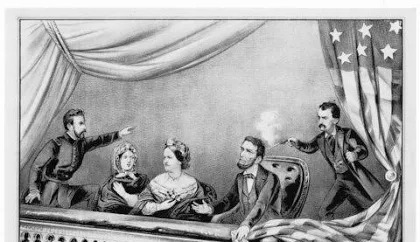 The United States of America has an historic problem with political violence. Four United States Presidents have been assassinated: Abraham Lincoln, James A. Garfield, William McKinley, and John F. Kennedy. In addition, attempts have been made on the lives of Andrew Jackson, Theodore Roosevelt, Franklin Delano Roosevelt, Harry Truman, Gerald Ford, Ronald Reagan, George H. W. Bush, and Donald Trump. Presidential candidates have also been targets of assassination attempts. Attempts have been made on the lives of Theodore Roosevelt as a candidate, Robert Kennedy (successful), George C. Wallace (seriously wounded), and former President Trump. What does this say about our political culture? What does it say about our national fascination with violence? What does it say about the deluded capacity of Americans to believe that the ends justify the means? [1]
The Myth of Redemptive Violence
In these blogs, I’ve had the opportunity to introduce readers to the notion of the “myth of redemptive violence.” The Myth of Redemptive Violence holds that violence can be redemptive. The term was coined by Walter Wink, a liberal Protestant theologian at Union Theological Seminary in New York. Wink believed that American society was and is deeply affected by a subconscious belief that violence can be redemptive; that is, violence to overcome evil is warranted and even positive. Polls show that substantial numbers of members of both our political parties subscribe to this nonsense. Wink believed the myth of redemptive violence needed to be demystified to show how deeply misleading it is. For Christians, the myth is contrary to the gospel. In other words, we all need to see that this is not true. It is a myth, and we must all avoid allowing ourselves and others to be motivated by this false narrative.
From the French Revolution to Today
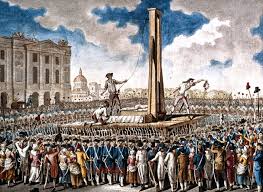 The problem of glorifying and accepting violence as a political tool is as old as the human race. However, it has its modern roots not so much in theology as in a culture that has lost its moorings in history and in a tradition of political accommodation and embraced the revolutionary ideas that began with the French Revolution. People were fascinated and inspired by the French Revolution, then progressively horrified by the Reign of Terror it produced. The decline of religion and morality in pre-revolutionary France made the Reign of Terror possible. At the very beginning of the modern era, a focus on power and a materialistic view of the world tended to elevate violence over wisdom and concern for others as political virtues.
Whenever governments exclude religious and moral virtues from political action, there is a tendency toward madness and excess, and the political result is violence and decay.[2] We should all be concerned by the way in which much of American culture has come to resemble aspects of the culture that produced the guillotine in revolutionary France. The statements of many current political and media celebrities are chillingly familiar to the rhetoric of that resulted in mindless slaughter at the beginning of the modern era.
We need to be concerned about how Marxism and its modern derivatives, such as Critical Theory, can and do create an immoral political culture inclined to violence. “One can’t expect to make an omelet without breaking eggs.” In 1790, Maximilian Robespierre used those words to welcome the horrific French Revolution that had begun the year before. Lenin, Stalin, Mao, and other 20th-century radicals have both voiced and put Robespierre’s slogan into practice, which involved the murder of millions of innocent people. [3]
The idea that killing a person or persons with whom one disagrees politically is part of creating a better society is sometimes called “moral inversion” or, as I would call it, twisted morality. The idea behind moral inversion is that one is entitled to violate common moral standards, for example, “Thou shalt not kill,” when violence is used to create a better social situation. The result is a kind of moralism in which any behavior, including the assassination of political leaders, can be justified on the grounds that one is trying to overcome what one believes is a great social evil.[4]
This notion that violence is justified for political reasons is easily channeled into violent words and actions by those who are infected with this disease, especially among the emotionally unstable. It is particularly common among those who have rejected traditional religion or the moral values of a culture and who are thus thrown back upon themselves and their own personal prejudices and desires in making moral commitments. In all these situations, a person who has become morally homeless falls victim to their own prejudice.
People are naturally moral, and when education or training fails to provide a proper intellectual foundation for their moral passions, those passions can spill over uncontrollably, like a river that overflows its banks. In today’s materialistic societies, this energy often finds a new outlet in revolutionary actions and violence. Preferred channels have included communism or national socialism. Sadly, the tragedies of the 21st century have been fueled by this redirected moral energy, which has been used destructively.
Negative Politics and Media Greed
Politicians have responded to the situation by leveraging it to their advantage. By the mid-1970s, they realized it was often easier to persuade people to vote against a disliked opponent than to support their own party’s views. This marked the beginning of what we now call “negative politics” and “negative campaigning.” Such campaigns play on our natural fears and anxieties, portraying opponents as villains who must be defeated at all costs. Particularly from the left, opposing candidates are depicted as embodiments of evil, even labeled Nazis. The result is predictable. If I am opposing someone like Hitler, the kind of total war the United States waged in World War II seems justified from a political standpoint. Whether or not the truth is on my side, or love and morality matter, don’t necessarily come into play when I’m slandering a villain. What truly counts is the effort to save the world from this perceived evil. In this context, the idea of redemptive violence can be used to justify the aggressive tactics involved. The tactic is particularly tempting to the mentally unbalanced, as we have repeatedly seen.
The media has also discovered that threats of violence, sensational language, and false accusations can attract more attention and generate more advertising revenue. One of the more unfortunate aspects of cultural postmodernism is the rise of what’s called advocacy journalism, where the focus is less on helping readers or viewers truly understand the facts and more on influencing emotions and encouraging actions, often aligning with what is considered politically correct. Sadly, whether due to a lack of moral scruples or other reasons, some journalists might even support false stories they know are wrong just to attract attention and boost sales. The result has been a visible decline in the quality and accuracy of the media and a corresponding decline in public trust.
Conclusion
It’s evident that living in a free society, where diverse opinions and free expression are cherished, can be challenging, especially in a culture that often feels nihilistic and accepts violence. Social media makes it easy for violent and thoughtless messages to spread widely. Because of this, it’s important for all of us in America to work together to calm the heated political debates.
Some of these blogs relate to the Constitution. While I haven’t yet delved deeply into the First Amendment, I can share my current perspective: it was created to enable people to share information and opinions, not to promote violence or deliberately disseminate false information. I would think this would include some people’s tendency to create false images using artificial intelligence. In addition, there may need to be some ability for public figures to sue when false or inflammatory information is broadcast over social media.
America was the first Enlightenment nation. The founders shared a worldview shaped by Isaac Newton and refined in the political arena by figures such as Locke and Rousseau. It was an optimistic age, and figures like Jefferson applauded the French Revolution even after the violence and death became wholly unjustified. They never gave up their support of revolutionary ideologies. Others, like Edmund Burke, were less inclined to justify what happened in France. Burke, for example, saw the violence of the French Revolution as stemming from a breakdown in cooperation among various elements of French society, combined with a failure to draw on aspects of the French intellectual and moral tradition that might have averted disaster.[5]
Whether America can avoid the potential political and cultural chaos ahead depends on all of us working together—academia, the media, politicians, everyday citizens, religious groups, and more—to build a more peaceful and cohesive society. It will require sacrifices from everyone and fundamental shifts in our political approach, which may have worked in the past but clearly aren’t doing the job today. In particular, voters play a crucial role in this change. Politicians from both parties who use violent language should face consequences at the polls. If they recognize that their strategies are no longer effective and may even be harmful, that recognition will motivate a quick and positive transformation in our political scene.
What is needed more than anything else is a truly postmodern, constructive political philosophy that values dialogue, conversation, compromise, and the search for social harmony over the acquisition of power and a “winner-take-all” mentality. I’ve written a preliminary exploration of this on my own. The title is Illumined by Wisdom and Love: Essays on a Sophio-Agapic Constructive Postmodern Political Philosophy. I’m not a professional philosopher, nor was the book intended to be much more than my own study notes as I developed my way of looking at the problems of our society. However, I do think it was helpful.[6]
[1] This and the following paragraph are updates to a prior blog, G. Christopher Scruggs, “Our Unhealthy Political Culture,” found at www.gchristopherscruggs.com (July 18, 2024).
[2] The quotations from this work and from other works of Burke upon which this blog is based are found in Edmund Burke: Selected Writings and Speeches Peter J. Stanis, ed. (Washington, DC: Regency Publications, 1963), at 540.
[3] It is hard to fully trace the linage of this quote, which is also attributed to Lenin and Stalin.
[4] I believe that modern Western society, lacking a transcendent faith in the reality of moral values, has entered a period of moral nihilism that can affect even those who deny accepting it. The power orientation of our culture is part of its plausibility structure. Lesslie Newbigin, Truth to Tell: The Gospel as Public Truth (Grand Rapids, MI: William B. Eerdmans, 1991)
[5] G. Christopher Scruggs, “Burke 3: Response to the French Revolution” found at found at www.gchristopherscruggs.com (May 13, 2021).
[6] G. Christopher Scruggs, Illumined by Wisdom and Love: Essays on a Sophio-Agapic Constructive Postmodern Political Philosophy (Hunt, TX: Quansus Publishing & College Station, TX: Virtual Bookworm, 2024).