
 For the past several weeks, Kathy and I have been spending a good bit of time with people with whom we have been in Bible studies, Prayer Groups, and other small groups over the past many years. Some of these friendships are now nearly 50 years old. Some of them are about five years old. At least one of them is even shorter. One constant theme in our meetings has been how blessed we feel to have had the opportunity to spend time in a deep, meaningful relationship with each other.
I’ve given my testimony many times, and it is included in Crisis of Discipleship, which I wrote shortly after retirement. [1] It’s worth repeating time and time again, just as the apostle Paul repeats his own testimony, time and time again, in his preaching and writing. In 1976, nearly 50 years ago, I attended a Bible study in Houston, Texas. I was asked to do so by a young lady who worked in the same law firm. Over the next few months, I returned to church from a long absence, became a much stronger Christian, and began my life as a Christian teacher and leader.
In 1991, after serving as a deacon, elder, Sunday School teacher, and small group leader, as well as holding other responsibilities at First Presbyterian Church of Houston, Texas, I attended seminary in Richmond, Virginia. We started a small group almost immediately after arriving there. I also participated in a small group led by Matt at the seminary. After graduating in 1994, we established several small groups in Brownsville, Tennessee, one of which continues to meet today. When I moved to Richmond, Virginia, we became involved in discipleship groups, reunion groups, Salt & Light groups, and many other small groups. I often attended small groups when we lived in Bay Village, Ohio. Finally, when I retired and moved to San Antonio, we almost immediately began a small group that met in homes. Small groups have always been a part of our lives.
The Kingdom of God and Small Groups
Last evening, we attended a worship service for a new church starting in San Antonio. The reason we were there was that we had been in small groups with many of the participants in this effort. We went to support them and show our love and encouragement. Additionally, we attended because we recognize that one of the most effective ways the kingdom of God grows is through fostering genuine Christian community. Many of the leaders of this new church participate in a men’s ministry Bible study that I sometimes attend on Thursday mornings. One of the things that this group does is meet in small groups as well as in the larger group, which can sometimes number as many as 50 men. The men in these small groups come from several churches, though one of the churches that began the group historically has the most attendees. These men love and support one another, creating in these groups a little piece of the Kingdom of God.
At the very beginning of my daily prayer guide, I have the following quotation from the Apostle Paul:
As God’s holy and beloved chosen ones, put on compassionate hearts, kindness, humility, meekness, and patience, bearing with one another. If anyone has a complaint against another, forgive them. Just as the Lord has forgiven you, you should forgive others. Above all virtues, put on love, which binds everything together in perfect harmony. Finally, let the peace of Christ rule in your hearts, to which you have been called in one body. Be thankful. Let the Word of Christ dwell in you richly, teaching and admonishing one another in all wisdom, singing psalms and hymns and spiritual songs to God with thankful hearts. And whatever you do, in word or deed, do everything in the name of the Lord Jesus, giving thanks to God the Father through Christ (Colossians 3:12-17).
These words by the apostle Paul show us why churches must build community both within their larger fellowship and in smaller groups. The Christian church is not meant to function like any other secular organization. Instead, it should be a place where people can experience the transformative love of Christ. I have served as the pastor of both small and large churches. The reality is, it’s not possible to create a single large, loving community in a church with 1000 members. It’s even difficult in a church with 200 members. One way to expand the reach of the kingdom of God is by focusing on small Christian communities where people can personally experience the kingdom of God.
Characteristics of the Kingdom
The little text I quoted from Colossians gives us a hint as to some characteristics that should be present in these small groups. First, they should be characterized by Christian love. Small groups are places where people can be compassionate with one another, learn, show kindness, humility, and the ability to be patient with the faults of others. (And, of course, those others will be learning patience by putting up with our faults!)
Forgiveness. Anyone who has been in a small group for any length of time knows that forgiveness is essential. We are all human and inevitably do things that hurt or at least annoy others. As I’ve grown older, I like to say, “I don’t have enough friends that I can afford not to tolerate the ones that I have!” This statement reflects that we all must forgive others constantly, for minor mistakes and sometimes for major ones. People who never learn to forgive can’t fully experience the kingdom of God. After all, God brings us into that kingdom by forgiving us! It’s the least we can do to forgive others.
Harmony. The kingdom of God is a place where people are in harmony with God. As theologians often say, the kingdom of God exists wherever God rules. Wherever God’s love, wisdom, justice, and patience are present, the kingdom of God is also present. It is the wise church leader who builds a team of servant leaders capable of reflecting God’s wisdom and love in their small groups, creating an atmosphere where the larger church can also experience the kingdom of God. This harmony that God desires to establish in human relationships is called “shalom” or peace. It represents the relationship in which the self-giving love of God, demonstrated by Christ on the cross, is experienced in tangible human relationships.
Christ-like Love. As Paul recognizes when writing to the Colossians, this harmony cannot exist without agape, love. In Philippians, he writes a church he dearly loves the following famous words:
So if there is any encouragement in Christ, any comfort from love, any participation in the Spirit, any affection and sympathy, complete my joy by being of the same mind, having the same love, being in full accord and of one mind. Do nothing from selfish ambition or conceit, but in humility count others more significant than yourselves. Let each of you look not only to his own interests, but also to the interests of others. Have this mind among yourselves, which is yours in Christ Jesus, who, though he was in the form of God, did not count equality with God a thing to be grasped, but emptied himself, by taking the form of a servant, being born in the likeness of men. And being found in human form, he humbled himself by becoming obedient to the point of death, even death on a cross.Therefore God has highly exalted him and bestowed on him the name that is above every name, so that at the name of Jesus every knee should bow, in heaven and on earth and under the earth, and every tongue confess that Jesus Christ is Lord, to the glory of God the Father (Philippians 2:1-11).
Of course, creating a Christian community is impossible through our own human abilities. Those of us with above-average skills need constant reminders that we cannot build the kingdom of God on our own. Our selfish ambition, self-conceit, and human pride all interfere with creating the kingdom of God. It can only be built by those who are unselfish, humble, and willing to serve others. The kingdom of God can only be created in relationships where the love of God the Father, shown to us by Christ the Son, is experienced through the power of the Holy Spirit.
I’ve had the opportunity to work for more than one troubled church. In my experience, the trouble always begins with some kind of human ambition, self-conceit, or pride. Sometimes it’s the ambition, self-conceit, or pride of a pastor. Sometimes, it’s the ambition, self-conceit, or pride of a group of leaders. Sometimes it’s even the ambition, self-conceit, or pride of those who wish they were the leaders. All of us, and especially the most capable of us, can fall into the delusion that we are capable of doing what only God can do. I’ve learned it’s a big mistake.
Some years ago, I had the privilege of working with an outstanding Christian leader. Interestingly, he’s also the least ambitious, conceited, or prideful person I’ve ever worked with. It would be hard to completely explain how often this person forgave others, poured oil on the waters of a potential conflict, and refused to get his own way. One little illustration comes to mind. The leadership of this church was faced with a difficult decision that divided the leadership team. Some people thought one decision should be made, and others thought otherwise. Another decision should be made. They couldn’t reach an agreement.
My friend endured this for a long time. Eventually, the leadership team made a decision he personally disagreed with. Still, he supported the decision, and the outcome was successful. I am very confident that the outcome wouldn’t have been successful if he had shown hurt feelings, voiced his reservations about the leadership’s decision, or tried to undermine the result. I don’t think the church would have split, but it could have been close. I’ve watched other Christian leaders take a different approach that has resulted in conflict and even church splits. In none of these situations was the kingdom of God visible.
Conclusion
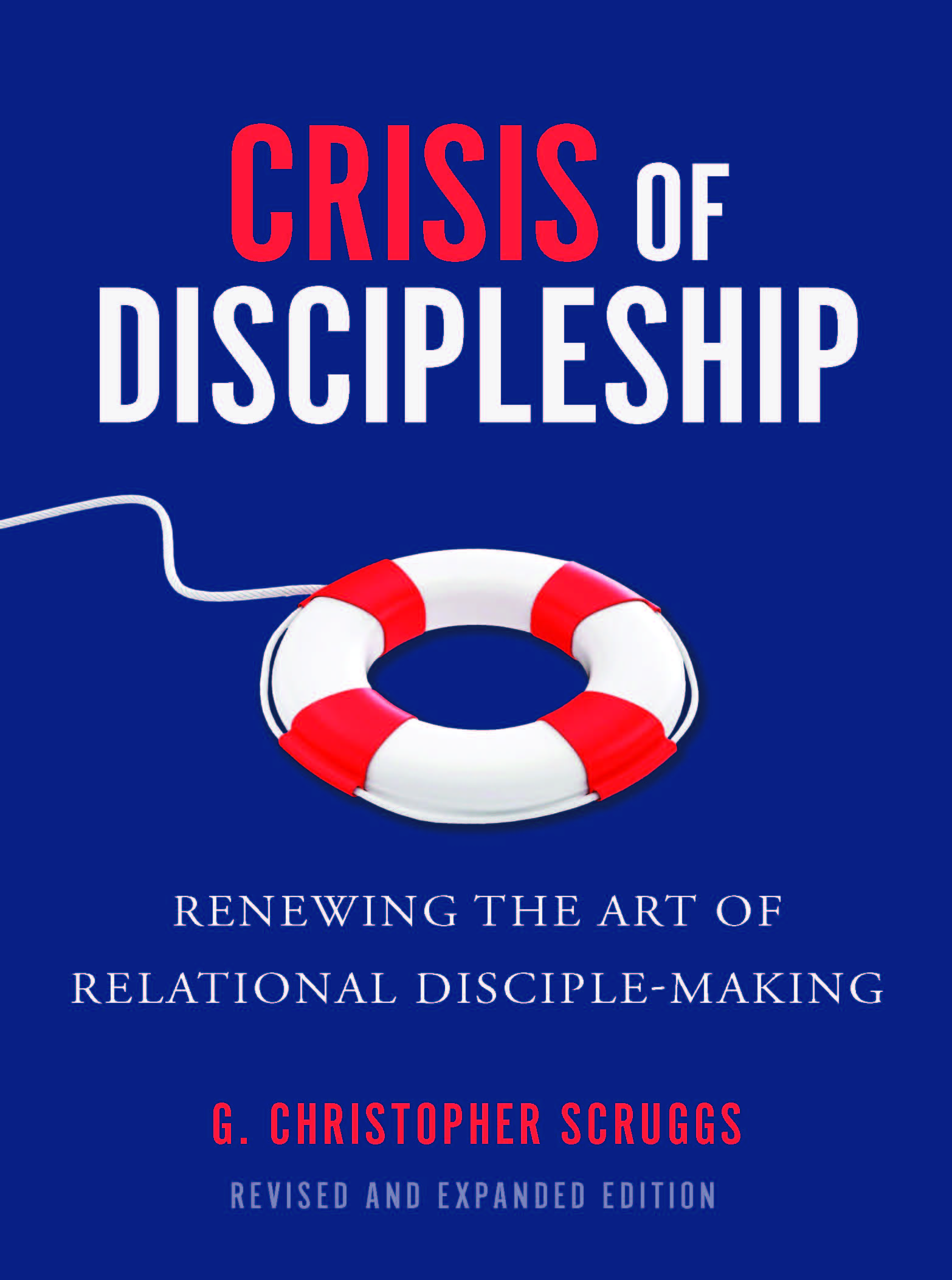 In this blog, I didn’t want to cover ground that was previously covered in Crisis of Discipleship. There are specific ideas that can be embodied in any concrete small group discipleship program. They will vary from church to church, but the fundamental thing is to start groups of around eight to 18 people and nurture Christian relationships within those groups.
Some years ago, our church hosted a series of small groups that were social events, but they also included a time of prayer, a brief Bible study, and a service to the church or community. One day, the leader of one of these groups came to see me. His group is having trouble. I asked him what they did in their group. He told me that the group met together, had a few margaritas, ate dinner, talked a while, and then went home. They did say grace before dinner. I suggested that perhaps it would be a good idea to dispense with the margaritas, have a very short Bible study after dinner, share a prayer request, and participate as a group in a Christmas program our church sponsored.
When he left my office, I wasn’t sure if he agreed. But he did. Several months later, he returned and told me how much better their group had become since making those small changes. “It’s amazing what the Bible study and prayer have done for our group!” he said later. I have told many people that a great Bible teacher did not lead the small group where I renewed my faith in Christ. It was led by a group of participants, none of whom knew much about the Bible, at least I didn’t. However, we read the Bible together, discussed the passage, shared questions, and prayed for each other and our community at the end of the meeting. That’s all there was to it.
As I mentioned, we’ve stayed pretty close together over the years. Interestingly, we now live all over the country. Most members are leaders in the congregations they now attend. The beginning of their journey into church leadership was participating in a small Bible study group in Houston, Texas. This should be an encouragement to pastors and other church leaders: You don’t have to be especially good at organization, Bible, teaching, prayer, or any other element of the Christian life to share your Christian faith with others. You just have to be willing.
Copyright 2025, G. Christopher Scruggs, All Rights Reserved
[1] G. Christopher Scruggs, Crisis of Discipleship: Renewing the Art of Relational Disciplemaking (Richmond, VA: Living Dialog Ministries, 2023).
Thank you Chris, your words are filled with great wisdom. I miss seeing you all. When will you guys be back home.?
Hugs. Lexi